Mounting coral frags safely means attaching small coral pieces to plugs or rocks using reef-safe glue or epoxy while minimizing stress, handling time, and exposure to air. Proper placement improves coral survival, growth rate, and stability inside reef aquariums.
If a coral frag falls repeatedly or gets mounted incorrectly, it may suffer tissue recession, infection, or slow growth. Many reef hobbyists lose new frags not because of water quality, but because of poor mounting technique. The good news is that mounting coral frags correctly is simple when you follow a structured process.
This guide explains how to mount coral frags step by step using proven reef-safe methods. You will learn when to use glue vs epoxy, how to handle delicate SPS and LPS corals, how to prevent frag loss, and how experienced reef keepers improve survival rates after mounting.
Whether you are building a frag rack system or placing corals directly on live rock, this article helps you mount coral frags securely without damaging tissue or slowing growth.
Why is proper coral frag mounting important for reef tank success?
Short answer: Proper mounting prevents tissue damage, improves coral stability, increases survival rates, and supports long-term reef tank growth.
Many beginners assume mounting coral frags is just about sticking them to rock. In reality, mounting directly affects coral health, placement stability, and long-term growth direction.
Improper mounting creates several problems:
- Frag detachment from rock surfaces
- Tissue damage during handling
- Bacterial infection at cut sites
- Reduced light exposure
- Flow imbalance around the frag
Experienced reef aquarists often report that newly mounted SPS corals stabilize faster when attached within minutes of introduction. Keeping exposure time short reduces stress response.
A practical observation from reef hobbyist forums and frag propagation systems shows that cyanoacrylate gel mounting improves attachment success compared to loose placement. Stable mounting allows coral encrusting behavior to begin earlier.
What tools do you need to mount coral frags safely?
Short answer: You need reef-safe glue, epoxy putty, frag plugs or live rock, tweezers, gloves, and a towel or mounting tray.
Having the right tools prevents handling mistakes and reduces mounting time.
- Cyanoacrylate gel glue (reef safe)
- Two-part reef epoxy putty
- Frag plugs or frag discs
- Protective aquarium gloves
- Tweezers or forceps
- Paper towel for drying surfaces
- Frag rack (optional)
Gel glue works best for SPS corals like Acropora. Epoxy works better for uneven rock surfaces. Many reef keepers combine both for maximum stability.
How do you mount coral frags using reef-safe glue?
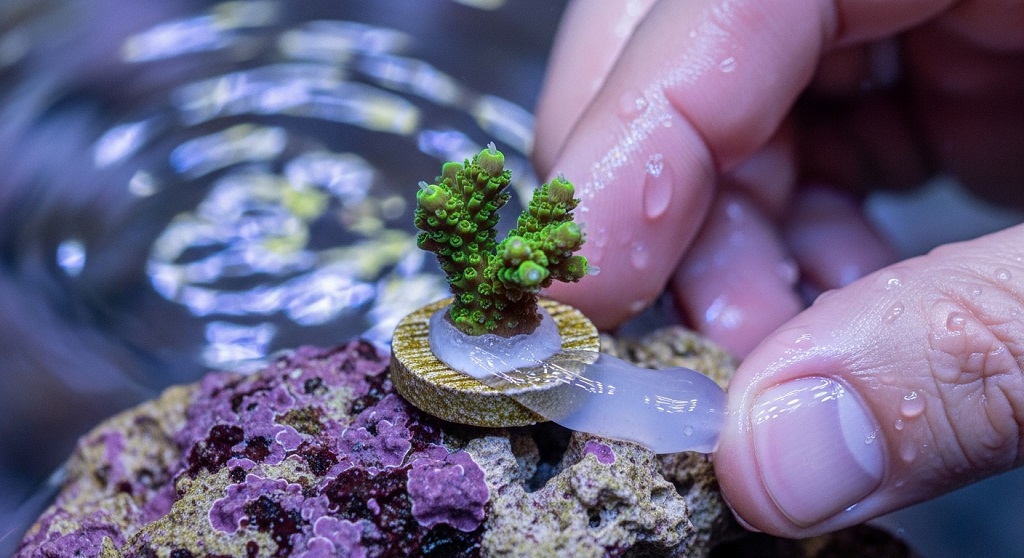
Short answer: Dry the frag base, apply gel glue, press firmly onto the plug or rock, then hold for 10–20 seconds underwater.
This is the most common method used in reef aquariums.
Step-by-step process
- Remove frag from water briefly
- Dry the frag base using paper towel
- Apply thick gel glue
- Press onto frag plug or rock
- Hold underwater for 10–20 seconds
- Return coral to tank flow area
Limiting air exposure to under 30 seconds helps prevent stress in sensitive coral species.
Cyanoacrylate gel forms a skin instantly in saltwater, allowing quick attachment without harming coral tissue.
When should you use epoxy instead of glue for coral mounting?
Short answer: Use epoxy when attaching frags to uneven live rock surfaces or when extra structural support is required.
Epoxy works well when mounting corals permanently inside aquascapes.
Glue alone may fail on porous rock surfaces. Epoxy fills gaps and creates stronger mechanical bonding.
Best situations for epoxy use
- Mounting heavy LPS corals
- Attaching frags to vertical rock faces
- Fixing corals in high-flow zones
- Securing base colonies permanently
Many advanced reef keepers combine glue and epoxy together. Glue holds instantly. Epoxy provides long-term strength.
How do you mount coral frags on live rock securely?
Short answer: Clean the rock surface, apply epoxy or glue, position the frag carefully, and stabilize it until bonding completes.
Live rock mounting creates natural-looking reef layouts.
Secure mounting technique
- Select stable rock surface
- Remove algae or debris
- Apply glue or epoxy
- Press frag gently into position
- Hold until fixed
Frag stability is critical during the first 24 hours. Avoid placing fish or snails nearby that may knock it loose.
What is the best placement strategy after mounting coral frags?
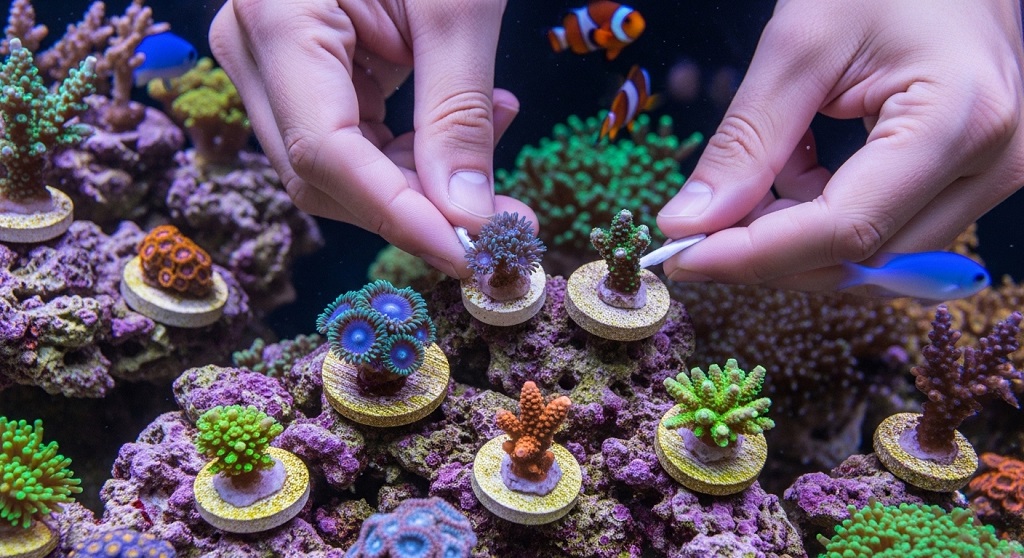
Short answer: Place newly mounted frags in moderate flow and appropriate light conditions based on coral species.
Placement determines whether the coral adapts quickly or becomes stressed.
| Coral Type | Recommended Flow | Recommended Light |
|---|---|---|
| SPS | Moderate to high | High PAR |
| LPS | Low to moderate | Medium PAR |
| Soft corals | Low flow | Low to medium PAR |
Incorrect placement often causes frag detachment before encrusting begins.
How can you mount SPS coral frags without tissue damage?
Short answer: Handle SPS frags only by their base skeleton and avoid touching living tissue during mounting.
SPS corals like Acropora are sensitive to handling pressure.
Safe mounting tips include:
- Use tweezers instead of fingers
- Apply glue only to skeleton base
- Avoid twisting branches
- Limit air exposure time
Fast mounting reduces stress response and improves polyp extension within hours.
How do you mount LPS coral frags safely?
Short answer: Support the skeleton base only and avoid squeezing fleshy tissue during attachment.
LPS corals like Euphyllia require extra care.
Because their tissue extends beyond skeleton edges, improper handling causes tearing.
- Mount only by skeleton base
- Avoid glue touching tissue
- Place in low-flow zones first
- Allow recovery time after mounting
Can coral frags be mounted underwater without removing them?
Short answer: Yes, underwater mounting works using gel glue, but surface drying improves bonding strength.
Underwater mounting reduces air exposure stress.
However, glue bonds stronger when surfaces are slightly dry.
Many reef keepers use hybrid methods:
- Remove frag briefly
- Apply glue
- Attach underwater
How long does it take coral frags to attach after mounting?
Short answer: Most coral frags begin encrusting within 3–14 days depending on species and tank stability.
Attachment speed depends on:
- Water stability
- Lighting intensity
- Flow strength
- Coral species
- Mounting technique
SPS corals typically encrust faster than LPS corals.
What mistakes should you avoid when mounting coral frags?
Short answer: Avoid touching tissue, using non-reef-safe glue, placing frags in strong flow immediately, or mounting unstable surfaces.
Common mounting mistakes reduce survival rates.
- Using household glue
- Handling tissue directly
- Mounting on dirty rock
- Placing frags in high-flow areas immediately
- Overexposing frags to air
Even small handling errors slow coral recovery.
What does real-world frag mounting experience show about survival rates?
Short answer: Reef hobbyist propagation systems consistently report higher frag survival when gel glue is used with stable placement compared to loose placement methods.
Small-scale coral fragging setups used in reef propagation tanks often compare attachment methods.
Observational reef tank records from hobbyist frag swaps and propagation trays show:
- Loose placement leads to frequent frag displacement
- Gel glue improves early stability
- Glue plus epoxy increases long-term attachment strength
- Mounted frags begin encrusting faster than unmounted frags
These results explain why coral farms rarely leave frags unattached after cutting.
Stable mounting allows energy to shift toward growth instead of recovery.
Conclusion: What is the safest long-term strategy for mounting coral frags?
Mounting coral frags correctly protects coral tissue, improves survival rates, and supports faster reef tank growth. Using reef-safe glue, minimizing handling time, and placing corals in suitable lighting and flow conditions creates a stable environment for attachment.
Most frag losses occur during the first few days after placement. Careful mounting reduces this risk significantly.
If you are building a reef aquarium or expanding your coral collection, consistent mounting techniques help maintain stability and reduce maintenance problems later.
Start applying these mounting steps today to improve frag survival and create a stronger reef structure inside your aquarium.
FAQ: How to mount coral frags
Can I mount coral frags without glue?
Yes, coral frags can be placed in frag racks or wedged between rocks, but glue provides stronger stability and improves attachment success.
Is super glue safe for coral frags?
Only cyanoacrylate gel labeled reef-safe should be used. Standard household liquid glue may harm corals.
Should coral frags be dipped before mounting?
Yes, coral dipping helps remove pests and parasites before introducing frags into reef tanks.
How long can coral frags stay out of water?
Most coral frags tolerate 20–30 seconds of air exposure during mounting without stress if handled correctly.
Can I remount a fallen coral frag?
Yes, remounting is safe if tissue remains healthy and the frag base is intact.
Do coral frags grow faster after mounting?
Yes, stable mounting encourages encrusting behavior and supports faster skeletal growth.
Read More Also: How to Print Professional Shipping Labels at Home
Learn More: How to renovate your kitchen on a budget