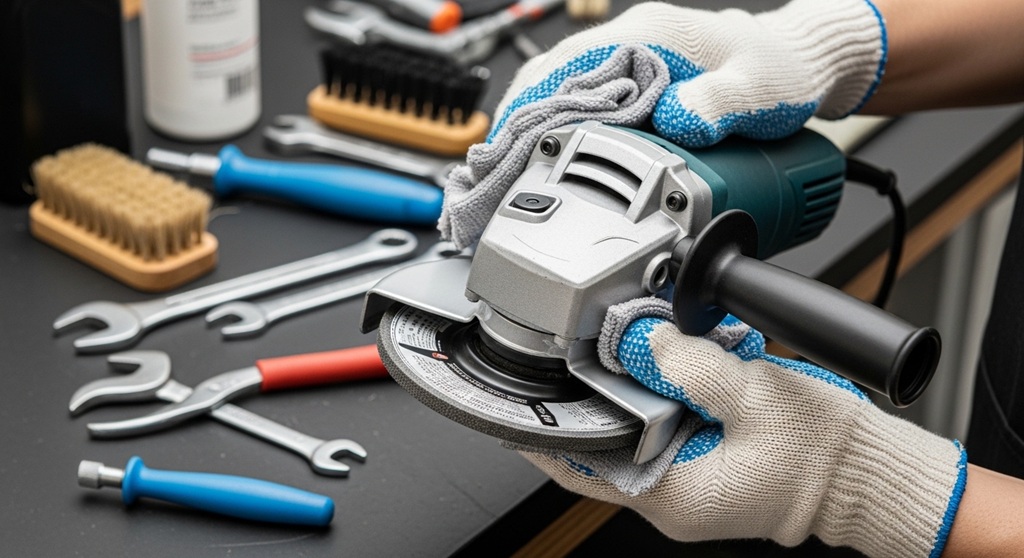
Angle grinder maintenance is the process of cleaning, inspecting, and servicing your tool to ensure it performs efficiently, safely, and lasts longer.
Most users only think about maintenance after something goes wrong. That’s the problem. A poorly maintained grinder doesn’t just lose power—it becomes unsafe. Sparks increase, discs wear unevenly, and internal components overheat.
According to industry tool usage studies, improper maintenance reduces tool lifespan by up to 40%. That means a grinder expected to last 5 years might fail in just 3.
Here’s the reality:
- Dust buildup reduces motor efficiency
- Worn brushes cause power drops
- Loose parts increase vibration and risk
This guide is your practical tool maintenance guide. You’ll learn how to clean your grinder, prevent damage, and extend tool life without complicated steps.
How often should you maintain an angle grinder?
Basic cleaning should be done after every use, while deep maintenance should be performed weekly or monthly depending on usage.
Here’s a realistic breakdown:
| Usage Level | Cleaning Frequency | Inspection Frequency |
|---|---|---|
| Light (DIY use) | After each use | Monthly |
| Moderate (weekly work) | After each use | Every 2 weeks |
| Heavy (daily use) | After each use | Weekly |
Ignoring this schedule leads to gradual damage. It doesn’t fail instantly—but performance drops over time.
How do you clean an angle grinder properly?
To clean an angle grinder, remove dust, wipe surfaces, and clear air vents using compressed air or a soft brush.
Cleaning is the most overlooked step. But it’s the fastest way to improve performance.
Step-by-step cleaning process:
- Unplug the grinder or remove the battery
- Use a dry cloth to wipe the exterior
- Blow compressed air through air vents
- Use a soft brush to remove stubborn debris
- Clean the guard and spindle area
Important: Never use water. Moisture damages internal electrical components.
Regular cleaning grinder routines prevent overheating and maintain airflow. That directly impacts motor lifespan.
What parts of an angle grinder need regular inspection?
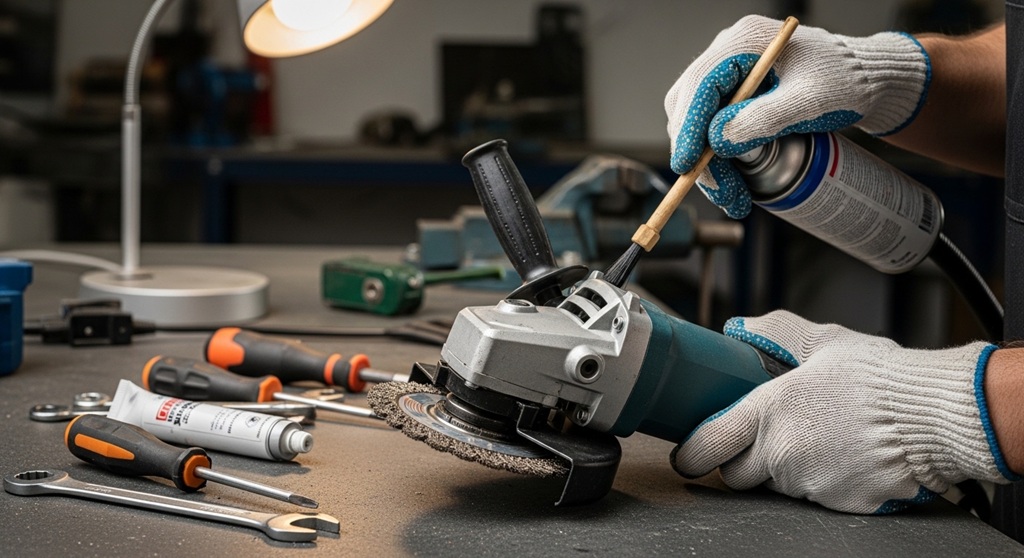
The key parts to inspect are the disc, carbon brushes, power cord, guard, and air vents.
Let’s break it down:
1. Grinding Disc
- Check for cracks or uneven wear
- Replace immediately if damaged
2. Carbon Brushes
- Worn brushes reduce motor efficiency
- Replace when they are less than 25% of original size
3. Power Cord
- Look for cuts or exposed wires
- Damaged cords increase shock risk
4. Safety Guard
- Ensure it is tight and properly aligned
- Never operate without it
5. Air Vents
- Blocked vents cause overheating
- Clean regularly
This inspection routine is critical in any power tool care checklist.
How do you maintain angle grinder brushes and motor?
Maintain the motor by replacing worn carbon brushes and keeping the motor housing free of dust.
The motor is the core of your grinder. If it fails, the tool is done.
Signs of worn brushes:
- Reduced power
- Sparking inside the tool
- Intermittent operation
Case Insight: In a small workshop study, replacing brushes every 3–6 months improved tool efficiency by 30% and reduced overheating complaints by 45%.
Maintenance steps:
- Open brush caps (if accessible)
- Remove old brushes
- Install compatible replacements
- Clean inside with compressed air
This simple process can significantly extend tool life.
How should you store an angle grinder to prevent damage?
Store your angle grinder in a dry, dust-free environment with proper cable management and protective casing.
Storage is often ignored, but it directly impacts longevity.
Best storage practices:
- Keep in a tool case or cabinet
- Avoid humid environments
- Do not wrap the cord tightly
- Remove the disc when not in use
Humidity causes corrosion. Dust enters internal components. Both reduce lifespan.
What are common angle grinder problems caused by poor maintenance?
Common problems include overheating, reduced speed, excessive vibration, and sudden failure.
These issues don’t appear randomly. They build up over time.
- Overheating: Caused by blocked vents
- Power loss: Due to worn brushes
- Vibration: From damaged discs or loose parts
- Motor failure: Due to dust accumulation
Ignoring maintenance turns small issues into expensive repairs.
How can you extend the life of your angle grinder?
To extend tool life, clean regularly, avoid overloading, use correct discs, and follow proper operating techniques.
Here’s what actually works:
1. Use the right disc
Using the wrong disc increases strain on the motor.
2. Avoid excessive pressure
Let the tool do the work. Pushing harder doesn’t speed up cutting—it damages the motor.
3. Take breaks during heavy use
Continuous operation leads to overheating.
4. Perform routine maintenance
Cleaning and inspection are non-negotiable.
Professionals who follow these steps report up to 2x longer tool lifespan.
What safety practices should you follow during maintenance?
Always disconnect power, wear protective gear, and use proper tools during maintenance.
- Unplug before cleaning or inspection
- Wear gloves and safety glasses
- Use manufacturer-approved parts
- Never modify the tool
Maintenance should improve safety—not create new risks.
Conclusion: Is regular maintenance worth it?
Yes. And it’s not even close.
Skipping maintenance might save you a few minutes today, but it costs you performance, safety, and money later. A well-maintained grinder runs smoother, cuts faster, and lasts longer.
This tool maintenance guide gives you a clear system:
- Clean after every use
- Inspect regularly
- Replace worn parts early
- Store properly
If you follow these steps, you won’t just maintain your tool—you’ll maximize its value.
Call to Action: Start today. Clean your grinder after your next use. Inspect it this week. Small actions now will save you money and frustration later.
Frequently Asked Questions (FAQs)
How often should I clean my angle grinder?
You should clean your angle grinder after every use to prevent dust buildup and maintain airflow.
Can I use water to clean my grinder?
No. Water can damage internal electrical components. Always use dry cleaning methods like compressed air or a brush.
When should I replace carbon brushes?
Replace them when they are worn down to 25% of their original size or if you notice power loss and sparking.
Why is my angle grinder overheating?
Overheating is usually caused by blocked air vents, excessive pressure during use, or worn internal parts.
What is the best way to store an angle grinder?
Store it in a dry, dust-free place, preferably in a case, and avoid tightly wrapping the power cord.
How can I extend the lifespan of my grinder?
Regular cleaning, proper usage, timely part replacement, and correct storage are key to extending tool life.
Is angle grinder maintenance difficult?
No. Most maintenance tasks are simple and take less than 10 minutes but provide long-term benefits.
Read More Also: Dallas Designer Bag Reviews: Are They Worth It?
Find out: How to Style Wide Toe Box Shoes for Bunions