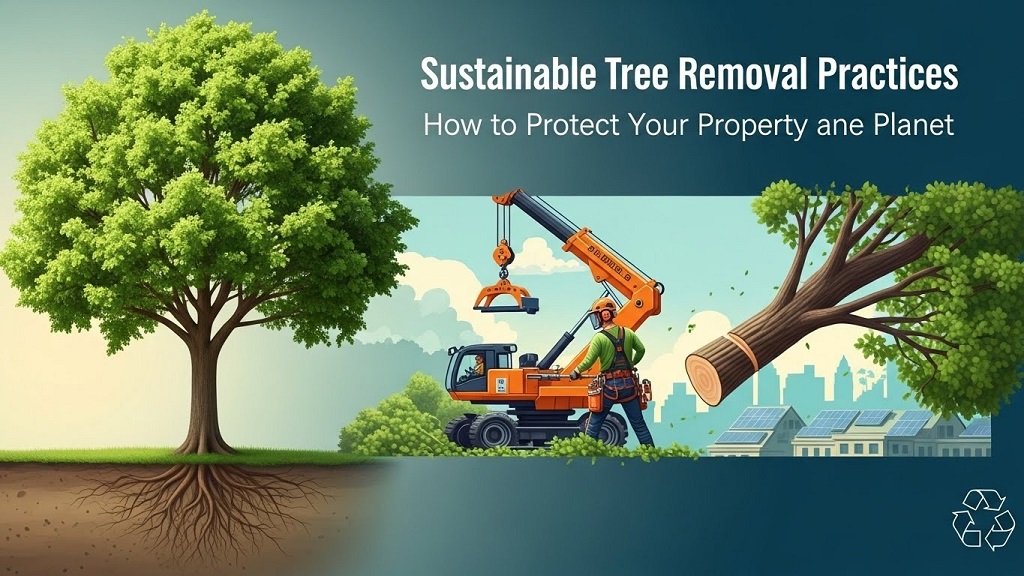
Sustainable tree removal practices protect your home from hazards while keeping your landscape, soil, and local wildlife as healthy as possible. By choosing eco friendly tree services that prioritize selective cutting, recycling wood, and replanting after removal, you can safeguard your property and still support the planet.
What Is Sustainable Tree Removal?
Sustainable tree removal practices focus on safety, minimal environmental impact, and long‑term restoration of the site. Instead of simply cutting everything down, professionals assess which trees truly need removal, how to minimize damage to the soil and nearby plants, and how to reuse or recycle the wood.
These methods often include selective removal of only diseased, dangerous, or poorly placed trees, low‑impact equipment, and strategies to restore the ecosystem through replanting and soil care.
When Tree Removal Is Actually Necessary
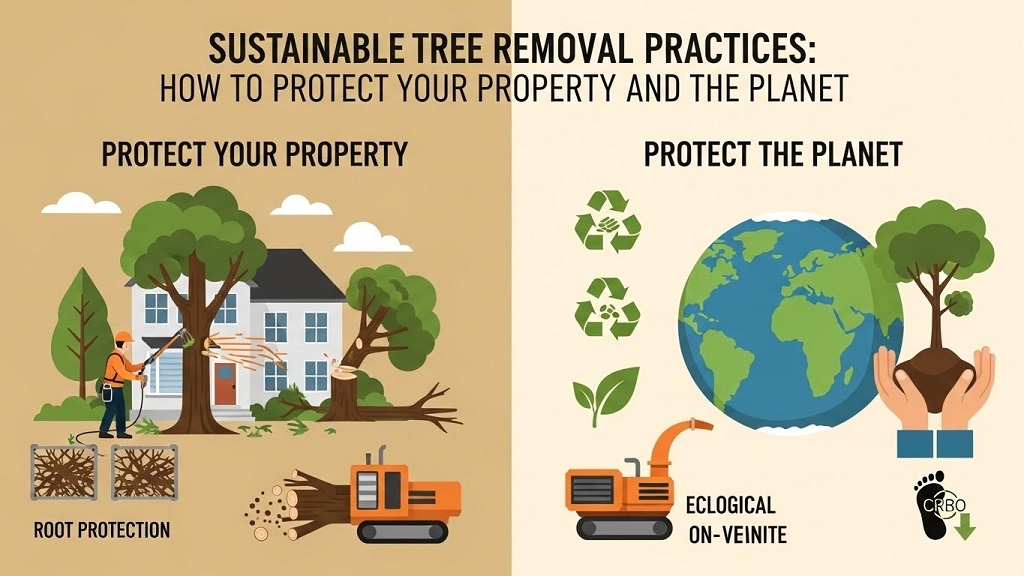
Removing a tree can feel counter to sustainability, but sometimes it is the most responsible choice.
Common reasons include:
-
Structural risk: Dead, leaning, or storm‑damaged trees that could fall on roofs, cars, or people.
-
Disease and pests: Severely infected trees that threaten other nearby trees or entire stands.
-
Construction and design: New foundations, driveways, or utilities that cannot safely coexist with existing roots or canopies.
A sustainable approach starts with an arborist assessment to decide whether pruning, cabling, or root protection could save the tree before removal is considered.
Key Eco Friendly Tree Services
Modern eco friendly tree services go far beyond “cut and haul.” They aim to lower emissions, reduce waste, and preserve as much of the ecosystem as possible.
Core elements usually include:
-
Selective tree removal instead of clear‑cutting, maintaining canopy structure and biodiversity where possible.
-
Use of manual tools or smaller, efficient machines that cut fuel use and prevent soil compaction.
-
Recycling and repurposing wood into mulch, compost, lumber, or firewood rather than sending it to landfills.
Many providers also offer stump grinding that leaves the roots in place and creates mulch instead of excavating large holes, which further protects soil health.
Techniques That Protect Your Property
Sustainable methods are also safer for your house, fences, and utilities.
Common best practices include:
-
Precision cutting and controlled felling to guide where the tree or large limbs fall, reducing the risk of structural damage.
-
Piece‑by‑piece dismantling using climbers, cranes, or rope systems in tight spaces so branches are lowered rather than dropped.
-
Avoiding heavy machinery near foundations and septic systems to prevent cracking, compaction, or root damage to desirable trees.
By combining careful planning with the right equipment, a sustainable crew can remove a hazardous tree with very little disturbance to the rest of your yard.
How Sustainable Tree Removal Protects the Environment
Trees provide shade, habitat, and carbon storage, so any removal has an environmental cost. Sustainable tree removal practices are designed to reduce that cost and sometimes even create benefits.
Environmental advantages include:
-
Lower carbon footprint by using efficient, often quieter tools and minimizing unnecessary cutting.
-
Habitat protection by timing work around nesting seasons where possible and preserving nearby healthy trees and understory plants.
-
Waste reduction through mulching, composting, and creative reuse such as reclaimed wood for furniture, pathways, or outdoor structures.
Some companies also support “green land clearing” for larger lots, favoring selective thinning, erosion control, and native replanting over complete clearing.
Sustainable Tree Removal vs. Conventional Methods
| Aspect | Conventional Removal | Sustainable Tree Removal Practices |
|---|---|---|
| Scope of work | Often removes many trees at once | Focuses on selective, risk‑based removal |
| Equipment use | Heavy, soil‑compacting machinery | Manual tools, climbing, low‑impact machines |
| Wood handling | Frequently hauled to landfill | Mulched, composted, repurposed, recycled |
| Site restoration | Minimal clean‑up or soil care | Mulching, erosion control, replanting after removal |
| Ecosystem impact | Greater habitat and canopy loss | Maintains structure and promotes green land clearing |
The Role of Replanting After Removal
Replanting after removal is one of the most powerful steps you can take to balance safety with sustainability. For every tree that must come down, adding one or more new trees helps restore canopy cover, carbon storage, and shade.
Best practices for replanting after removal include:
-
Choosing native or climate‑adapted species that support local wildlife and need less water and maintenance.
-
Matching the right tree to the right spot, considering mature height, root spread, and distance from buildings and power lines to avoid future conflicts.
-
Using the on‑site mulch from your old tree around the new planting to improve soil and retain moisture.
Over time, this creates a healthier, more resilient landscape than before.
What Is Green Land Clearing?
Green land clearing is an approach to opening up lots or construction sites that prioritizes soil protection, water quality, and biodiversity. Instead of scraping the entire area bare, professionals:
-
Survey and mark trees and vegetation to keep, focusing on healthy, native, and habitat‑rich areas.
-
Use selective clearing and careful machinery routes to reduce erosion and compaction.
-
Chip and spread cleared vegetation as mulch or send it for composting or biomass instead of burning.
This creates buildable space while preserving shade, wildlife corridors, and long‑term land value.
How to Choose an Eco Friendly Tree Service
Selecting the right provider is crucial if you care about sustainable tree removal practices.
Ask questions such as:
-
“Do you offer selective removal and green land clearing instead of full clear‑cuts?”
-
“How do you dispose of wood and debris—do you mulch, compost, or repurpose it?”
-
“What equipment do you use to minimize damage to soil and surrounding vegetation?”
-
“Do you provide guidance or services for replanting after removal with native species?”
Also look for certified arborists, proper insurance, and clear safety protocols that protect both your property and the crew.
Practical Tips for Homeowners
Even before the professionals arrive, you can support a more sustainable outcome.
Consider these steps:
-
Plan ahead: If possible, schedule work outside peak nesting seasons and extreme weather to reduce stress on surviving trees.
-
Preserve what you can: Discuss options like pruning, cabling, or transplanting instead of removing every inconvenient tree.
-
Keep materials on site: Request that chips or mulch remain on your property for beds, paths, or erosion control.
-
Commit to replanting: Budget for new trees or shrubs as part of the overall project, not as an afterthought.
These simple decisions can significantly lower the environmental cost of necessary tree work.
FAQs About Sustainable Tree Removal Practices
1. Are sustainable tree removal practices more expensive?
Costs can be similar or slightly higher because eco friendly tree services often use more labor‑intensive methods like climbing and selective cutting, but the long‑term benefit is reduced damage, less erosion, and lower future maintenance.
2. What happens to the wood in eco friendly projects?
In sustainable projects, wood is typically chipped for mulch, composted, cut for firewood, or repurposed as lumber or landscape materials instead of going to the landfill.
3. Do I really need to replant after removal?
Replanting after removal is not mandatory, but it is strongly recommended to restore shade, habitat, and carbon storage and to keep your yard from becoming hotter, drier, and less resilient over time.
4. Is stump grinding sustainable?
Yes, stump grinding is considered a sustainable option because it disturbs less soil than full excavation and produces mulch that can be reused on site.
5. Can a tree be moved instead of cut down?
In some cases, especially with younger or smaller trees, transplanting to another location is possible and offers an even more eco friendly alternative to removal.
Ready to Protect Your Property and the Planet?
If you have a tree that worries you—or a project that requires clearing—now is the time to plan it the sustainable way. Reach out to a local tree care company that offers eco friendly tree services, ask specific questions about their sustainable tree removal practices, and build replanting after removal into your project from day one. By taking these steps, you turn a necessary removal into an opportunity to create a safer, greener, and more resilient landscape for years to come.
Related Topics: Crafting Your Dream Space: Expert Bathroom Remodeling
Related Topics: Rediscovering Freedom: How Powerchairs Help Bristol Residents Stay Active and Independent