
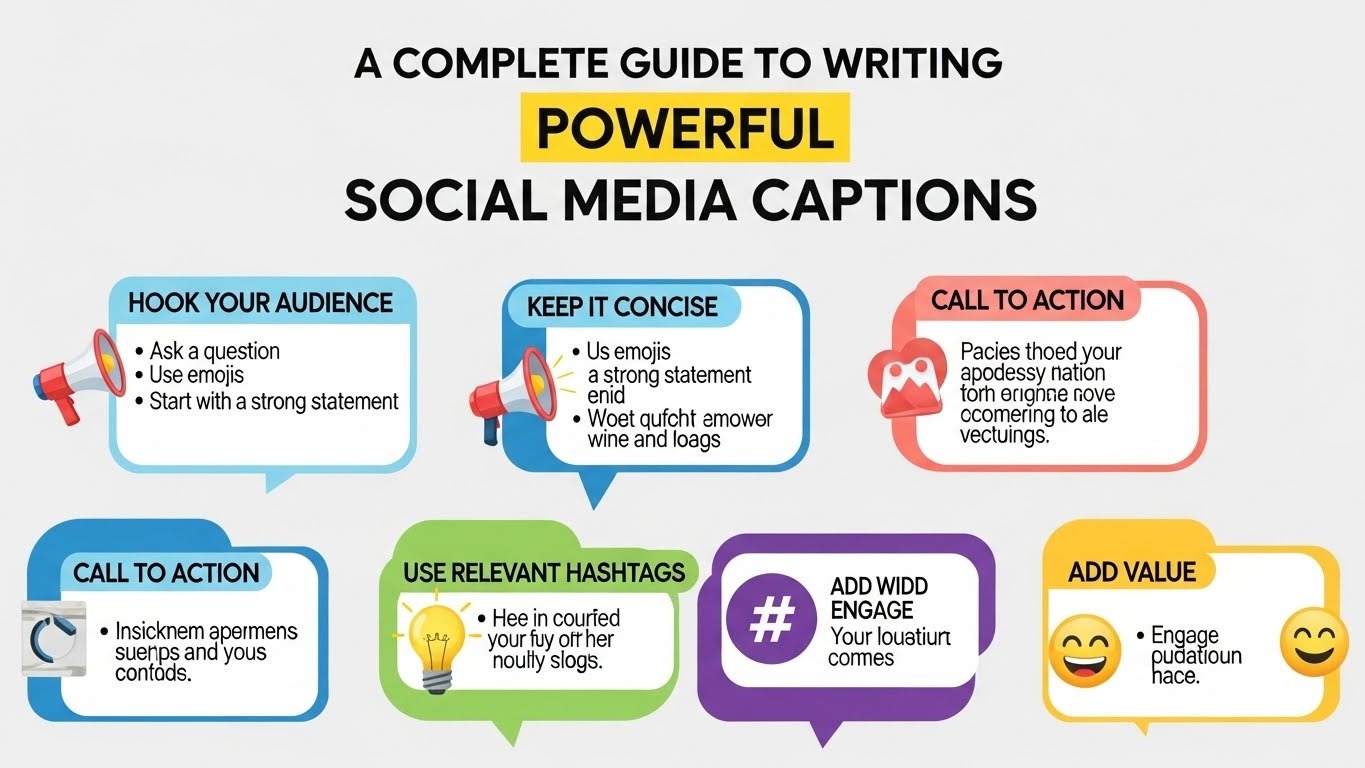
What Are Social Media Captions and Why Do They Matter?
Short answer: Social media captions are the text that accompanies a post and explains, persuades, or prompts action. They directly influence reach, engagement, and conversions.
Scroll through any social platform and one thing becomes clear. Images stop the scroll, but captions drive the outcome. A post without context often gets ignored. A post with a clear, relatable, and purposeful caption invites people to react, comment, save, or click.
Social media captions are not filler text. They are a strategic communication tool. According to multiple platform studies, posts with well-structured captions receive up to 30–45% higher engagement compared to posts with generic or unclear text. This is not about being clever. It is about being understood.
From brands to creators, captions act as the bridge between content and audience intent. A strong caption clarifies the message, sets expectations, and tells the reader what to do next. Without that clarity, even high-quality visuals underperform.
This guide breaks down how to write social media captions that work across platforms using proven frameworks, real data, and practical examples. No fluff. No trends that fade. Just a repeatable caption strategy you can apply today.
Why Do Most Social Media Captions Fail to Drive Engagement?
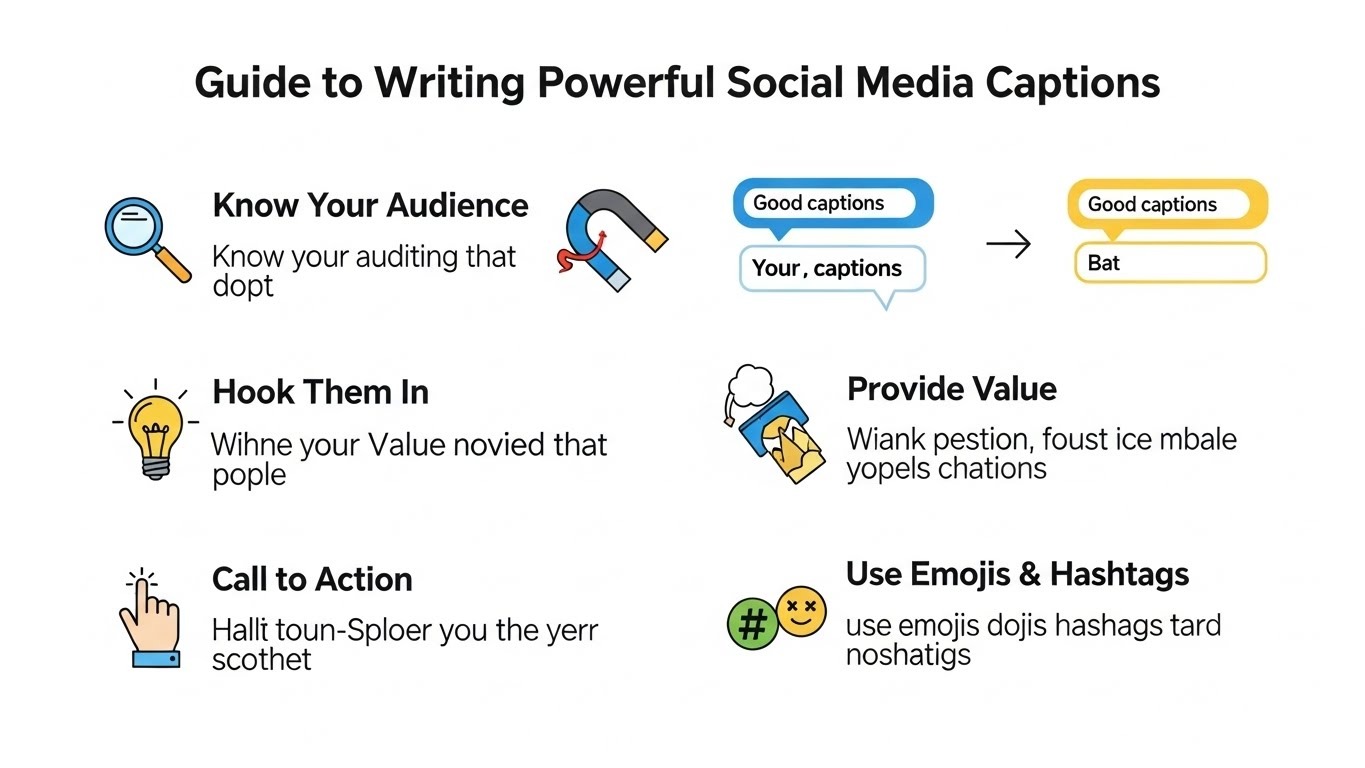
Short answer: Most captions fail because they focus on the brand, not the reader.
The biggest problem with social media captions is not length, grammar, or hashtags. It is relevance. Many captions talk at people instead of talking with them. They describe features instead of outcomes. They post information instead of starting conversations.
Here are common reasons captions fail:
- No clear point or takeaway
- Weak or missing hook in the first line
- Overuse of generic phrases
- No call to action
- Trying to sound smart instead of useful
Data from Facebook and Instagram insights consistently shows that posts with a clear opening line and a direct CTA generate higher comment rates. When captions start with vague statements, people scroll. When captions speak to a problem they recognize, they pause.
Captions fail when they are written as an afterthought. Effective social media content writing treats captions as part of the content, not a caption box to fill.
What Is a Caption Strategy and How Does It Improve Results?
Short answer: A caption strategy is a repeatable system for writing captions that align with goals, audience needs, and platform behavior.
A caption strategy removes guesswork. Instead of asking “What should I write today?”, you follow a structure based on intent.
An effective caption strategy answers three questions every time:
- Who is this for?
- What problem or desire does it connect to?
- What action should the reader take?
Brands that use documented content strategies are more likely to report consistent engagement growth. One case study from a mid-sized ecommerce brand showed a 38% increase in saves and comments after standardizing caption formats across Instagram and LinkedIn.
This happened without changing visuals. Only the captions changed.
Social media captions work best when they are intentional, not improvised.
How Does the PAS Framework Apply to Social Media Captions?
Short answer: PAS works by highlighting a problem, intensifying it, and offering a clear solution in the caption.
The PAS framework stands for Problem, Agitation, Solution. It is widely used in copywriting because it mirrors how people process information.
Problem
Start by naming a problem your audience already feels. This earns attention.
Example: “Posting every day but getting no comments?”
Agitation
Show why the problem matters. Add consequences or frustration.
Example: “That usually means your captions are explaining, not connecting.”
Solution
Offer a clear, practical solution.
Example: “Here’s a simple caption structure that increases replies.”
Short-form platforms reward clarity. PAS keeps captions focused and relevant without sounding promotional.
How Long Should Social Media Captions Be for Maximum Impact?
Short answer: The ideal length depends on the platform, but clarity matters more than word count.
Platform data shows different behaviors:
- Instagram: Medium to long captions (70–150 words) perform well when structured
- LinkedIn: Long-form captions (150–300 words) outperform short posts for saves
- Facebook: 40–80 words with a strong hook works best
- X (Twitter): Short, focused captions under 200 characters
The key is scannability. Short sentences. Line breaks. One idea per line.
Effective social media content writing respects attention spans without oversimplifying the message.
What Role Do Hooks Play in Social Media Captions?
Short answer: Hooks determine whether the caption gets read at all.
The first line of a caption is the most important line. On most platforms, it appears before the “more” button.
Strong hooks often:
- Ask a direct question
- Challenge a common belief
- Highlight a specific outcome
- Call out a mistake
Example comparison:
| Weak Hook | Strong Hook |
|---|---|
| Social media captions are important | Your posts fail because your captions do not guide action |
Hooks are not clickbait. They are clarity statements.
How Do CTAs Improve Caption Performance?
Short answer: Clear CTAs tell readers what to do next, increasing engagement signals.
Captions without CTAs rely on guesswork. Readers might like the post but not act.
Effective CTAs include:
- “Comment your experience”
- “Save this for later”
- “Share with your team”
- “Follow for more practical tips”
A/B tests on Instagram business accounts show that posts with explicit CTAs generate up to 20% more interactions.
CTAs are not pushy. They are directional.
How Can Brands Maintain Consistency in Social Media Content Writing?
Short answer: By documenting tone, structure, and intent.
Consistency builds familiarity. Familiarity builds trust.
Create a simple caption guide that defines:
- Preferred sentence length
- Use of emojis or no emojis
- CTA style
- Common opening formats
Brands that maintain consistent voice across captions report stronger audience retention. This is especially visible on LinkedIn and Instagram.
How Do You Measure the Effectiveness of Social Media Captions?
Short answer: Measure behavior, not likes alone.
Key metrics to track:
- Comments and replies
- Saves and bookmarks
- Profile visits
- Link clicks
One case study from a creator-led brand showed that optimizing captions for saves increased reach by 27% over 60 days due to algorithm signals.
Good captions create signals platforms reward.
Conclusion: How Can You Start Writing Better Social Media Captions Today?
Powerful social media captions are not about writing more. They are about writing with purpose.
When captions focus on real problems, use clear structure, and guide action, they become a growth tool. Not decoration.
You do not need to reinvent your content. You need to refine how you communicate it.
Start with one change. Add stronger hooks. Use PAS. End with a clear CTA. Track what works.
Call to Action: Review your last five posts. Rewrite the captions using one clear problem, one insight, and one action. Then measure the difference.
Frequently Asked Questions About Social Media Captions
What makes a good social media caption?
A good caption is clear, relevant, and action-oriented. It speaks to a specific audience problem and guides the next step.
How often should I change my caption strategy?
Review performance monthly. Adjust structure based on engagement trends, not daily fluctuations.
Do hashtags still matter in social media captions?
Yes, but they support discovery. Captions drive engagement first.
Can long captions hurt engagement?
No, if they are structured. Poor formatting hurts more than length.
Should captions be the same across platforms?
No. Adapt tone and length to platform behavior.
Are emojis necessary in captions?
No. Use them only if they fit your brand voice.
How long does it take to see results from better captions?
Most accounts notice engagement shifts within 2–4 weeks.
Related Topics: Stunning Instagram Feeds That Redefine Visual Storytelling
Related Topics: Top 5 Myths About AI Receptionists – Busted!