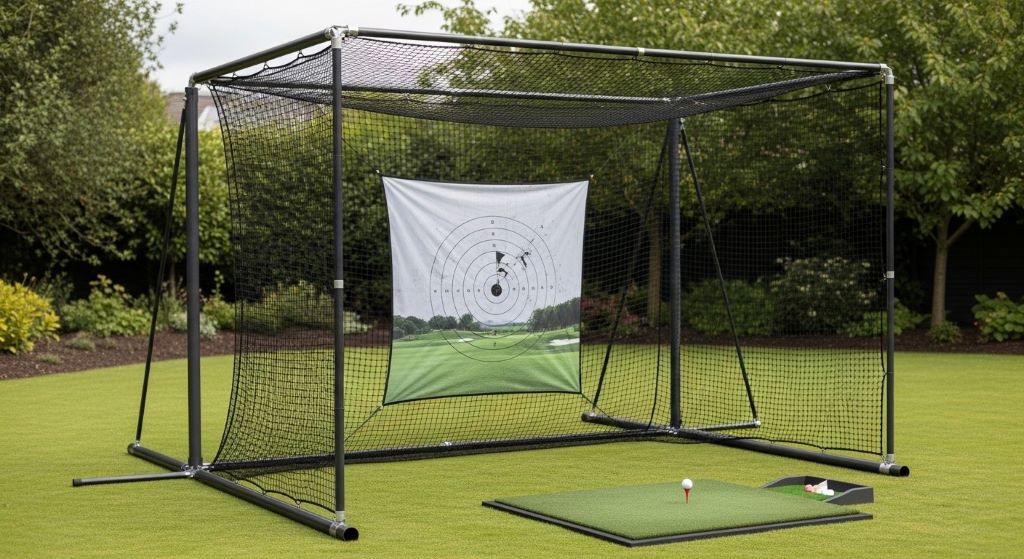
Practicing golf at home has become increasingly popular among players who want to improve their game without constantly visiting the driving range. A quality golf net allows you to work on your swing, practice different shots, and build muscle memory right in your backyard. However, choosing the wrong net can lead to frustration, wasted money, and potentially dangerous situations.
Many golfers rush into purchasing a practice net without fully understanding what they need. They focus on price alone or pick the first option that looks appealing online. Unfortunately, this approach often results in buying equipment that doesn’t fit their space, can’t handle their swing speed, or lacks essential safety features.
This comprehensive guide will walk you through everything you need to know when using a buying guide to select the perfect golf net. You’ll learn how to avoid the most common purchasing mistakes and ensure your investment delivers years of productive practice sessions. By understanding what to look for and what questions to ask, you’ll make an informed decision that matches your specific needs and budget.
Understanding Your Practice Space
Before diving into product specifications, you need to thoroughly assess where you plan to use your golf net. This step is crucial yet frequently overlooked by eager buyers. Many people purchase a net only to discover it doesn’t fit their intended location or creates safety hazards they hadn’t considered.
Measure your available space carefully in three dimensions: width, height, and depth. Don’t just estimate these measurements. Use a tape measure and write down the exact numbers. Consider not only the net itself but also the clearance you’ll need around it for safe swinging.
Think about ceiling height if you’re planning indoor installation. Your full swing creates an arc that extends well above your head. Additionally, mishit balls can fly upward at steep angles. Insufficient ceiling clearance leads to damaged ceilings, light fixtures, and potentially dangerous ricochets.
Outdoor spaces present different challenges. Consider wind conditions in your area, as strong gusts can move or damage nets that aren’t properly secured. Think about neighbors, windows, and other property that could be at risk if a ball somehow gets past your net. Evaluate whether you have adequate room behind the net for the ball to decelerate safely.
Ground surface matters more than many buyers realize. Grass, concrete, artificial turf, and other surfaces affect both net stability and the type of mat or platform you’ll need. Some nets require stakes or anchors that won’t work on certain surfaces.
Decoding Size Specifications
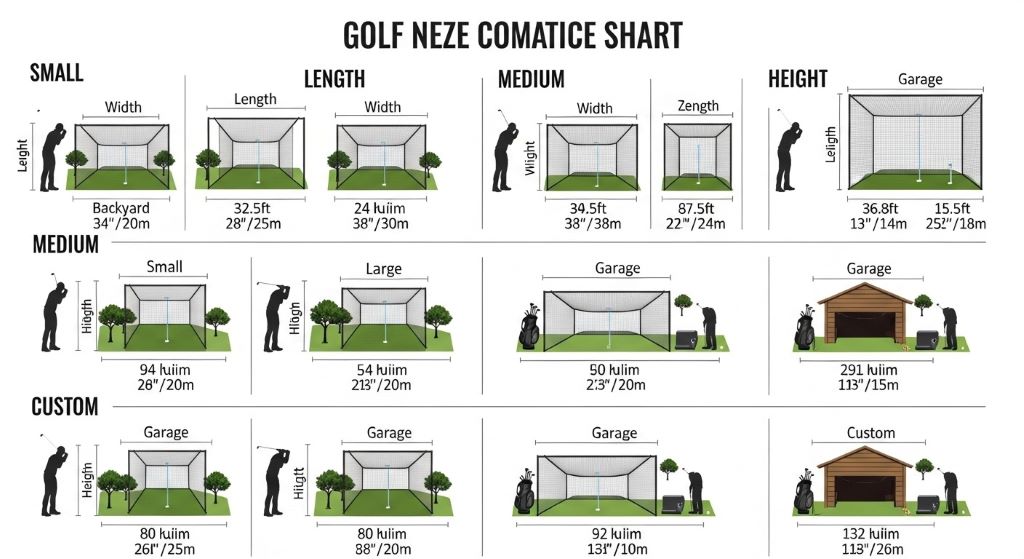
One of the most critical aspects covered in any net size guide involves understanding how manufacturers specify dimensions and what those numbers actually mean for your practice sessions. Misunderstanding size specifications leads to one of the most common and frustrating purchasing mistakes.
Net dimensions are typically listed as width by height. However, these measurements can be deceiving. The stated size often represents the maximum frame dimensions, not the actual catching area. The netting itself may be smaller than the frame, and you need to account for this difference when evaluating whether a net will work for your needs.
Consider the target zone within the net. This is the area where balls should ideally impact. Most manufacturers recommend aiming for the center of the net to maximize safety and extend the net’s lifespan. Therefore, even if a net measures ten feet wide, your effective target zone might only be six or seven feet across.
Depth is another crucial dimension that buying guides sometimes underemphasize. A deeper net provides more space for the ball to decelerate, reducing wear on the netting and minimizing the chance of balls bouncing back toward you. Shallow nets work for short game practice but may not safely stop full-swing shots, especially from stronger players.
Your skill level and typical miss patterns should influence size decisions. Beginners tend to hit more errant shots across a wider area. Therefore, they generally benefit from larger nets that offer more forgiveness. Advanced players with consistent ball striking can often use smaller nets effectively.
Evaluating Construction Quality
The durability and safety of your golf net depend entirely on how well it’s constructed. Unfortunately, construction quality isn’t always obvious from product photos or basic descriptions. Learning what to look for helps you identify nets that will last versus those that will fail prematurely.
Frame material determines both stability and longevity. Steel frames offer excellent durability but add significant weight. Fiberglass frames provide good strength while remaining lighter and more portable. Aluminum frames split the difference between weight and strength. Plastic frames are the lightest but typically can’t handle heavy use or strong impacts.
Connection points where the frame sections join together are common failure points. Look for reinforced joints, thick-walled tubing, and secure locking mechanisms. Cheap nets often use thin metal and simple friction-fit connections that loosen over time or break under stress.
Net material varies significantly across different products. Most quality golf nets use nylon or polyester in various thicknesses and weave patterns. Thicker material and tighter weaves generally mean better durability. However, extremely tight weaves can actually be less effective at absorbing impact energy.
Edge reinforcement prevents the netting from tearing at attachment points. Quality nets feature double or triple stitching around edges and grommets that distribute stress across a wider area. Without proper reinforcement, nets can tear away from frames during normal use.
Weather resistance matters for outdoor nets. UV-resistant materials prevent degradation from sun exposure. Water-resistant or waterproof coatings protect against moisture damage. If you plan to leave your net set up outdoors long-term, these features become essential rather than optional.
Identifying Essential Golf Net Features
Understanding which golf net features actually matter versus which are just marketing gimmicks saves you from paying for unnecessary add-ons while ensuring you don’t miss crucial elements. Buying guides should clearly explain the purpose and value of each feature.
Target systems help you focus your practice and track improvement. Basic targets might be simple printed zones on the net. Advanced systems include separate target curtains or electronic sensors that provide feedback. Consider whether you’ll actually use target features or if they’re unnecessary complexity for your goals.
Ball return systems automatically send balls back toward you after they hit the net. This convenience feature eliminates constant walking to retrieve balls. However, these systems add cost and complexity. Evaluate whether the convenience justifies the expense based on your practice habits and the number of balls you typically hit per session.
Side netting or wings extend protection beyond the main net face. They catch shots that miss wide, preventing balls from flying into areas where they could cause damage or get lost. For golfers with inconsistent accuracy, side protection provides valuable peace of mind and reduces ball loss.
Portability features determine how easily you can move and store your net. Pop-up designs set up and break down quickly but typically sacrifice some stability and durability. Traditional frame nets are more stable but require more assembly time. Consider how often you’ll need to move or store your net when evaluating portability features.
Compatibility with hitting mats is sometimes overlooked. Some nets come with integrated mat systems or specific mat recommendations. Others work with any mat. Ensure that your hitting surface and net work together effectively, particularly regarding height relationships and overall footprint.
Avoiding Assembly and Setup Problems
Many buyers focus entirely on the finished product without considering the assembly process. Complex assembly procedures or poorly written instructions lead to frustration, incorrect setup, and potentially unsafe installations. Smart shoppers research these aspects before purchasing.
Assembly time varies dramatically between different net designs. Some pop-up nets deploy in minutes, while frame-based systems might require an hour or more for initial setup. Consider your mechanical aptitude and patience level honestly. A net that sits unused because assembly was too frustrating provides zero value.
Tool requirements should be clear in product descriptions. Some nets need only basic tools like a Phillips screwdriver. Others require specialized tools or additional hardware not included with the product. Discovering you need tools you don’t own after the net arrives delays your ability to start practicing.
Instruction quality makes a huge difference in assembly success. Look for products with clear, illustrated instructions or video tutorials. Customer reviews often mention instruction quality, so pay attention to comments about assembly difficulties or confusing documentation.
Anchoring requirements depend on where and how you’ll use your net. Outdoor nets typically need ground stakes or weighted bases to remain stable. Indoor nets might use friction-fit bases or require attachment to walls or ceilings. Make sure you understand and can accommodate the anchoring system before purchasing.
Adjustment mechanisms allow you to modify net tension, angle, or position. High-quality adjustment systems let you fine-tune the net for optimal performance. Poorly designed adjustments become loose over time or require tools to change. Test or research how adjustments work to ensure they’ll meet your needs.
Understanding Price Versus Value
Price is often the first specification buyers look at, but focusing solely on cost leads to poor decisions. Understanding the relationship between price and actual value helps you spend your money wisely, whether you’re on a tight budget or willing to invest in premium equipment.
Budget nets under two hundred dollars serve casual players who practice occasionally. They typically use lighter materials, simpler designs, and smaller catching areas. For golfers hitting a few balls once or twice per week, these nets often provide adequate performance despite their limitations.
Mid-range nets between two hundred and five hundred dollars offer significant improvements in durability, size, and features. They’re built to withstand regular use by serious recreational golfers. This price range typically delivers the best overall value for golfers who practice multiple times per week.
Premium nets exceeding five hundred dollars cater to advanced players, high-speed swingers, and those wanting professional-grade equipment. They feature superior materials, larger sizes, and advanced features. While expensive, they often last many years longer than cheaper alternatives, potentially making them more economical long-term.
Hidden costs can significantly impact your total investment. Consider whether you need to purchase additional items like hitting mats, target systems, ball return mechanisms, or weighted anchors separately. Some lower-priced nets require more add-ons, while premium options include more components.
Warranty coverage provides insight into manufacturer confidence and customer support quality. Longer warranties typically indicate better construction and materials. However, warranty terms matter as much as length. Read the fine print to understand what’s covered, how claims are processed, and whether shipping costs fall on you or the manufacturer.
Matching Net Characteristics to Your Game
Your personal playing style, skill level, and practice goals should drive your net selection more than any other factors. A net perfect for one golfer might be completely wrong for another, even if they have similar handicaps.
Swing speed directly impacts the forces your net must withstand. Players with slower swing speeds can safely use lighter nets with less robust construction. However, if you regularly generate clubhead speeds above 100 mph, you need a net specifically designed to handle high-velocity impacts.
Shot trajectory affects which net designs work best for you. High ball flight requires taller nets and more overhead clearance. Players who tend to hit low, piercing shots need nets with sufficient depth to safely stop balls before they rebound. Analyze your typical shot patterns honestly when evaluating net specifications.
Practice objectives determine which features matter most. If you’re working on full swing mechanics, a large net without extra features may be ideal. Conversely, if you’re focused on precision and shot shaping, investing in target systems and feedback mechanisms might be worthwhile.
Physical limitations should influence your choice. Seniors or those with mobility issues benefit from nets with ball return systems that minimize bending and walking. Players with limited space need highly portable or compact designs that store efficiently when not in use.
Family use considerations come into play if multiple household members will use the net. Children need different specifications than adults. Ensure the net you choose accommodates all intended users safely. This might mean choosing a larger size or more forgiving design than you’d select for yourself alone.
Learning from Others’ Experiences
Customer reviews and user experiences provide invaluable real-world information that manufacturer specifications can’t capture. However, not all reviews are equally useful. Learning to extract meaningful insights from others’ experiences helps you avoid their mistakes.
Look for reviews from golfers similar to you in terms of skill level, swing speed, and practice frequency. Someone who hits fifty balls per week will have different experiences than someone hitting five hundred. A senior player’s review may not apply to a young, aggressive swinger.
Pay attention to long-term durability reports rather than initial impressions. Many nets perform well initially but develop problems after several months of use. Reviews posted six months or a year after purchase provide more accurate assessments of true product quality and longevity.
Identify common complaints across multiple reviews. One person experiencing an issue might represent a fluke, but if many users report the same problem, it’s likely a genuine design flaw or limitation. Recurring themes in negative reviews reveal weaknesses you should take seriously.
Consider the reviewer’s context and use case. A review complaining about portability from someone using the net in a permanent outdoor setup provides little useful information for someone needing frequent mobility. Filter reviews based on how similar the reviewer’s situation is to yours.
Manufacturer responses to reviews demonstrate customer service quality and company attitude. Companies that respond helpfully to complaints and work to resolve issues inspire more confidence than those that ignore feedback or become defensive. This insight into post-purchase support can be just as valuable as product information.
Making the Final Decision
After gathering all this information, you still need to synthesize it into a confident purchase decision. This final step involves weighing competing priorities and accepting that no perfect solution exists for everyone.
Create a prioritized list of your must-have features, nice-to-have features, and features you don’t need. This list keeps you focused on what truly matters for your situation rather than getting distracted by impressive-sounding but irrelevant specifications.
Compare your top three or four choices side by side using a simple chart or spreadsheet. List the key specifications and features that matter to you, then fill in how each option performs in those categories. This visual comparison often reveals a clear winner or highlights trade-offs you need to make.
Consider future needs alongside current requirements. Will you be practicing more frequently as you improve? Might family members start using the net? Are you planning to move to a home with more space? Anticipating changes helps you avoid outgrowing your net quickly.
Factor in opportunity costs of choosing cheaper options. Saving two hundred dollars on a net that fails after a year costs more in the long run than buying a durable option initially. Similarly, buying an inadequately sized net means you’ll need to upgrade later, essentially paying twice.
Trust your research and instincts once you’ve done thorough homework. Analysis paralysis helps no one. At some point, you’ve gathered enough information to make a well-informed decision. Choose the net that best matches your priorities and start practicing.
Conclusion
Selecting the right golf net requires careful consideration of multiple factors beyond simple price comparisons. Understanding your practice space dimensions, decoding size specifications in any net size guide you consult, and evaluating construction quality all play crucial roles in making a smart purchase decision.
Recognizing essential golf net features while avoiding unnecessary add-ons helps you get the best value for your budget. Taking time to research assembly requirements, understand price versus value relationships, and match net characteristics to your specific game ensures your investment serves you well for years.
Learning from other golfers’ experiences through reviews and carefully considering how you’ll actually use the net prevents common mistakes that lead to buyer’s remorse. The key is gathering comprehensive information, prioritizing features that matter to you personally, and making a decision based on your unique needs rather than generic recommendations.
A well-chosen golf net becomes an invaluable tool for improvement, offering convenient practice opportunities that accelerate skill development. By following this guide and avoiding common purchasing mistakes, you’ll select equipment that enhances your game rather than gathering dust in the garage. Take your time, do your research, and invest wisely in a net that matches your goals and circumstances perfectly.
Frequently Asked Questions
What size golf net do I need for full swing practice?
For full swing practice, most golfers need a net at least ten feet wide and ten feet tall, though larger is better for added safety and forgiveness. Consider your ceiling height for indoor use, allowing at least twelve feet of clearance. Additionally, ensure you have adequate depth behind the net, ideally eight to ten feet, for proper ball deceleration. Beginners or those with inconsistent ball striking should opt for larger nets that provide more margin for error.
How do I know if a golf net can handle my swing speed?
Check the manufacturer’s specifications for maximum swing speed or ball velocity ratings. Quality nets designed for full swings should safely handle speeds up to 120 mph or higher. If you have a particularly fast swing, look for nets specifically marketed to advanced players or those reinforced for high-impact use. Customer reviews from players with similar swing characteristics can also provide insight into real-world performance.
Can I leave my golf net set up outdoors permanently?
While some nets are designed for outdoor use, leaving any net permanently exposed to weather will shorten its lifespan. Look for nets with UV-resistant materials and weather-resistant coatings if you plan outdoor use. However, even these should be brought indoors during severe weather or when not in use for extended periods. Alternatively, invest in a weather cover designed specifically for golf nets to provide additional protection.
What’s the difference between a golf net and a cage system?
Golf nets are typically open-backed systems that catch balls in netting, while cage systems enclose you within a frame covered by netting on multiple sides, including above. Cages provide more comprehensive protection from errant shots and are better for indoor use or situations where space surrounds your hitting area. However, they’re more expensive, require more space, and take longer to set up than simple nets.
Do I need to buy a hitting mat along with my golf net?
Yes, you should use a proper golf hitting mat with your net to protect both your clubs and the ground surface. Hitting off concrete, dirt, or regular grass without a quality mat will damage your clubs and create inconsistent practice conditions. Many nets are sold as packages that include compatible mats, which ensures proper sizing and integration. If buying separately, measure your available space and ensure the mat complements your net setup.
Related Topics:
Top-Rated Irons, Drivers, and Putters: The Best Golf Clubs of 2025
Best Golf Clubs for NYC Players Top Picks & Local Stores Reviewed