
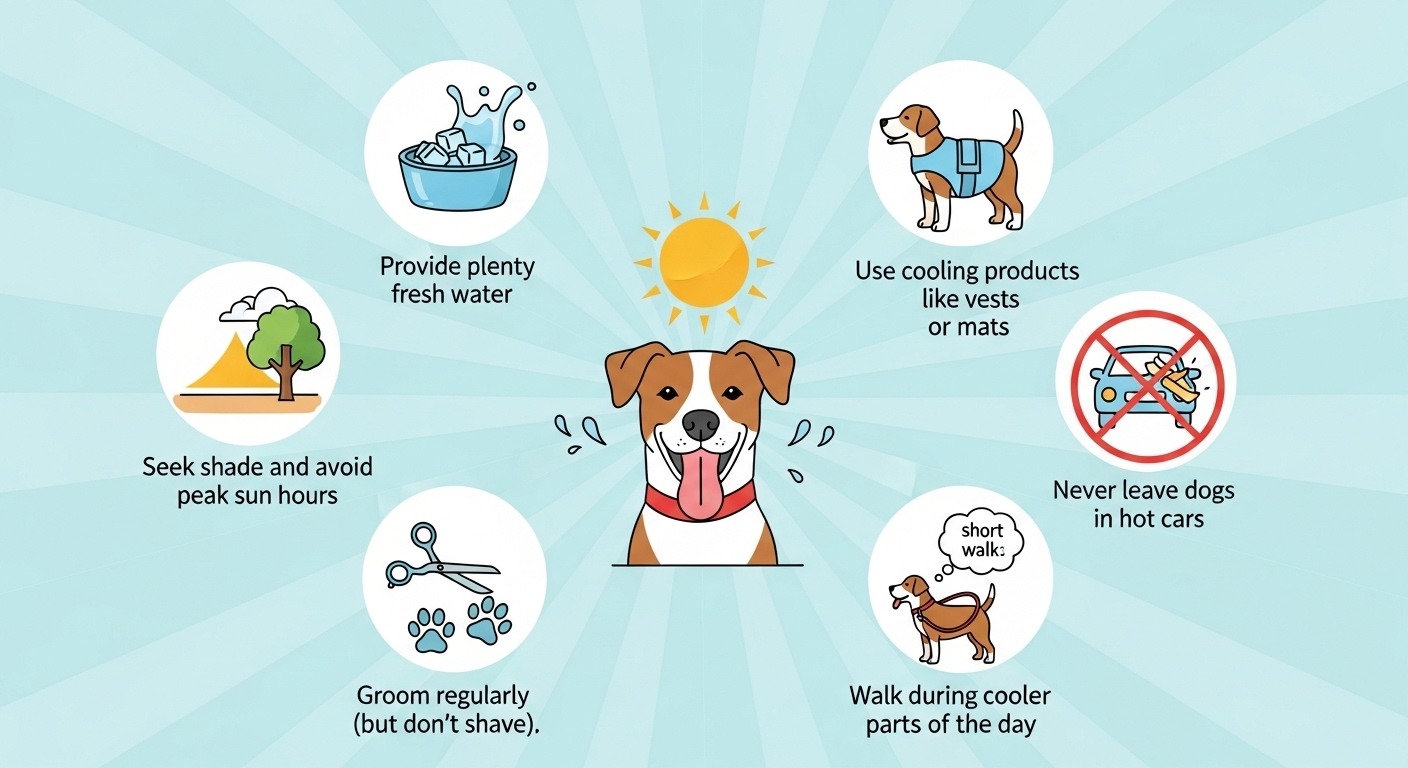
Every summer, thousands of dogs suffer from heat exhaustion and heatstroke. Unlike humans, dogs cannot regulate body temperature efficiently through sweating. They rely mostly on panting and limited sweat glands in their paws. When temperatures rise quickly, this cooling system can fail.
According to veterinary data from the Royal Veterinary College, heatstroke in dogs has a fatality rate of around 14%. Many of these cases happen during routine summer activities such as walks, car rides, or backyard play.
This is why dog heatstroke prevention should be a top priority for every pet owner. Simple mistakes—like walking a dog during peak heat or leaving them in a parked car—can quickly become life-threatening situations.
The good news is that heat-related illness in dogs is largely preventable. With proper dog summer care tips, awareness of warning signs, and a few practical habits, you can keep your dog safe even during extreme heat.
This guide explains how dogs overheat, what symptoms to watch for, and the most effective ways to prevent heatstroke during hot weather.
Why Do Dogs Overheat So Easily in Hot Weather?
Short answer: Dogs overheat because they cannot sweat like humans and rely mainly on panting to regulate body temperature.
Dogs maintain an average body temperature between 101°F and 102.5°F. When external temperatures rise above their comfort zone, their bodies struggle to cool down effectively.
Unlike humans who sweat through millions of pores, dogs only sweat minimally through their paw pads. Their primary cooling mechanism is panting. Panting helps evaporate moisture from the tongue and respiratory tract, releasing heat.
However, this system has limits.
If the surrounding air is too hot or humid, panting becomes ineffective. Body temperature rises quickly, and the dog may develop heat exhaustion or heatstroke.
Several factors increase overheating risk:
- High humidity levels
- Direct sunlight exposure
- Intense physical activity
- Poor ventilation
- Limited access to water
Certain breeds are especially vulnerable:
- Bulldogs
- Pugs
- French Bulldogs
- Boxers
These are called brachycephalic breeds. Their shorter snouts restrict airflow, making cooling through panting more difficult.
Older dogs, overweight dogs, and puppies also have higher risk.
What Temperature Is Dangerous for Dogs?
Short answer: Temperatures above 85°F can become dangerous for many dogs, especially during physical activity or high humidity.
Dogs tolerate moderate heat better when shade and water are available. However, risk increases rapidly as temperatures climb.
| Temperature | Risk Level for Dogs |
|---|---|
| Below 75°F | Generally safe for outdoor activity |
| 75°F – 85°F | Moderate risk during exercise |
| 85°F – 95°F | High risk of overheating |
| Above 95°F | Extreme danger for heatstroke |
Humidity plays a major role as well. High humidity prevents effective evaporation during panting, which speeds up overheating.
For example, a temperature of 85°F with 70% humidity can feel significantly hotter for dogs.
This is why veterinarians often recommend limiting outdoor exercise during midday hours.
What Are the Early Signs of Heatstroke in Dogs?
Short answer: Early signs include excessive panting, drooling, weakness, vomiting, and difficulty walking.
Recognizing symptoms early is critical for dog heatstroke prevention. Heatstroke can escalate quickly within minutes.
Early warning signs include:
- Rapid, heavy panting
- Bright red gums
- Excessive drooling
- Restlessness or anxiety
- Increased heart rate
If overheating continues, more severe symptoms appear:
- Vomiting or diarrhea
- Weakness or collapse
- Confusion
- Seizures
- Loss of consciousness
When a dog’s body temperature reaches 104°F or higher, heatstroke becomes life-threatening.
Immediate cooling and veterinary treatment are required.
How Can You Prevent Dogs From Overheating During Summer?
Short answer: Prevent overheating by limiting exercise during hot hours, providing shade and water, and monitoring your dog closely.
Preventive care is the most effective strategy. Many heatstroke cases happen during normal summer routines.
1. Walk Dogs During Cooler Hours
The safest times for walks are:
- Early morning
- Late evening
Avoid walking dogs between 10 AM and 4 PM when temperatures peak.
Hot pavement can burn paw pads. If you cannot hold your hand on the pavement for five seconds, it is too hot for your dog.
2. Provide Constant Access to Fresh Water
Hydration is critical during summer.
Dogs lose moisture through panting. Without enough water, body temperature rises faster.
Best practices include:
- Keeping multiple water bowls indoors and outdoors
- Refilling water frequently
- Adding ice cubes during extreme heat
Portable dog water bottles are useful during walks and travel.
3. Create Cool Shaded Areas
Dogs spending time outdoors should always have shade.
Effective cooling options include:
- Covered patios
- Dog cooling mats
- Shaded trees
- Ventilated dog houses
Direct sunlight dramatically increases heat absorption in a dog’s body.
4. Never Leave Dogs in Parked Cars
This is one of the most dangerous situations.
Research from Stanford University shows that a parked car can reach 104°F in just 10 minutes on a warm day.
Even with windows slightly open, temperatures rise rapidly.
Dogs trapped in cars can suffer fatal heatstroke within minutes.
5. Use Cooling Products for Dogs
Modern pet products can significantly help during hot weather.
Examples include:
- Cooling vests
- Cooling mats
- Elevated dog beds
- Cooling bandanas
These products help regulate body temperature and reduce overheating risk.
Which Dogs Are Most At Risk of Heatstroke?
Short answer: Brachycephalic breeds, overweight dogs, elderly dogs, and puppies are most vulnerable to heatstroke.
Research analyzing over 900 heatstroke cases in dogs found that certain breeds had significantly higher risk.
High-risk groups include:
- Flat-faced breeds (pugs, bulldogs)
- Overweight dogs
- Dogs with thick coats
- Senior dogs
- Puppies
These dogs should have stricter heat precautions.
Even moderate summer temperatures can become dangerous for them.
What Should You Do If a Dog Shows Signs of Heatstroke?
Short answer: Move the dog to a cool area immediately, begin gradual cooling, and contact a veterinarian.
Quick action can save a dog’s life.
Follow these emergency steps:
- Move the dog into shade or air conditioning
- Offer small amounts of cool water
- Apply cool (not ice-cold) water to the body
- Use fans to increase airflow
- Transport the dog to a vet immediately
Avoid ice baths. Rapid cooling can cause shock.
The goal is gradual temperature reduction while seeking professional medical care.
Read More Also: Why Is My Garage Door So Loud? Causes and Fixes
Up Next: How to Choose the Best 4 Burner Gas Grill for Backyard Cooking
Conclusion
Hot weather can be dangerous for dogs, but heatstroke is largely preventable with the right awareness and preparation.
Understanding how dogs regulate temperature is the first step. Because dogs rely on panting rather than sweating, their cooling system can quickly become overwhelmed in hot conditions.
Simple habits—like walking during cooler hours, ensuring constant access to water, and providing shaded resting areas—can dramatically reduce risk.
Equally important is recognizing early warning signs such as excessive panting, drooling, and weakness. Early intervention can prevent a minor overheating episode from becoming a life-threatening emergency.
Responsible dog heatstroke prevention is part of essential dog summer care tips that every pet owner should follow.
If you want to keep your dog healthy and active throughout the summer, start implementing these safety strategies today. Share this guide with other dog owners and help spread awareness about protecting pets during extreme heat.
Frequently Asked Questions
Can dogs get heatstroke indoors?
Yes. Dogs can experience heatstroke indoors if ventilation is poor or indoor temperatures become too high. Homes without air conditioning can reach dangerous levels during heat waves.
How long does it take for a dog to overheat?
A dog can begin overheating within 10–15 minutes in extreme heat, especially during physical activity or when trapped in a hot environment such as a car.
Are long-haired dogs more likely to overheat?
Dogs with thick double coats can retain heat more easily. However, coat length alone does not determine risk. Breed type, weight, and age also play major roles.
Should dogs be shaved during summer?
Not always. Many breeds rely on their coats for insulation from heat. Shaving double-coated breeds can disrupt natural temperature regulation.
Is cold water safe for cooling overheated dogs?
Cool water is safe, but ice-cold water should be avoided. Rapid cooling can cause shock. Gradual cooling is safer.
How much water should a dog drink in hot weather?
Dogs typically need about one ounce of water per pound of body weight daily, but they may require more during hot weather or exercise.