Being a digital nomad means you live life on your own terms. You work from beaches, mountain towns, and riverside cafes. So why not fish while you are at it? Fishing is one of the most peaceful hobbies you can carry with you. However, not every rod is built for life on the road. Choosing the right one takes a little thought.
This guide will help you find a fishing rod that fits your nomadic lifestyle. You will learn what features matter most, what to avoid, and how to make the most of your gear no matter where your laptop takes you.
Why Fishing and the Digital Nomad Life Go Together
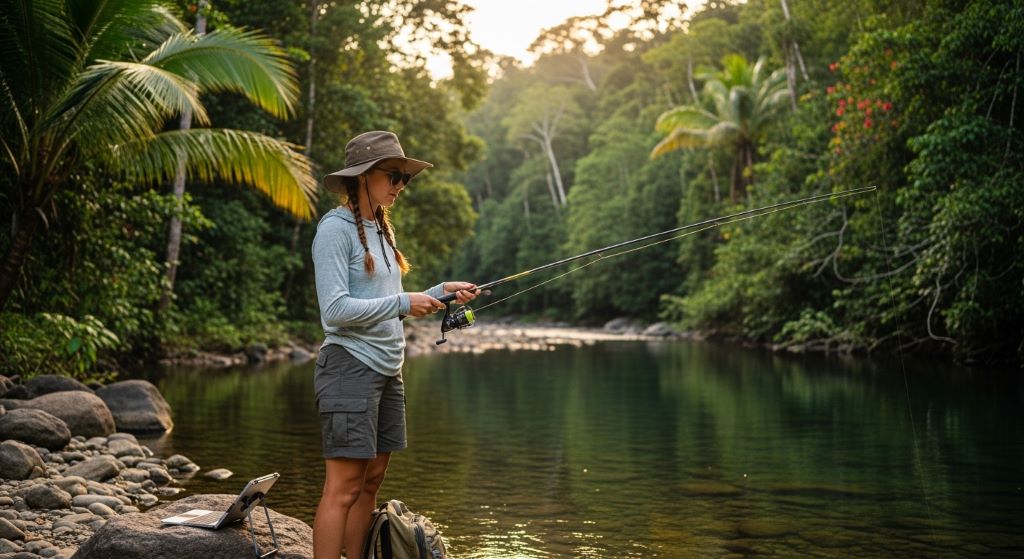
Think about it. You already work near water. Many popular nomad destinations — Bali, Portugal, Thailand, Colombia — are filled with rivers, lakes, and coastlines. Fishing gives you a reason to step away from your screen. It clears your head and connects you to a place in a way no coffee shop ever will.
Additionally, fishing is a low-cost hobby once you have the right gear. You do not need a boat or expensive equipment. A simple rod and a bit of local knowledge can get you started almost anywhere. Therefore, it makes perfect sense for nomads to add fishing to their travel toolkit.
The Most Important Feature: Portability
When you live out of a backpack or a single suitcase, every item earns its place. A full-length fishing rod simply does not work for most nomads. It is too long, too fragile, and too awkward to carry through airports.
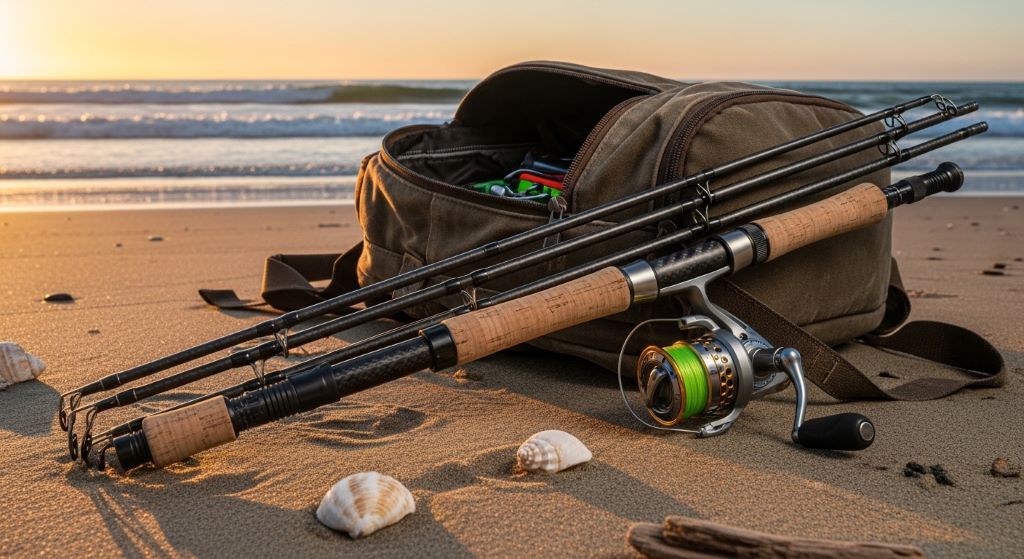
This is where travel fishing gear becomes essential. Look for rods that break down into four, five, or even six pieces. These are called multi-piece or telescopic rods. When packed, they can fit inside your bag or strap onto the outside without any trouble.
A good travel rod should pack down to around 18 to 24 inches. That is small enough to fit in most carry-on luggage. Some rods even come with a protective tube or sleeve, which is a huge bonus when you are hopping between countries.
Understanding Rod Materials
The material of your rod affects everything — how it feels, how it casts, and how long it lasts.
Graphite rods are the most popular choice for traveling anglers. They are stiff, sensitive, and very responsive. You can feel even the lightest nibble. However, they can be brittle if handled roughly, so pack them with care.
Fiberglass rods are more flexible and nearly unbreakable. They are great for beginners or for fishing in rugged conditions. The downside is that they are heavier and less sensitive than graphite.
Composite rods combine both materials. They offer a good balance of sensitivity and durability. For nomads who want one rod that handles a variety of fish and environments, composite is often the smartest pick.
Why Lightweight Rods Matter for Travel
Weight adds up fast when you travel full time. Every gram counts, especially if you fly often or cycle between destinations. Choosing lightweight rods is not just a comfort choice — it is a practical one.
Most quality travel rods weigh between two and five ounces. That might not sound like much, but when you compare it to heavier options, the difference is real. A lighter rod is also less tiring to use over a long day of fishing.
Beyond weight, a lighter rod tends to be more sensitive. You will notice movements in the water more easily. That means more fun and more fish.
Choosing the Right Rod Length and Power
Rod length affects how far you can cast and how well you can control your line. For general travel fishing, a rod between six and seven feet works well in most situations.
Shorter rods offer more control in tight spaces like streams or mangroves. Longer rods give you distance on open beaches or lakes. If you can only bring one rod, a medium-length option around 6.5 feet is a solid all-rounder.
Power refers to how much force the rod can handle. A medium-power rod is ideal for most travel situations. It can handle small to medium-sized fish without being overkill. Light power rods are great for small streams, while heavy power rods are best left to serious saltwater anglers.
Spinning vs. Casting Rods: Which Should You Pack?
Most nomads do best with a spinning rod. Spinning rods are easier to use, more forgiving for beginners, and work well with a wide range of lures and bait. The reel hangs below the rod, and the line comes off freely, which makes casting simple.
Casting rods offer more precision and control, but they have a steeper learning curve. They work best for anglers who already know what they are doing and want to target specific fish with specific techniques.
For most travel situations, stick with a spinning setup. It is versatile, beginner-friendly, and widely available in case you need spare parts abroad.
What to Look for in a Travel Rod Kit
Some manufacturers sell complete travel fishing gear kits. These bundles include a rod, a reel, a line, and sometimes a small tackle box. For nomads who are new to fishing, these kits are a great starting point. They save you the hassle of matching parts yourself.
When shopping for a kit, check these things:
- The rod breaks down into multiple sections and packs compactly.
- The reel is corrosion-resistant, especially important near saltwater.
- The line weight is appropriate for the type of fish you plan to catch.
- The kit comes in a carrying case that fits in your luggage.
Even if you buy a kit, you can always upgrade individual pieces over time as your skills grow.
Caring for Your Rod While Traveling
A travel rod can last for years if you treat it well. After each use, rinse your rod with clean fresh water. This is especially important after fishing in saltwater, which can corrode metal parts quickly.
Store your rod in its case or sleeve when not in use. Avoid leaving it in extreme heat, like inside a car on a sunny day. Heat can warp the rod blank and damage the guides.
Check the ferrules — the joints where the sections connect — regularly. If they feel loose, clean them and apply a small amount of ferrule wax. Tight connections mean better casting and fewer breakages.
Destination-Specific Tips for Nomad Anglers
Where you fish changes what you need. Here are a few quick tips by environment:
- Tropical coastlines: Go for a rod with corrosion-resistant guides and a sealed reel to handle saltwater and humidity.
- Mountain rivers and streams: A shorter, lighter rod works best for tight spaces and small trout or mountain fish.
- Lakes and large rivers: A mid-length spinning rod gives you casting distance and versatility.
- Urban canals or ponds: Even a simple ultralight rod can keep you entertained during long workdays in a city.
No matter where you are, always check local fishing regulations. Many countries require a fishing license, and rules about catch-and-release vary widely.
Conclusion
Fishing and the digital nomad lifestyle are a natural match. The right rod makes all the difference. Focus on portability first — look for lightweight rods that pack down small and travel easily. Choose a material that suits your experience level and the types of environments you fish in. A medium-power spinning rod in the 6 to 7-foot range is a great starting point for most nomads. With proper care and the right travel fishing gear, your rod can be a faithful travel companion for years to come. So go ahead — pack your rod alongside your laptop and make every destination a little more memorable.
Frequently Asked Questions
Can I bring a fishing rod on a plane as carry-on luggage?
Yes, but only if it packs down small enough to fit within your airline’s carry-on size limits. Most multi-piece travel rods pack to around 18–24 inches, which fits in many overhead bins. Always check your specific airline’s rules before flying.
What is the best rod length for traveling anglers?
A rod between 6 and 7 feet is ideal for most travel situations. It is versatile enough for lakes, rivers, and coastal areas. If space is a concern, a 6.5-foot rod is a solid middle ground.
Are telescopic rods good for travel fishing?
Telescopic rods are very convenient for travel because they collapse to a short length. However, they are generally less durable and sensitive than multi-piece rods. For casual fishing, they work great. For more serious use, a multi-piece rod is a better investment.
What type of fish can I catch with a travel rod?
It depends on the rod’s power rating. A medium-power travel rod can handle a wide range of species, from small trout and bass to medium-sized ocean fish. Heavy-duty saltwater fishing usually requires more specialized equipment.
How do I clean and maintain a travel fishing rod?
Rinse the rod with fresh water after every use, especially after saltwater fishing. Dry it fully before storing. Check the guides and ferrules regularly for damage or looseness. Store the rod in a protective case to prevent damage during travel.
Related Topics:
Braided vs. Monofilament: Which Fishing Line Wins the Battle?
How to Choose a Heavy Duty Spinning Reel for Beach Fishing