Beach fishing offers an incredible opportunity to catch powerful fish from the shore. Whether you’re targeting massive predators or simply want equipment that can handle anything the ocean throws at you, choosing the right heavy duty spinning reel makes all the difference. The wrong reel can fail during a fight with a trophy fish, leaving you frustrated and empty-handed.
Understanding what separates ordinary reels from heavy duty models helps you make an informed decision. This guide will walk you through everything you need to know about selecting a spinning reel that can withstand the challenges of surf fishing and help you land the big one.
Understanding Heavy Duty Spinning Reels
Heavy duty spinning reels differ significantly from their lighter counterparts. These workhorses are built to handle extreme conditions, powerful fish, and the corrosive marine environment. They feature stronger gears, more robust drag systems, and construction materials designed to last.
The term “heavy duty” isn’t just marketing language. These reels undergo different engineering considerations than standard freshwater or light saltwater models. Manufacturers use materials like aircraft-grade aluminum, stainless steel, and advanced polymers to create reels that won’t fail when you hook something massive.
Size matters when discussing heavy duty reels. These models typically fall into larger size categories, offering greater line capacity and more powerful drag systems. However, bigger isn’t always better. You need to match your reel size to your target species and fishing style.
Key Features of Beach Fishing Reels
Several critical features distinguish quality heavy duty spinning reels from mediocre options. Understanding these components helps you evaluate different models effectively.
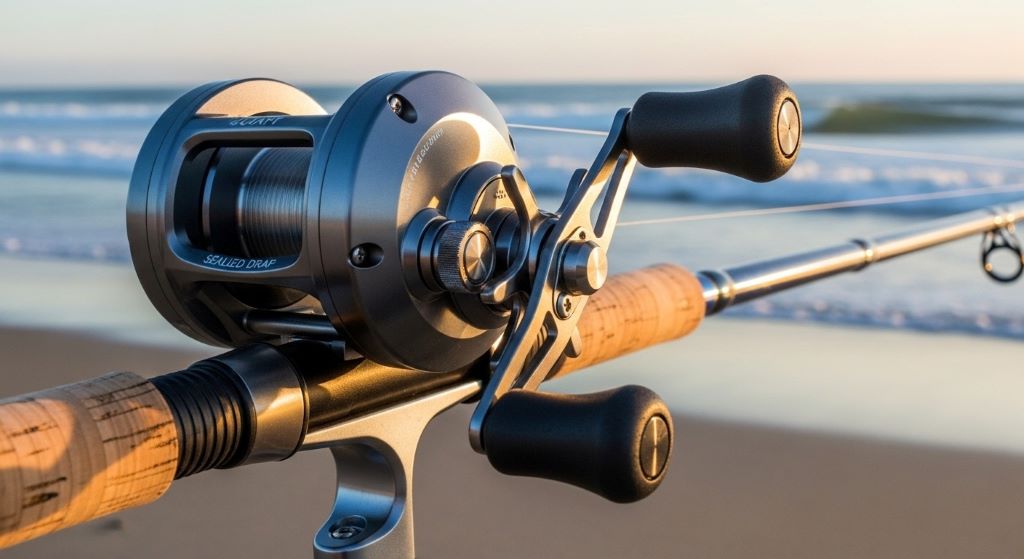
The drag system serves as your first line of defense against powerful fish. A quality drag provides smooth, consistent pressure without jerking or sticking. Look for reels with sealed drag systems that protect internal components from sand and salt. Carbon fiber or carbon composite drag washers offer superior performance and heat dissipation compared to felt washers.
Gear ratio determines how much line you retrieve with each handle turn. For beach fishing, a moderate gear ratio between 4.5:1 and 5.5:1 provides a good balance. Lower ratios offer more cranking power for fighting large fish, while higher ratios help you retrieve line quickly when needed.
Ball bearings contribute to smooth operation. More bearings don’t automatically mean better performance, however. The quality and placement of bearings matters more than quantity. Look for reels with at least six quality ball bearings, preferably shielded or sealed to resist corrosion.
Line capacity becomes crucial when fishing from the beach. Big fish make long runs, and you need enough line to handle them. Additionally, beach casting often requires distance, meaning you’ll have line out before a fish even strikes. Check the reel’s line capacity specifications for the pound test you plan to use.
The bail system needs to be robust and reliable. A bent or broken bail can end your fishing trip immediately. Look for heavy gauge wire bails with smooth operation. Some premium reels feature manual bail designs that eliminate the spring mechanism that often fails on cheaper models.
Choosing the Right Size for Your Target Species
Reel size significantly impacts your fishing success. Manufacturers use numbering systems that can seem confusing, but understanding them helps you select appropriately.
For general heavy duty beach fishing, reels in the 6000 to 10000 size range handle most situations well. These sizes provide adequate line capacity and drag power for fish ranging from large striped bass to moderate-sized tuna.
If you’re specifically pursuing larger predators, a shark fishing reel typically falls into the 14000 to 25000 size category. These massive reels hold hundreds of yards of heavy line and feature drag systems capable of 40 pounds or more of stopping power. They’re heavy and require more effort to operate, but they’re necessary for serious big game fishing from the beach.
Medium-sized reels in the 8000 to 12000 range offer versatility. They’re large enough to handle powerful fish but not so heavy that they become exhausting to cast repeatedly. This size works well if you target various species during your beach sessions.
Consider your physical strength and endurance when selecting reel size. Fighting a big fish on oversized equipment can be exhausting, but undersized gear simply won’t get the job done. Find the sweet spot that matches your capabilities and target species.
Material Construction and Durability
The materials used in reel construction directly impact longevity and performance. Saltwater environments are incredibly harsh, and inferior materials fail quickly.
Aluminum body construction provides excellent strength and corrosion resistance when properly treated. Look for reels with anodized aluminum frames and side plates. This treatment creates a protective layer that resists saltwater corrosion much better than bare aluminum.
Stainless steel components are essential for saltwater durability. The main shaft, bail wire, and critical internal parts should be stainless steel. However, not all stainless steel is equal. Higher grades offer better corrosion resistance.
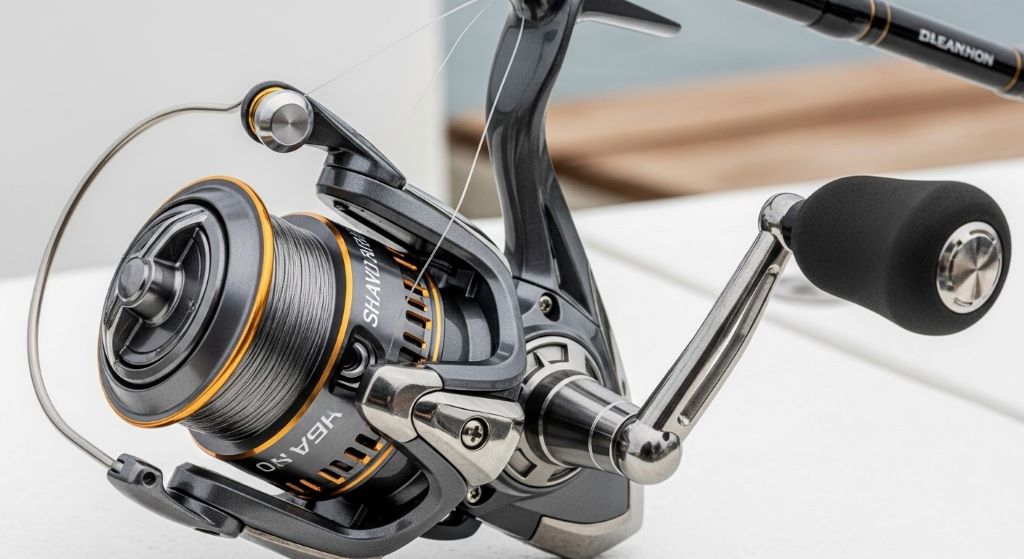
The rotor, which spins around the spool during retrieve, needs to be particularly robust. Graphite rotors work well in lighter reels but may not withstand the stress of heavy duty applications. Metal rotors provide superior strength and longevity.
Sealed bearings protect critical moving parts from sand and salt intrusion. While they add cost, sealed bearings dramatically extend reel life in beach fishing applications. Some manufacturers use magnetic oil seals to create watertight compartments that protect internal components.
Drag System Performance
The drag system deserves special attention because it’s arguably the most important feature for handling powerful fish. Understanding drag systems helps you evaluate reels effectively.
Maximum drag pressure indicates how much resistance the drag can provide before the spool starts giving line. For heavy duty beach fishing, look for reels offering at least 25 to 30 pounds of maximum drag. A large species reel designed for truly massive fish should provide 40 pounds or more.
However, maximum drag is only part of the equation. Smoothness and consistency matter just as much. A jerky drag can break your line or tear the hook free during a fight. Test the drag by pulling line off the spool. It should release smoothly without grabbing or stuttering.
Front drag systems generally outperform rear drag designs for heavy duty applications. They offer more drag surface area and better heat dissipation. Rear drags provide convenience for quick adjustments but typically can’t match the power and smoothness of quality front drag systems.
Waterproof or water-resistant drag systems prevent performance degradation when exposed to water. Some manufacturers use rubber gaskets to seal the drag completely, while others use labyrinth seals that discourage water intrusion without creating a perfect seal.
Line Capacity Considerations
Having adequate line capacity prevents problems during long fights with powerful fish. Calculate your needs carefully before purchasing.
Braided line has become extremely popular for beach fishing because it offers incredible strength with minimal diameter. A reel that holds 300 yards of 20-pound monofilament might hold 400 yards or more of 50-pound braided line. This increased capacity provides a safety margin when fish make extended runs.
Consider adding a monofilament or fluorocarbon leader even when using braided main line. This leader provides shock absorption and abrasion resistance that braid lacks. Therefore, your effective line capacity is slightly less than the reel’s maximum, as you’ll have leader material taking up spool space.
Backing the reel properly matters too. Don’t underfill or overfill the spool. Line should come to within about 1/8 inch of the spool lip. Underfilling reduces casting distance, while overfilling causes line management problems like wind knots and loose loops.
For serious big game fishing from the beach, maximum line capacity becomes critical. Fighting a large fish can easily consume 200 to 300 yards of line during multiple runs. Having 400 to 500 yards ensures you won’t get spooled by a determined opponent.
Handle and Grip Design
The handle and grip might seem like minor details, but they significantly impact comfort during extended fights and long fishing sessions.
Handle length provides leverage for cranking under load. Longer handles make it easier to retrieve line when fighting heavy fish, but they can interfere with casting. Most heavy duty spinning reels come with handles in the 4 to 6 inch range, providing a good compromise.
Handle materials affect durability and grip. Aluminum handles are strong and lightweight but can become slippery when wet. Rubberized or EVA foam grips provide excellent traction even in wet conditions. Some anglers prefer cork for its traditional feel and good wet grip.
The handle knob size matters for extended fishing sessions. Larger knobs distribute pressure across more of your palm, reducing fatigue. Some premium reels offer oversized knobs specifically designed for fighting big fish.
Reversible handles allow both right and left-handed operation. While many anglers have a preference, being able to switch hands during a long fight can prevent fatigue. Check whether your prospective reel offers this feature if it matters to you.
Anti-Reverse and Retrieve Systems
The anti-reverse mechanism prevents the handle from spinning backward when a fish pulls line. This feature is essential for setting hooks and maintaining pressure during fights.
Instant anti-reverse systems engage immediately without any backward handle movement. This instant engagement provides better hooksets and more positive control. Cheaper reels often have anti-reverse systems with noticeable play, which reduces your effectiveness.
One-way clutch bearings provide the most reliable anti-reverse performance. These bearings are specifically designed to prevent backward rotation while allowing smooth forward movement. They’re more expensive than simple pawl-and-gear systems but offer superior reliability.
The retrieve system encompasses all components involved in bringing line back onto the spool. The oscillation system distributes line evenly across the spool, preventing line bunching that causes casting problems. Look for reels with smooth, consistent oscillation patterns.
Corrosion Resistance and Maintenance
Beach fishing exposes equipment to salt, sand, and moisture. Choosing a reel with good corrosion resistance and maintaining it properly extends its lifespan significantly.
Beyond stainless steel and anodized aluminum, some manufacturers apply special coatings to protect components. These coatings might include chrome plating, nickel plating, or proprietary treatments that provide an additional barrier against corrosion.
Sealed construction protects internal components from environmental damage. Look for reels advertised as having sealed bodies, sealed drag systems, and sealed bearings. While no reel is completely waterproof, good seals dramatically improve durability.
After each beach fishing session, rinse your reel thoroughly with fresh water. Don’t use high-pressure streams that force water past seals. Instead, use a gentle spray or dunk the reel in fresh water while slowly turning the handle. Let it dry completely before storing.
Periodic maintenance involves disassembling the reel, cleaning internal components, and applying fresh grease and oil. If you’re not comfortable doing this yourself, most tackle shops offer reel servicing. Annual professional maintenance keeps your equipment in top condition.
Budget Considerations and Value
Heavy duty spinning reels range from under one hundred dollars to well over a thousand. Understanding what you get at different price points helps you make smart purchasing decisions.
Entry-level heavy duty reels in the $100 to $200 range can perform adequately if you choose carefully. Look for established brand names known for quality at this price point. These reels might lack some refinements of premium models but can still land big fish when properly maintained.
Mid-range options between $200 and $400 offer significant improvements in smoothness, durability, and features. This price range represents the sweet spot for many serious beach anglers. You get quality construction and reliable performance without the premium price tag.
High-end reels costing $500 or more provide the ultimate in performance and durability. They feature the finest materials, tightest tolerances, and most advanced engineering. For dedicated anglers who fish frequently or target trophy fish, these reels represent a worthwhile investment.
However, expensive doesn’t always mean better for your specific needs. A $300 reel might serve you better than a $700 model if it better matches your fishing style and target species. Therefore, focus on features and specifications rather than price alone.
Testing and Evaluating Before Purchase
If possible, handle reels before buying. Many tackle shops display models you can examine and operate.
Turn the handle to feel for smoothness and any grinding or roughness. A quality reel operates silently with minimal resistance. Check for any play in the handle or rotor. Excessive wobble indicates poor tolerances or worn components.
Engage and disengage the bail several times. It should snap open and closed positively without hanging or requiring excessive force. The roller bearing that guides line during retrieve should spin freely.
Adjust the drag while feeling for smoothness. It should tighten progressively without sudden changes in resistance. Pull line off the reel with the drag engaged to test for stuttering or grabbing.
Read reviews from other anglers who fish similar species and conditions. Real-world feedback often reveals issues or advantages that aren’t apparent from specifications alone. Look for patterns in reviews rather than focusing on isolated complaints or praise.
Matching Your Reel to Rod and Line
Your reel doesn’t work in isolation. It needs to balance with your rod and line for optimal performance.
Rod power and action should complement your reel size. A 14000 size reel on a light rod creates an unbalanced outfit that’s difficult to cast and uncomfortable to fish. Similarly, a small reel on a heavy rod doesn’t provide adequate control or line capacity.
Line choice affects reel performance significantly. Braided line requires reels with larger arbors and high-quality line rollers to prevent cutting into components. Monofilament is more forgiving but offers less strength per diameter.
The overall balance of your outfit matters for casting distance and accuracy. Hold the assembled rod and reel as you would when fishing. The balance point should fall near where you grip the rod. An unbalanced outfit causes fatigue and reduces casting performance.
Special Considerations for Targeting Large Predators
When you’re specifically pursuing massive fish, additional factors become important. A shark fishing reel or large species reel requires extra attention to detail.
Drag capacity needs to be substantial, as mentioned earlier. However, you also need enough physical strength to handle these powerful reels. Fighting a 200-pound fish on oversized equipment can take hours and demands significant endurance.
Line capacity becomes even more critical. Big fish can strip 300 yards of line in a single run. Having 500 to 600 yards provides the safety margin you need.
The reel’s overall weight and size affects your ability to fight fish effectively. While you need robust equipment, unnecessarily heavy reels cause fatigue. Find the lightest reel that still provides the capacity and drag power you need.
Consider specialized features like live liner or baitrunner systems. These allow fish to take line with minimal resistance before you engage the drag for the hookset. This feature is particularly valuable when using live or cut bait for large predators.
Conclusion
Choosing a heavy duty spinning reel for beach fishing requires careful consideration of multiple factors. The right reel provides adequate line capacity, smooth and powerful drag, corrosion-resistant construction, and appropriate size for your target species.
Start by identifying what you’ll primarily fish for, then select a reel that handles those species comfortably with some room to grow. Consider the harsh beach environment when evaluating construction materials and sealed components. Don’t overlook seemingly minor features like handle design and bail strength, as these contribute to overall performance and longevity.
Remember that the most expensive reel isn’t necessarily the best choice for your situation. Focus on features, build quality, and real-world performance rather than price alone. A well-chosen mid-range reel often outperforms a premium model that doesn’t match your fishing style.
Take time to handle reels before purchasing when possible. Read reviews from anglers who fish similar conditions and species. Match your reel to appropriate rod and line for balanced performance.
With the right heavy duty spinning reel, you’ll be well-equipped to handle anything the beach throws at you. Whether you’re casting for stripers in the surf or pursuing massive predators from the sand, quality equipment makes the difference between success and disappointment. Choose wisely, maintain your equipment properly, and enjoy years of productive beach fishing.
Frequently Asked Questions
What size spinning reel do I need for surf fishing?
For general surf fishing, reels in the 6000 to 10000 size range work well for most anglers. This size handles fish from large striped bass to medium tuna. If you specifically target very large species like sharks, consider 14000 size or larger. Match your reel size to your most common target species while leaving some capacity for occasional larger catches.
How much drag power do I need for beach fishing?
Most heavy duty beach fishing situations require at least 25 to 30 pounds of maximum drag. However, you rarely fish with drag set at maximum. A good rule is to set your drag at roughly one-third of your line’s breaking strength. For targeting truly large predators, look for reels offering 40 pounds or more of drag capacity to provide adequate safety margin.
Is braided line better than monofilament for beach fishing?
Braided line offers several advantages for beach fishing, including greater strength per diameter, increased sensitivity, and virtually no stretch. These properties allow you to use heavier test line without sacrificing casting distance or line capacity. However, braid lacks shock absorption, so many anglers add a monofilament or fluorocarbon leader. The choice depends on your target species and fishing conditions.
How often should I service my saltwater spinning reel?
At minimum, service your reel annually if you fish regularly in saltwater. After each fishing trip, rinse the reel with fresh water and dry it thoroughly. Every few months, or after 10 to 15 fishing trips, apply fresh oil to external moving parts. Annual professional servicing involves complete disassembly, cleaning, and relubrication of internal components. More frequent servicing is necessary if you fish several times per week.
Can I use a freshwater reel for beach fishing?
While technically possible, it’s not recommended. Freshwater reels lack the corrosion protection necessary for saltwater environments. They also typically feature lighter construction and less powerful drag systems than comparable saltwater models. If you fish the beach occasionally, a freshwater reel might survive with thorough rinsing after each use, but it will degrade much faster than a proper saltwater reel designed for the harsh marine environment.
Related Topics:
How to Avoid Casting a Shadow While Sight Fishing in Shallow Water
Box vs Clam Reel: Which One Prevents Line Tangles?