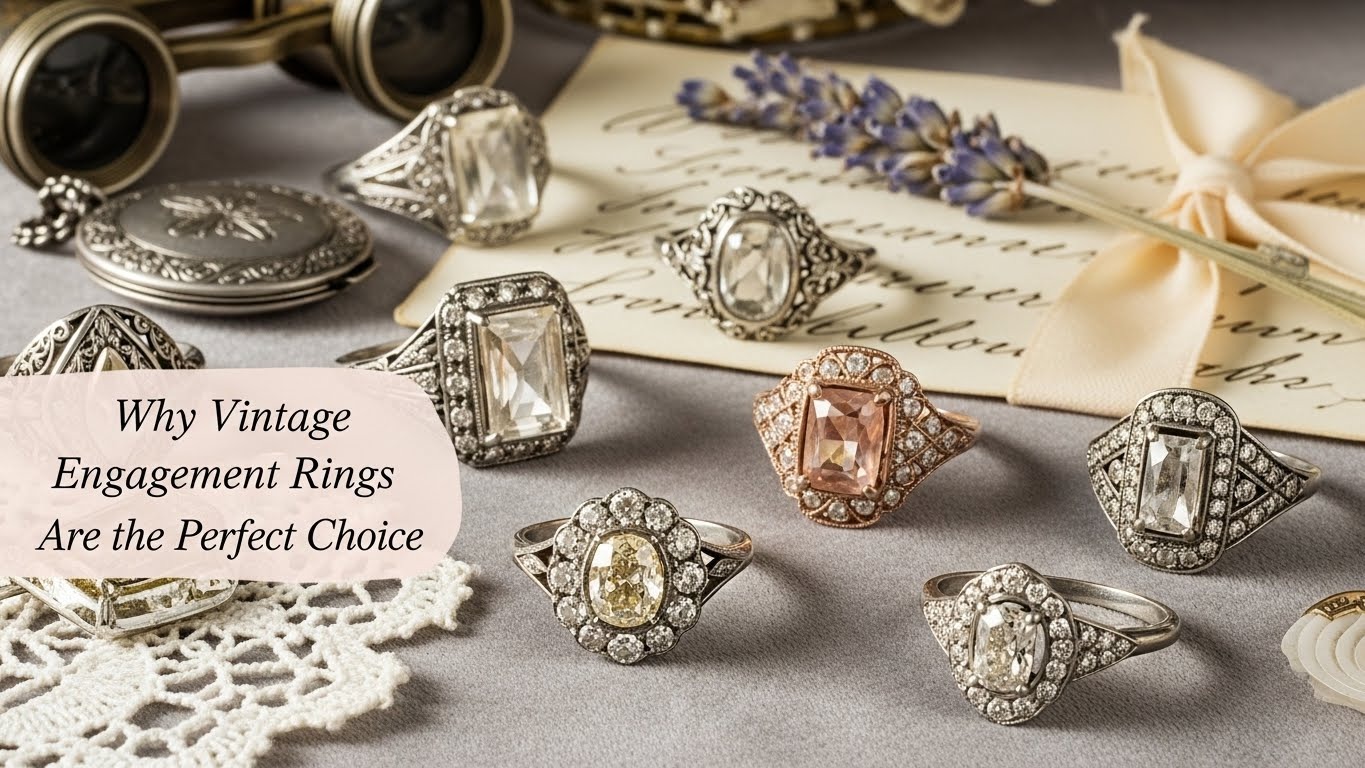
Few symbols of commitment carry the same depth of character and romance as vintage engagement rings. These pieces are more than jewelry—they’re miniature works of art imbued with history, meticulous craftsmanship, and sentimental value. Each vintage diamond ring tells a story, often through intricate designs that mark a particular historical period such as the Art Deco, Edwardian, or Victorian age.
For many couples, choosing a vintage engagement ring means finding a treasure that stands apart from modern designs. Whether you’re drawn to the geometric symmetry of Art Deco settings or the soft floral details of Edwardian filigree, these rings encapsulate a heritage of enduring style and grace. Plus, their timeless appeal ensures they’ll never go out of fashion—making them true heirlooms to be cherished for generations.
How Do You Identify Authentic Vintage Diamond Engagement Rings?
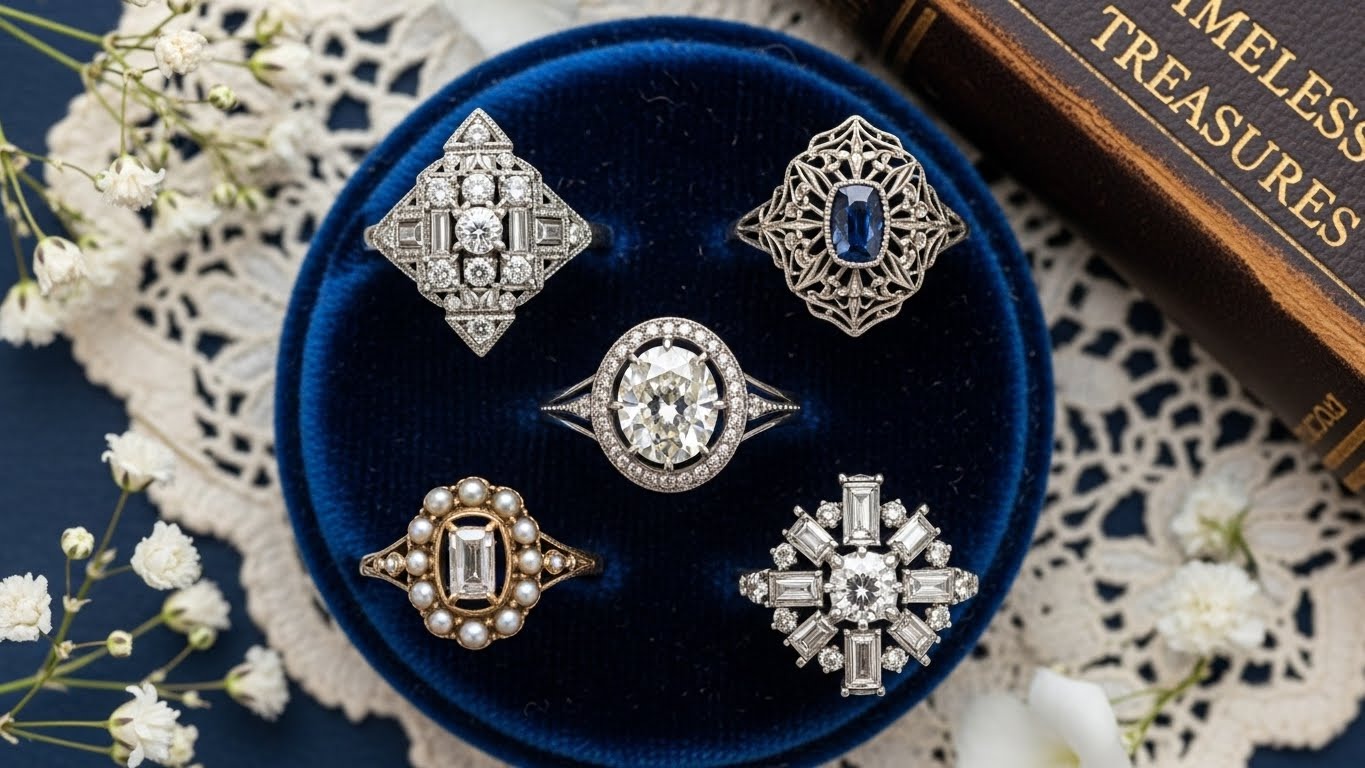
Snippet Answer: Authentic vintage diamond engagement rings show age-consistent craftsmanship, hallmark stamps, and rarity in metalwork. Always verify authenticity through professional appraisals and era-specific design markers.
Recognizing genuine vintage diamond rings takes a blend of research and a keen eye. Authentic vintage pieces—typically 20 years or older—exhibit traits that reflect their era’s jewelry-making practices. Key indicators include:
- Craftsmanship Quality: Fine hand-engraving, milgrain borders, and delicate latticework show skilled artisan work that machines can’t replicate.
- Metal Patina: Over time, gold and platinum develop a soft glow or faint wear patterns, signaling age and authenticity.
- Old Cut Diamonds: Look for cuts like Old Mine, Rose, or European cuts, which differ from the modern Brilliant’s symmetry but sparkle distinctively with old-world charm.
- Hallmarks and Vintage Stamps: Authentic rings may bear engravings such as purity marks, maker stamps, or country codes, providing clues to origin and metal composition.
If the history or authenticity of a piece is uncertain, have it verified by a certified gemologist or antique jewelry expert. They can determine whether your chosen ring is an authentic heirloom or a high-quality reproduction.
Which Vintage Eras Are Most Popular for Engagement Rings?
Snippet Answer: The most sought-after vintage engagement ring eras are Victorian, Edwardian, and Art Deco, each celebrated for its unique design language and romance.
Understanding the major design periods helps narrow down your search for the perfect ring. Each era reflects distinct cultural influences and aesthetics:
Victorian Era (1837–1901)
Characterized by romantic motifs such as hearts, flowers, and serpents, Victorian vintage diamond engagement rings often feature yellow or rose gold settings. Early diamonds were cut by hand, giving each stone a soft, candlelit glow that modern cuts can’t duplicate.
Edwardian Era (1901–1915)
Light, lace-like designs dominate this period. Platinum became the metal of choice, often set with diamonds and sapphires in intricate filigree patterns. Edwardian rings radiate sophistication, ideal for those seeking delicate and feminine detailing.
Art Deco Era (1920–1939)
Geometric lines, bold symmetry, and a splash of color define Art Deco jewelry. Platinum and white gold were common, setting off bright diamonds paired with emeralds, rubies, and onyx for contrast. Art Deco vintage engagement rings are perfect for modern brides with a love for architectural beauty and glamour.
Retro Era (1940s–1950s)
Retro rings reflect the optimistic post-war era with larger diamonds, scroll motifs, and warm yellow gold tones. These designs balance strength and femininity, making them distinctive yet timeless.
How to Choose the Right Vintage Diamond Engagement Ring for You
Snippet Answer: Select a vintage ring that aligns with your personal style, finger shape, and lifestyle needs. Factor in ring era, metal durability, diamond cut, and overall design aesthetic.
Choosing a vintage diamond engagement ring goes beyond visual preference—it’s about finding a piece that fits who you are. Here’s how to approach the process:
- Define Your Era Preference: Do you love the artistic flair of Art Deco or the romantic sentimentality of Victorian rings? Identify which era resonates with your personality.
- Consider Metal Type: Platinum offers durability and brilliance, while yellow and rose gold give warmth and nostalgia. Choose a metal that complements your skin tone and lifestyle.
- Stone Type and Cut: Vintage rings often include old-cut diamonds, sapphires, or rubies. Pay attention to the brilliance and fire—hand-cut stones sparkle differently under various lighting.
- Comfort and Wearability: If you wear your ring daily, go for designs less prone to snagging or damage. Stronger settings like bezel or box styles protect the stone better than high prongs.
- Authenticity Over Trend: Focus on craftsmanship, provenance, and condition rather than passing trends or quick bargains.
Where Can You Buy Authentic Vintage Engagement Rings?
Snippet Answer: Buy vintage engagement rings from certified jewelers, antique boutiques, or verified online retailers that provide authentication documents and grading reports.
With the rise of online marketplaces, finding authentic vintage pieces is easier—but also riskier. To ensure authenticity and value, consider buying from:
- Reputable Antique Jewelry Stores: Established dealers often curate genuine pieces with verifiable provenance.
- Certified Jewelers: Look for retailers affiliated with organizations like GIA (Gemological Institute of America).
- Estate Sales and Auctions: Ideal for discovering rare, one-of-a-kind designs, but verify all documentation before purchase.
- Trusted Online Stores: Platforms like 1stDibs, Lang Antiques, and Brilliant Earth specialize in authenticated vintage and estate jewelry.
How to Care for Your Vintage Diamond Engagement Ring
Snippet Answer: Clean gently with mild soap and water, avoid harsh chemicals, and schedule regular professional inspections to preserve vintage ring integrity.
Proper care ensures your vintage engagement ring retains its brilliance and structure for decades. Follow these essential maintenance tips:
- Use warm water and a soft toothbrush for cleaning—never ultrasonic machines or abrasives.
- Keep the ring in a separate-lined jewelry box to prevent scratches.
- Avoid exposing your ring to perfumes, chlorine, or harsh detergents.
- Schedule professional inspections at least once a year to check prongs, settings, and stone security.
Should You Consider a Reproduction Instead of a True Vintage Piece?
Snippet Answer: High-quality reproductions capture vintage design aesthetics while offering modern durability and customization at a lower cost.
If budget or availability limits your vintage search, a reproduction can be an excellent alternative. Reproductions replicate classic era styles but use new materials and modern settings for strength. The benefits include customization options, easier maintenance, and sometimes ethical sourcing. However, collectors or sentimental buyers usually prefer genuine vintage diamond engagement rings for their authenticity and historical narrative.
Why Are Vintage Engagement Rings a Smart Investment?
Snippet Answer: Vintage rings hold enduring value due to rarity, craftsmanship, and historical appeal. They often appreciate over time and carry deep emotional worth.
Unlike mass-market jewelry, authentic vintage rings are limited in supply. The combination of handcraftsmanship, old-cut gems, and period-specific detailing adds collectible value. Over the years, these rings not only maintain but often appreciate in price, especially those linked to notable designers or unique provenance. Beyond monetary worth, they offer emotional depth—transforming into cherished heirlooms that celebrate lasting love stories.
Conclusion: Find the Ring That Tells Your Story
Choosing a vintage diamond engagement ring isn’t just a purchase—it’s a journey through history, romance, and craftsmanship. Each piece connects you to an era’s artistry and whispers of timeless love. Whether you fall for a glittering Art Deco masterpiece or a delicate Victorian treasure, your chosen ring becomes more than adornment—it becomes part of your family legacy.
Call to Action: Browse trusted jewelers and antique boutiques today to discover a vintage engagement ring that reflects your style, story, and future. When you find it, you’ll know—it’s not just a ring, it’s your timeless heirloom.
Frequently Asked Questions (FAQs)
1. What is considered a vintage engagement ring?
Any ring over 20 years old qualifies as vintage. Rings older than 100 years are typically classified as antique.
2. Are vintage diamond engagement rings more expensive?
Not always. Prices vary based on age, rarity, condition, and brand. While some vintage rings command premiums, others offer excellent value compared to new designer pieces.
3. Can vintage rings be resized?
Yes, but resizing requires expert handling due to delicate settings and older metals. Always consult a jeweler experienced in vintage repairs.
4. Are old-cut diamonds less brilliant than modern ones?
Old-cut diamonds emit softer, romantic glows rather than sharp brilliance. This vintage sparkle is part of their enduring charm.
5. How can I verify a ring’s authenticity?
Request authenticity certificates, hallmarks, and gemological reports. Reputable jewelers or GIA-certified appraisers can confirm accuracy.
6. What are ethical considerations for vintage jewelry?
Buying vintage is sustainable and eco-friendly, as it repurposes existing materials rather than supporting new mining operations.
7. Should I insure my vintage engagement ring?
Absolutely. Insuring your ring protects against theft, loss, or damage. Opt for a specialized jewelry insurance policy with accurate appraisal values.
Related Topics: Influencer Marketing 2.0: The Next Wave of Social Media Power
Related Topics: Four benefits of hiring a virtual assistant