
Deciding how to transport bikes on your vehicle involves more than just picking the first rack you see. The choice between mounting your bicycles on the roof or attaching them to a hitch receiver affects your daily driving, fuel economy, and overall convenience. Each system has distinct advantages and limitations that make it better suited for different situations and lifestyles.
Many cyclists purchase the wrong type of rack because they focus solely on price or availability. However, the right choice depends on your specific needs, vehicle type, and how you plan to use the rack. Understanding the differences between these two popular systems helps you make an informed decision that you’ll be happy with for years to come.
This comprehensive guide examines both options in detail. You’ll learn about installation requirements, capacity differences, security features, and practical considerations for everyday use. By the end, you’ll know exactly which system best fits your cycling lifestyle and vehicle setup.
Understanding Roof-Mounted Systems
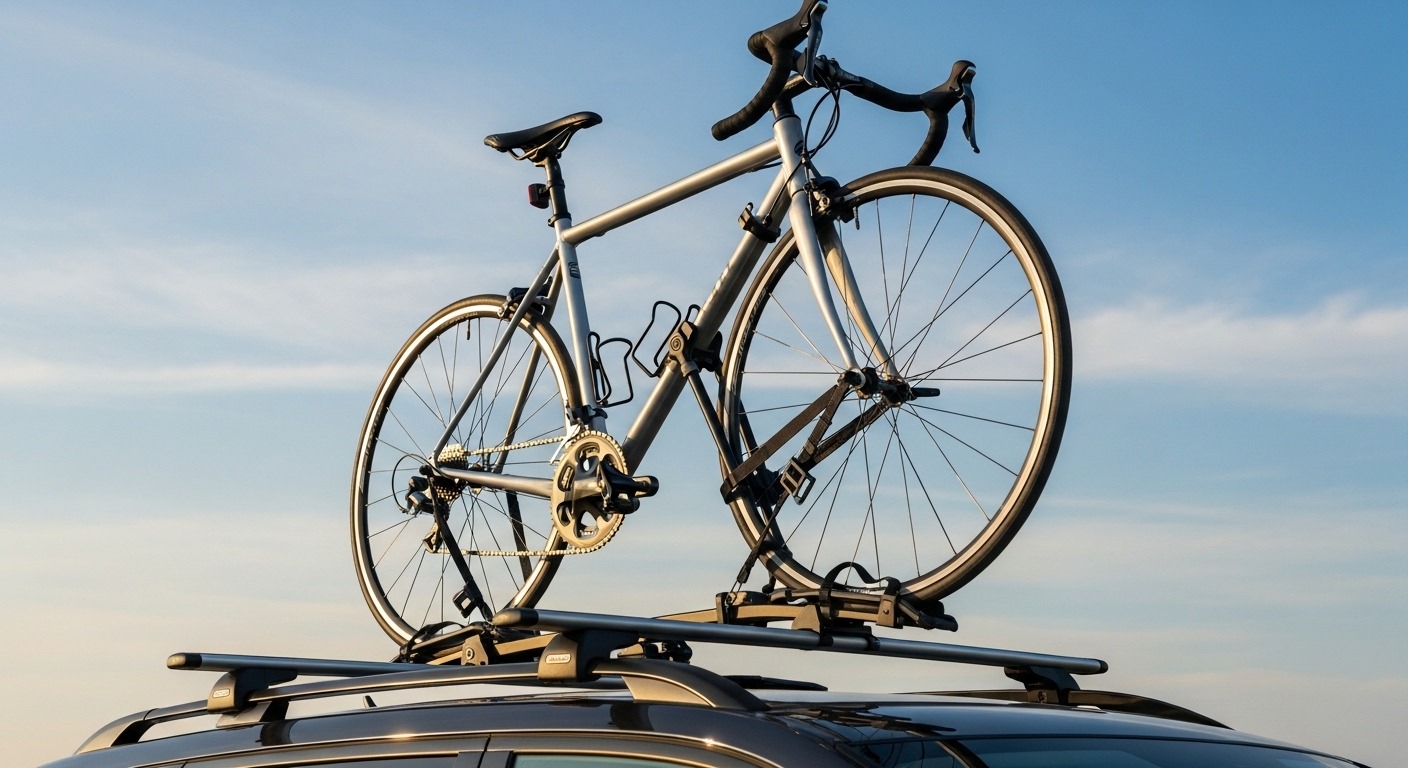
Roof racks attach to crossbars mounted on top of your vehicle. Each bicycle sits in its own carrier, typically held by the front wheel or both wheels depending on the design. The bikes rest horizontally along the roof, parallel to the direction of travel.
These systems require your vehicle to have either factory roof rails or aftermarket crossbars installed first. Once you have the base system, individual bike carriers attach to these crossbars. You can usually add or remove carriers based on how many bikes you need to carry.
The installation process varies by vehicle type. Some cars come with integrated mounting points that make adding crossbars straightforward. Others require clip-on or strap-based systems that take more time to install properly. However, once the base system is in place, attaching and removing individual bike carriers is relatively simple.
Most roof systems can accommodate various bike styles. Road bikes, mountain bikes, and even some fat tire bikes work with the right carrier design. You may need different carriers or adapters for unusual frame shapes or children’s bikes.
Exploring Hitch-Mounted Options
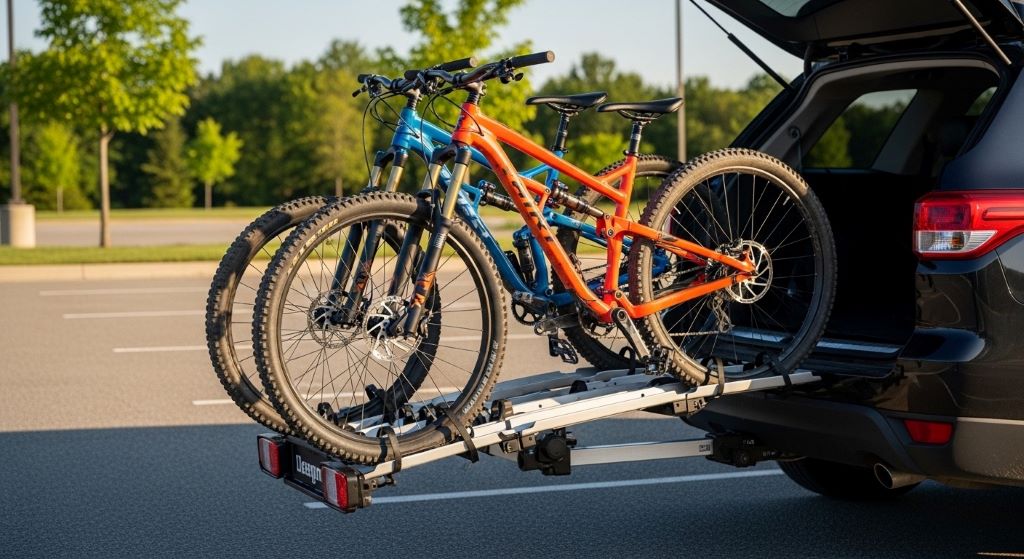
Hitch racks slide into a receiver tube mounted to your vehicle’s rear. These racks come in different sizes to match either 1.25-inch or 2-inch receiver tubes. The bikes typically hang vertically from the rack, supported by wheel trays or frame clamps.
Installing a hitch receiver is the first step if your vehicle doesn’t already have one. Many vehicles can accommodate a receiver, though installation complexity varies. Some bolt directly to existing frame points, while others require more extensive modifications. Professional installation ensures proper weight distribution and safety.
Two main styles dominate the hitch rack market. Platform racks support bikes by their wheels without touching the frame. Hanging racks use arms that clamp onto the bike frame and hold the bicycle suspended. Each style offers different advantages in terms of bike compatibility and ease of loading.
Hitch racks generally provide easier access to your bikes than roof systems. The lower mounting height means less lifting and makes loading heavy electric bikes or kids’ bikes much simpler. Additionally, many models fold up when not in use or tilt away to allow trunk access.
Comparing Installation and Compatibility
Installation requirements differ significantly between these two systems and can influence which option works best for your situation.
Roof racks demand sufficient vertical clearance for installation and use. Your vehicle needs either built-in roof rails or the structural capability to support aftermarket crossbars. Soft-top convertibles and some glass roof vehicles may not be compatible with roof-mounted systems.
Furthermore, you must consider your garage clearance. Adding a roof rack system increases your vehicle’s total height by several inches even without bikes loaded. With bikes mounted, you may not fit into standard parking garages or your home garage without removing the bikes first.
Hitch systems require your vehicle to have a compatible receiver installed. Nearly all vehicles can accommodate a hitch, but the installation cost varies. Some vehicles have factory hitch options available, while others need aftermarket solutions. Weight capacity also varies, so you need to ensure your hitch can handle the combined weight of the rack and bikes.
Additionally, hitch racks may interfere with rear sensors, cameras, or license plate visibility. Some jurisdictions have specific requirements about license plate placement and lighting when using a hitch rack. Check local regulations before purchasing to avoid potential legal issues.
Evaluating Capacity and Weight Limits
How many bikes you need to carry and their combined weight plays a crucial role in determining the right system for your needs.
Roof racks typically carry one bike per carrier. Most vehicles can accommodate two to four carriers across the roof width. However, the total weight capacity depends on your vehicle’s roof rating, which usually ranges from 100 to 165 pounds including the rack system itself.
Each roof-mounted bike carrier adds weight to your total load. A typical carrier weighs 5 to 15 pounds, and bikes can weigh anywhere from 20 to 60 pounds depending on type. Therefore, you must carefully calculate whether your roof can handle the combined weight of carriers and bikes.
Hitch racks often carry more bikes in a more compact footprint. Two-bike models are most common, but four and even five-bike versions exist. Platform-style hitch racks typically support more weight per bike than hanging styles, making them better for heavy electric bikes or downhill mountain bikes.
The receiver’s weight capacity determines how much you can safely carry. A 1.25-inch receiver usually handles up to 200 pounds, while 2-inch receivers often support 300 pounds or more. Remember that the rack’s weight counts toward this limit, reducing how much bike weight you can add.
Assessing Ease of Loading and Unloading
Daily usability often matters more than technical specifications when choosing between these systems.
Loading bikes onto a roof rack requires lifting them overhead. For lighter bikes and taller individuals, this presents minimal challenge. However, if you’re shorter, have back problems, or regularly transport heavy bikes, roof loading becomes difficult quickly. Electric bikes weighing 50 pounds or more can be nearly impossible to lift safely onto a roof.
Some roof carriers require removing the front wheel, adding an extra step to the loading process. Others accommodate the complete bike but still demand careful positioning to secure everything properly. In wet or windy conditions, wrestling a bike onto the roof becomes even more challenging.
Hitch racks position bikes at a comfortable working height. Most adults can easily lift bikes onto these racks without straining. Platform-style racks are particularly user-friendly, often requiring only that you roll the bike into position and secure the wheel trays.
Many modern hitch racks feature tool-free securing mechanisms. Ratchet straps, cam levers, and quick-release systems let you secure bikes in seconds without hunting for tools. This convenience makes a significant difference when loading and unloading bikes multiple times during a trip.
Analyzing Impact on Fuel Economy
Both rack types create aerodynamic drag that reduces fuel efficiency, though the impact differs between systems.
Roof racks and crossbars create wind resistance even without bikes attached. Adding bikes to the roof dramatically increases drag, as you’re essentially pushing several bike-shaped objects through the air at highway speeds. Studies show fuel economy can drop 10 to 25 percent with bikes mounted on the roof.
The exact impact depends on vehicle shape, driving speed, and number of bikes. Highway driving sees the biggest efficiency penalty because drag increases exponentially with speed. Urban driving shows less dramatic changes because speeds are lower.
Hitch racks generally produce less aerodynamic drag than roof systems. The bikes sit in the vehicle’s wake, where air resistance is already disrupted. However, fuel economy still suffers compared to driving without a rack, typically dropping 5 to 15 percent depending on configuration.
Platform-style hitch racks create more drag than minimalist hanging styles because they present a larger frontal area. Nevertheless, even the bulkiest hitch rack usually impacts fuel economy less than bikes mounted on the roof.
Considering Vehicle Access and Height Restrictions
How the rack affects your ability to access your vehicle and navigate in various environments matters in everyday use.
Roof-mounted bikes increase your total vehicle height significantly. A typical bike adds 30 to 40 inches to your roof height. This increase creates problems in parking garages, drive-throughs, and home garages with limited clearance.
Many cyclists have damaged bikes, racks, or garage doors by forgetting about the extra height. Some parking structures have clearance bars that prevent entry when roof-mounted bikes are installed. Additionally, automatic car washes become off-limits with a roof rack system.
Hitch racks extend behind your vehicle but don’t affect height. You can still use parking garages and drive-throughs without worry. However, the rack extends your vehicle’s length by 2 to 3 feet, affecting parking and maneuverability in tight spaces.
Accessing your rear hatch or trunk becomes complicated with a hitch rack. Many modern designs include tilt-away features that let you access the rear without removing bikes. However, these mechanisms add weight and cost. Some situations still require completely removing the rack for full access.
Examining Security Features
Protecting your investment in both bikes and rack equipment requires considering security options available with each system.
Roof rack security varies by manufacturer. Most quality systems include locks that secure the bike carriers to the crossbars and prevent easy removal. Individual bike carriers then lock the bicycles in place using integrated cable locks or frame clamps.
However, roof-mounted bikes are highly visible and can attract attention from thieves. The bikes are also somewhat exposed to weather and road debris. Covers are available but add complexity to an already elevated storage situation.
Hitch rack security has improved significantly in recent years. Quality models include locks that secure the rack to the receiver and prevent removal without a key. Individual bike locks then secure each bicycle to the rack.
Many cyclists appreciate that hitch-mounted bikes are less visible than roof-mounted ones, potentially reducing theft risk. The bikes also sit closer to eye level, making it easier to quickly verify they’re secure before driving. Nevertheless, bikes remain accessible and vulnerable in public parking situations.
Understanding Price Differences
Budget considerations often play a significant role in the decision between roof vs hitch rack systems.
Roof rack systems require initial investment in both crossbars and individual bike carriers. Basic crossbar systems start around 100 to 200 dollars, while premium brands can cost 400 dollars or more. Each bike carrier then adds another 50 to 200 dollars depending on style and brand.
Quality matters significantly with roof systems. Cheap carriers may damage bike frames, fail to secure bikes properly, or create excessive wind noise. Investing in reputable brands often proves worthwhile despite higher upfront costs.
Hitch racks present different pricing structures. You first need a receiver hitch if your vehicle doesn’t have one. Professional installation typically costs 200 to 500 dollars depending on vehicle complexity. The rack itself then ranges from 200 dollars for basic hanging models to over 1000 dollars for premium platform systems.
However, hitch racks often represent better value when carrying multiple bikes. A single hitch rack carries two to four bikes, while roof systems require purchasing a separate carrier for each bike. Therefore, the total cost comparison shifts depending on how many bikes you typically transport.
Weighing Convenience Factors
Day-to-day convenience often determines whether you actually use your rack or leave it in the garage.
Roof racks stay relatively out of the way when not carrying bikes. The crossbars remain on the vehicle, creating minimal inconvenience. However, they do produce wind noise and slightly reduce fuel economy even when empty.
Removing and storing roof carriers is relatively simple. Most detach with simple lever mechanisms and store compactly in a garage or basement. This makes seasonal removal practical for cyclists who only ride bikes part of the year.
Hitch racks are heavier and bulkier to remove and store. A typical two-bike hitch rack weighs 30 to 60 pounds, making frequent installation and removal impractical for most people. Many cyclists leave their hitch rack installed year-round despite the slight reduction in fuel economy.
Folding hitch racks partially address this issue. When not carrying bikes, they fold up against the vehicle, reducing the profile. However, even folded racks still extend behind the vehicle and may interfere with parking sensors or reduce approach angles on steep driveways.
Evaluating Long-Term Durability
The longevity of your rack investment depends on construction quality and how well each system withstands environmental exposure.
Roof racks face intense sun exposure, temperature extremes, and weather conditions. Quality systems use corrosion-resistant materials like aluminum or stainless steel with durable plastic components. Cheaper racks may develop rust, especially in areas that use road salt during winter.
The constant vibration and stress from highway driving can loosen roof rack components over time. Regular inspection and maintenance keep everything tight and functional. Rubber components like load bars may eventually need replacement.
Hitch racks experience less sun exposure but face different challenges. Road spray, mud, and debris constantly bombard the rear of your vehicle where the rack mounts. Salt exposure in winter climates can cause corrosion on lower-quality racks.
Quality hitch racks use powder-coated steel or aluminum construction designed to withstand harsh conditions. The receiver tube protects the insertion point from water intrusion. Regular cleaning and occasional lubrication maintain smooth operation of moving parts.
Making the Right Choice for Your Situation
Selecting between these two systems ultimately depends on your specific circumstances and priorities.
Choose a roof rack if you frequently need rear vehicle access, want to avoid height restrictions being a non-issue, or have a vehicle that cannot accommodate a hitch. Roof systems also work well if you’re comfortable with overhead lifting and want bikes out of the way during camping or tailgating.
Additionally, roof racks make sense if you already have crossbars installed for other cargo systems. The incremental cost of adding bike carriers becomes minimal, making this an economical choice.
Select a hitch rack if ease of loading is your priority, you transport heavy bikes regularly, or you want the most user-friendly option for frequent use. Hitch systems excel when carrying electric bikes, traveling with children who need help loading their bikes, or when you simply want the most convenient option.
Furthermore, hitch racks often prove better for longer trips where fuel economy matters. The reduced aerodynamic penalty can save significant money on gas during extended road trips.
Conclusion
Choosing between hitch racks and roof bike racks requires carefully weighing multiple factors including vehicle compatibility, loading convenience, capacity needs, and budget. When conducting a thorough bike rack comparison, consider how often you’ll transport bikes, the types of bicycles you own, and your physical ability to lift bikes overhead.
Roof systems offer excellent solutions for those comfortable with overhead loading who want to maintain rear vehicle access. They work particularly well for lighter bikes and situations where height isn’t restricted. However, they demand more effort during loading and significantly impact fuel economy.
Hitch-mounted options provide superior convenience for frequent use, especially when dealing with heavy bikes or multiple passengers. They’re easier to load, create less aerodynamic drag, and accommodate a wide range of bike types. The trade-off comes in reduced rear access and the need for a receiver hitch installation.
Neither system is universally superior. Your ideal choice depends on matching the rack’s characteristics to your specific needs and usage patterns. Consider renting or borrowing both types before purchasing to experience the real-world differences firsthand. This hands-on experience often reveals preferences that aren’t apparent from reading specifications alone.
Frequently Asked Questions
Can I use a roof rack if my car has a sunroof or panoramic glass roof?
Most vehicles with sunroofs can still use roof racks, provided they have proper mounting points for crossbars. However, you should never mount crossbars directly to glass panels. Check your vehicle’s owner’s manual for maximum roof weight capacity, as glass roof vehicles sometimes have lower limits than solid-roof models. Panoramic glass roofs may restrict where crossbars can mount, potentially limiting how many bikes you can carry.
How much does a hitch receiver installation typically cost?
Professional hitch installation usually costs between 200 and 500 dollars, including parts and labor. The price varies based on your vehicle type and whether a custom hitch is required. Some vehicles have straightforward bolt-on installations that take an hour, while others need custom fabrication. DIY installation is possible if you’re mechanically inclined, potentially saving half the cost. However, improper installation compromises safety and may damage your vehicle.
Will either rack type work with electric bikes?
Electric bikes work with both systems, but hitch racks are generally better suited for e-bikes. Most electric bikes weigh 45 to 70 pounds, making roof loading extremely difficult for most people. Platform-style hitch racks designed for heavy bikes can safely carry e-bikes weighing up to 60 or even 70 pounds per bike. Always verify your rack’s weight capacity per bike and your vehicle’s total carrying capacity before transporting heavy electric bicycles.
Do I need to remove the rack when not transporting bikes?
This depends on your priorities and rack type. Roof carriers store compactly and are easy to remove when not needed, eliminating wind noise and drag. Crossbars can stay installed year-round with minimal impact. Hitch racks are heavier and more cumbersome to remove, so many people leave them installed permanently. However, removing any rack when not in use maximizes fuel economy and reduces wear on the equipment.
Can I still access my trunk or hatchback with bikes on a hitch rack?
Many modern hitch racks feature tilt-away designs that let you access your rear hatch without removing bikes. You activate a lever or handle that tilts the entire rack and bikes away from the vehicle. However, this feature adds weight and cost to the rack. With bikes loaded, access is more limited than normal, and heavy bikes make tilting more difficult. Some situations still require removing bikes completely for full access.
Related Topics:
Dallas Bike Types Comparison and Buying Guide
How to Fix a Bike Chain That Keeps Falling Off