Aquarium enthusiasts often overlook one of the most critical components of their filtration system. While many focus on selecting the right filter, the air pump powering it deserves equal attention. A properly matched air pump ensures your aquarium maintains optimal water quality and provides a healthy environment for your aquatic life.
Understanding the relationship between air pumps and filtration systems helps you make informed decisions. The right pump delivers consistent airflow, maintains beneficial bacteria colonies, and operates quietly without disturbing your household. Therefore, selecting an appropriate air pump requires careful consideration of several factors.
Understanding How Air Pumps Work with Filtration
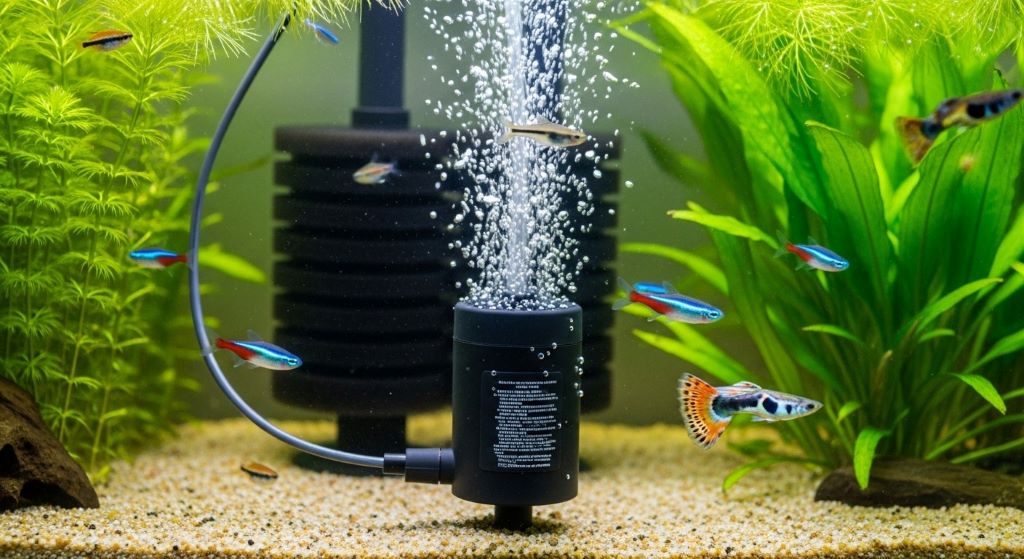
Air pumps serve as the heart of your sponge filter setup, pushing air through airline tubing into the filter. This process creates bubbles that rise through the sponge material, drawing water along with them. As water passes through the sponge, mechanical and biological filtration occurs simultaneously.
The mechanical aspect traps debris, uneaten food, and waste particles in the sponge’s porous structure. Meanwhile, beneficial bacteria colonize the sponge surface, breaking down harmful ammonia and nitrites into less toxic nitrates. This dual function makes air-driven systems remarkably efficient despite their simple design.
However, the effectiveness of this process depends entirely on adequate airflow. Insufficient air pressure results in weak water circulation, reducing filtration capacity and potentially harming your fish. Conversely, excessive airflow can create too much turbulence, stressing sensitive species.
Determining Your Tank’s Air Pump Requirements
Tank size represents the primary factor when selecting an air pump. Manufacturers typically rate pumps by the maximum tank volume they can support. Additionally, you must consider the number of filters, ornaments, or airstones connected to the pump.
A ten-gallon aquarium requires less powerful equipment than a fifty-gallon setup. Small tanks generally need pumps producing one to two liters per minute, while larger aquariums demand higher output. Furthermore, running multiple devices from a single pump necessitates choosing a model with sufficient capacity.
Water depth also affects pump selection because deeper tanks require stronger pressure to push air to the bottom. Standard pumps work well for tanks up to twenty-four inches deep. Deeper aquariums may need specialized high-pressure models to overcome the increased resistance.
The number of aquatic inhabitants influences your choice as well. Heavily stocked tanks benefit from stronger filtration, requiring more robust air circulation. Meanwhile, lightly populated aquariums can function adequately with smaller, less powerful pumps.
Evaluating Air Pump Features and Specifications
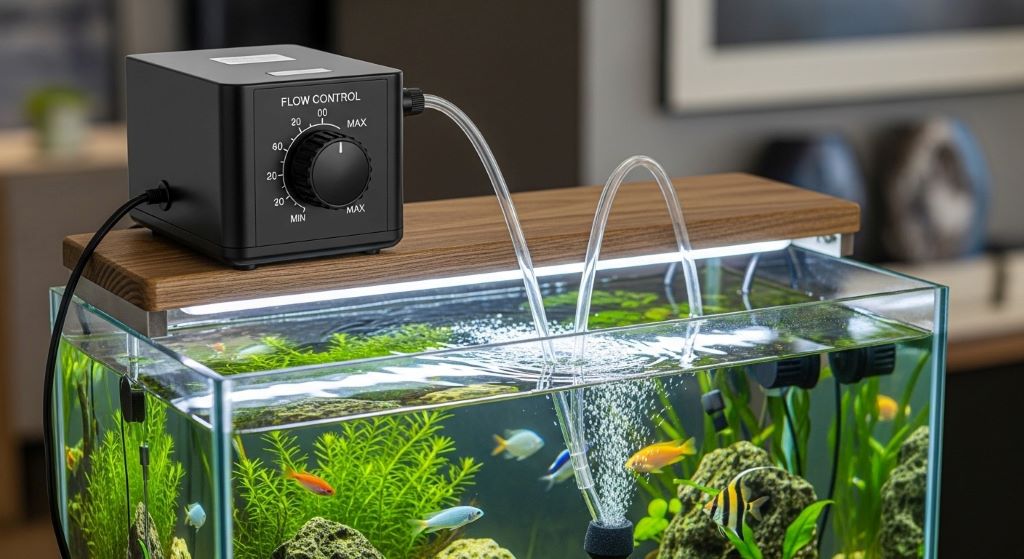
Modern air pumps offer various features that enhance performance and user experience. Adjustable flow control lets you fine-tune the airflow to match your specific needs. This flexibility proves invaluable when maintaining different fish species with varying current preferences.
Noise levels significantly impact your enjoyment of the aquarium hobby. Quality pumps incorporate vibration-dampening technology and sound-reducing chambers. Look for models specifically marketed as quiet or silent operation, particularly if placing the tank in bedrooms or living spaces.
Energy efficiency matters for equipment running twenty-four hours daily. Energy-saving models consume less electricity without sacrificing performance, reducing long-term operating costs. Therefore, investing in an efficient pump pays dividends through lower utility bills.
Durability and build quality determine how long your investment lasts. Pumps constructed with quality materials resist corrosion and mechanical failure better than cheaper alternatives. Additionally, reputable brands typically offer better warranty coverage and customer support.
Matching Pump Power to Your Air-Driven Filter System
Understanding pump output specifications helps ensure compatibility with your filtration setup. Manufacturers measure output in liters per minute or gallons per hour. Compare these ratings against your filter’s requirements to achieve optimal performance.
Single sponge filters in small tanks need modest airflow. A pump producing one to two liters per minute suffices for most situations. However, larger filters or multiple units require proportionally more air volume.
Corner filters, box filters, and under-gravel filtration systems each have unique air requirements. Research your specific filter model’s recommendations before purchasing a pump. Manufacturers often provide guidance regarding suitable pump sizes in their product documentation.
Consider future expansion when selecting pump capacity. Purchasing a slightly oversized pump with adjustable flow allows room for adding decorations, additional filters, or upgrading to a larger tank. This forward-thinking approach prevents needing to replace equipment as your aquarium evolves.
The Role of Check Valves and Air Stones
Supplementary equipment enhances your air-driven filter system’s safety and efficiency. Check valves prevent water from flowing backward through airline tubing during power outages. This simple device protects your pump from water damage and potential electrical hazards.
Installing check valves requires proper orientation. The directional arrow printed on the valve body must point away from the pump toward the filter. Incorrect installation renders the valve useless, potentially damaging your equipment.
Air stones diffuse air into smaller bubbles, increasing oxygen exchange and improving biological filtration effectiveness. Fine bubble production creates gentle water movement suitable for delicate fish species. Moreover, the increased surface area of smaller bubbles enhances gas exchange rates.
Gang valves allow splitting airflow among multiple devices from a single pump. These simple connectors enable running several filters, ornaments, or decorations simultaneously. Furthermore, individual shut-off valves on each outlet provide independent flow control.
Addressing Common Air Pump Problems
Even quality pumps occasionally develop issues requiring attention. Reduced airflow often indicates clogged air stones or dirty filter sponges. Regular maintenance prevents most problems and extends equipment lifespan.
Increased noise levels typically signal worn diaphragms or loose components. Most pumps feature replaceable diaphragm kits available from manufacturers or pet stores. Replacing these parts restores quiet operation at minimal cost.
Vibration problems arise from improper placement or worn mounting feet. Position pumps on foam pads or suspend them above the tank to minimize vibration transmission. Additionally, ensuring the pump sits level reduces unnecessary noise and wear.
Complete pump failure requires replacement unless you possess technical repair skills. However, quality models rarely fail suddenly, usually showing gradual performance decline first. Monitoring your pump’s operation helps identify problems early, preventing aquarium emergencies.
Optimizing Biological Filtration Performance
Beneficial bacteria colonies require stable conditions to thrive. Consistent airflow maintains oxygen levels necessary for aerobic bacteria survival. Interruptions in air supply can crash these colonies, leading to dangerous ammonia spikes.
Temperature affects bacterial metabolism and reproduction rates. Warm water accelerates biological processes but reduces dissolved oxygen levels. Therefore, maintaining adequate aeration becomes increasingly critical in heated aquariums.
Never completely replace your sponge filter during cleaning. Doing so removes the established bacterial colony, eliminating biological filtration capacity. Instead, rinse sponges gently in aquarium water, preserving beneficial microorganisms.
Adding new fish increases the biological load on your filtration system. Allow several weeks for bacterial populations to adjust before introducing additional livestock. This patience prevents overwhelming your biological filtration capabilities.
Selecting Pumps for Specific Aquarium Types
Saltwater aquariums demand corrosion-resistant equipment due to the aggressive nature of salt. Stainless steel or plastic components prevent premature deterioration. Moreover, marine systems often require stronger aeration than freshwater setups.
Breeding tanks benefit from gentle filtration that won’t harm fry or eggs. Sponge filter setup paired with adjustable air pumps provides safe, effective filtration for delicate young fish. The gentle current prevents exhaustion while maintaining water quality.
Hospital and quarantine tanks need reliable filtration without introducing pathogens from main displays. Dedicated air pumps and filters for these temporary setups prevent cross-contamination. Additionally, the ease of sterilizing sponge filters between uses makes them ideal for medical applications.
Planted aquariums require balancing filtration with carbon dioxide retention. Excessive surface agitation drives off CO2 needed for plant growth. Adjustable pumps allow fine-tuning airflow to maintain both adequate filtration and plant health.
Budget Considerations and Value Assessment
Price ranges vary significantly across different air pump models. Entry-level pumps cost less initially but may require earlier replacement. Premium models command higher prices yet offer superior performance, longevity, and features.
Calculate total ownership costs rather than focusing solely on purchase price. Energy consumption, replacement parts, and expected lifespan all factor into long-term expenses. Sometimes spending more upfront saves money over the equipment’s lifetime.
Brand reputation influences reliability and customer satisfaction. Established manufacturers with positive reviews typically deliver better products and support. However, newer companies occasionally offer innovative features at competitive prices.
Warranty coverage provides peace of mind and protects your investment. Longer warranties often indicate manufacturer confidence in product quality. Additionally, good warranty terms simplify addressing defects or premature failures.
Installation and Maintenance Best Practices
Proper installation ensures optimal performance and prevents common problems. Position pumps above water level whenever possible to prevent backflow during power outages. If elevation placement proves impossible, check valves become essential safety devices.
Secure airline tubing to prevent kinks that restrict airflow. Use appropriate diameter tubing matching your pump’s outlet size for maximum efficiency. Furthermore, replace brittle or cracked tubing promptly to maintain system integrity.
Clean or replace air pump filters regularly according to manufacturer recommendations. These small foam pads prevent dust and debris from entering the pump mechanism. Neglecting filter maintenance reduces efficiency and shortens pump lifespan.
Monitor your air-driven filter system daily for signs of reduced performance. Weak bubble streams, unusual noises, or decreased water movement indicate potential issues requiring attention. Early intervention prevents minor problems from becoming major failures.
Conclusion
Choosing the best air pump for your aquarium involves balancing multiple factors. Tank size, filtration requirements, and specific aquatic life needs all influence the decision. Quality pumps deliver reliable performance, operate quietly, and provide adjustable airflow for different applications.
Investing time in proper selection pays dividends through healthier fish and easier maintenance. Match pump capacity to your current setup while considering future expansion. Prioritize features like quiet operation, energy efficiency, and durability based on your specific circumstances.
Remember that the pump forms just one component of your biological filtration system. Proper maintenance, appropriate stocking levels, and patience while establishing bacterial colonies all contribute to aquarium success. With the right air pump powering your filtration, you create an environment where aquatic life thrives.
Frequently Asked Questions
Can I use one air pump for multiple filters?
Yes, a single pump can power multiple filters using gang valves to split the airflow. However, ensure your pump produces sufficient output for all connected devices. Each additional filter reduces the air volume available to others, so choose a pump rated for the combined requirements.
How often should I replace my air pump?
Quality air pumps typically last three to five years with proper maintenance. Replace diaphragms annually or when you notice reduced airflow. Complete replacement becomes necessary when repairs no longer restore adequate performance or when the pump fails entirely.
Do air pumps need to run continuously?
Yes, air pumps should operate twenty-four hours daily to maintain consistent biological filtration and oxygenation. Turning off your pump disrupts beneficial bacteria colonies and can cause dangerous water quality fluctuations. Continuous operation ensures stable aquarium conditions.
Why is my air pump suddenly louder than before?
Increased noise usually indicates worn diaphragms, loose components, or improper placement. Check that the pump sits level on vibration-dampening material. If noise persists, replace the diaphragm kit following manufacturer instructions or consider upgrading to a quieter model.
What size air pump do I need for a twenty-gallon tank?
A pump rated for twenty to thirty gallons typically works well for standard twenty-gallon aquariums. Choose models producing approximately two to three liters per minute for single filter operation. Adjust upward if running multiple devices or maintaining heavily stocked tanks.
Related Topics:
Minimalist Interior Design: Creating Beauty Through Simplicity
Do these garden jobs in February