
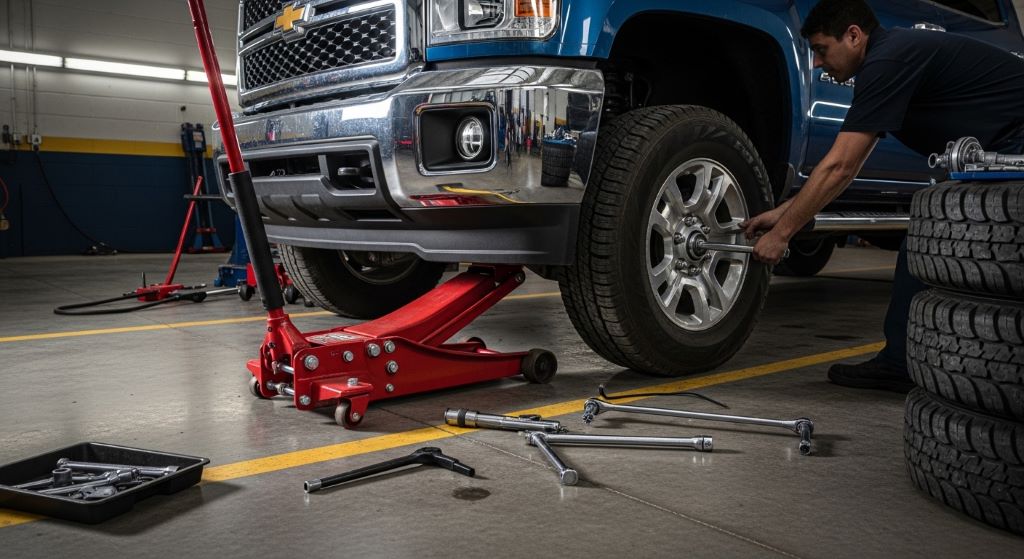
Lifting a truck or SUV requires more than the standard jack that comes with passenger cars. These larger vehicles demand specialized equipment capable of handling their substantial weight safely. Choosing the right lifting equipment protects both you and your vehicle during maintenance, tire changes, and repairs.
Many truck owners make the mistake of using inadequate equipment, putting themselves at serious risk. A collapsed jack can cause severe injuries or expensive vehicle damage. Therefore, understanding what makes a jack suitable for heavy vehicles is essential for anyone who performs their own maintenance.
This guide will walk you through everything you need to know about selecting reliable truck jack tools and industrial jacks for your specific needs. You’ll learn about weight capacities, safety features, and the different types available on the market today.
Understanding Weight Capacity Requirements
The first step in choosing appropriate lifting equipment is knowing your vehicle’s weight. Trucks and SUVs vary dramatically in how much they weigh. A midsize SUV might weigh around 4,500 pounds, while a full-size pickup truck can exceed 7,000 pounds.
However, you don’t need to lift the entire vehicle weight at once. When changing a tire, you’re only lifting one corner of the vehicle. Generally, you’ll be supporting about one-quarter to one-third of the total weight. Despite this, safety experts recommend choosing equipment rated for at least half the vehicle’s total weight.
Adding a safety margin is crucial because weight distribution isn’t always even. The front of most trucks weighs more than the rear due to the engine. Additionally, any cargo, fuel, or modifications add extra weight that you must account for in your calculations.
Check your vehicle’s door jamb sticker or owner’s manual for the exact weight specifications. This information helps you make an informed decision about the minimum capacity you need. Never assume or guess when it comes to weight ratings.
Types of Heavy Duty Jacks
Several types of jacks are designed specifically for lifting trucks and SUVs. Each type has distinct advantages and limitations that make it better suited for certain situations.
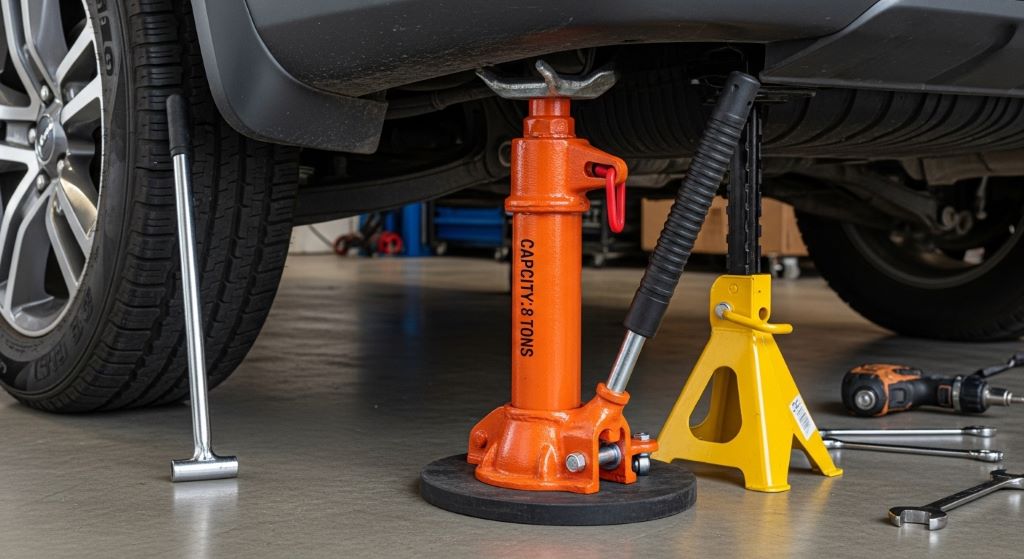
Bottle jacks are compact and powerful, using hydraulic pressure to lift heavy loads. They can handle impressive weight capacities, often ranging from three to twenty tons. Their vertical design takes up minimal floor space, making them portable and easy to store. However, they require a relatively high lift point and can be unstable if not used on perfectly level ground.
Floor jacks, also called trolley jacks, roll under your vehicle on wheels. They offer excellent stability and can lift from very low positions. Professional-grade models designed for trucks feature reinforced construction and extended lift heights. These jacks are ideal for garage use but tend to be heavier and less portable than bottle jacks.
Scissor jacks use mechanical advantage through a diamond-shaped lifting mechanism. While the ones included with vehicles are often inadequate for trucks, heavy duty versions exist. These mechanical jacks don’t require hydraulic fluid and are extremely reliable. Nevertheless, they’re slower to operate and require more physical effort than hydraulic options.
Farm jacks, sometimes called high-lift jacks, are designed for off-road recovery and extreme lifting situations. They can lift vehicles to impressive heights and work in rugged terrain. These specialized tools are essential for serious off-roaders but require proper training to use safely.
Key Safety Features to Look For
Safety should be your top priority when selecting lifting equipment. Several features separate professional-grade equipment from dangerous bargain options.
A wide, stable base prevents tipping during operation. Look for jacks with a base that extends well beyond the lifting mechanism. This broader footprint distributes weight more effectively and reduces the risk of the jack tipping over under load.
Bypass valves prevent overloading by releasing pressure when you exceed the jack’s rated capacity. This critical safety feature protects both the jack and you from catastrophic failure. Quality hydraulic jacks include this feature as standard equipment.
Locking mechanisms or safety bars provide backup support once you’ve lifted the vehicle. Never work under a vehicle supported only by a jack, regardless of how robust it seems. Always use jack stands rated for your vehicle’s weight as secondary support.
Swivel saddles on hydraulic jacks help maintain contact with the vehicle’s lift point even on uneven surfaces. This feature prevents the jack from slipping off the lift point as weight shifts during raising or lowering.
Look for handles with comfortable grips and adequate length for leverage. Operating a jack requires significant force, and a well-designed handle makes the job safer and easier. Some models include extension handles for additional mechanical advantage.
Material Construction and Durability
The materials used in construction directly affect both safety and longevity. Industrial jacks built for professional use incorporate superior materials that justify their higher cost.
Steel construction is virtually mandatory for heavy duty applications. The thickness and quality of the steel determine how well the jack handles stress. Look for models made from forged steel components rather than cast metal, which can develop weak points and cracks over time.
Powder coating or specialized paint finishes protect against rust and corrosion. Jacks stored in garages or used outdoors face constant moisture exposure. Quality surface treatments extend the tool’s life significantly and maintain smooth operation of moving parts.
Sealed hydraulic systems prevent fluid leaks and contamination. Check that the jack uses quality seals and o-rings designed for long-term use. Leaking hydraulic fluid not only makes a mess but also indicates potential failure under load.
Reinforced lift arms and support points handle the stress of repeated use. Areas that bear the most force should show visible reinforcement through thicker materials or additional bracing. Examine these critical areas carefully before purchasing.
Height Range Considerations
The lift range of your jack must match your vehicle’s ground clearance and your working needs. This specification is often overlooked but can make the difference between a useful tool and an expensive paperweight.
Minimum height determines whether the jack can fit under your vehicle when it’s on the ground. Trucks and SUVs typically have higher ground clearance than cars, but lowered suspension or flat tires can reduce this clearance significantly. Measure your vehicle’s actual clearance at the jacking points, not just the general ground clearance.
Maximum lift height affects how high you can raise the vehicle. Consider what work you’ll be performing. Changing tires requires less height than accessing the undercarriage for repairs. Additionally, account for the thickness of jack stands if you plan to use them.
The stroke length, or the difference between minimum and maximum height, indicates how much lifting the jack can accomplish. A longer stroke reduces the number of pumps needed and makes operation faster and easier.
Some situations require extreme lift heights, particularly for off-road vehicles with large tires. Specialized high-lift jacks address these needs but come with increased complexity and safety considerations.
Portability and Storage
Where and how you’ll use your jack influences which type makes the most sense for your situation. Consider your typical usage scenarios before making a decision.
Weight affects portability significantly. A jack you keep in your truck for roadside emergencies needs to be light enough to handle easily. Conversely, a jack that stays in your garage can be heavier if that extra weight provides stability and durability.
Size and shape determine storage requirements. Measure your available storage space before purchasing. Some jacks break down or fold for more compact storage, while others remain in one fixed configuration.
Built-in handles or carrying cases make transportation easier. If you’ll be moving the jack frequently, these features become increasingly valuable. Some professional models include wheels that make repositioning effortless despite their weight.
Think about whether you need one jack for all situations or specialized jacks for different purposes. Many truck owners keep a compact bottle jack in the vehicle for emergencies and a heavy duty floor jack in the garage for regular maintenance.
Hydraulic Versus Mechanical Operation
The choice between hydraulic and mechanical jacks involves weighing convenience against simplicity and reliability.
Hydraulic jacks use fluid pressure to multiply force, allowing you to lift heavy loads with minimal effort. They operate quickly and smoothly, making them popular for frequent use. Modern hydraulic systems are highly reliable when properly maintained. However, they can leak, lose pressure, or fail if seals deteriorate.
Regular maintenance keeps hydraulic jacks operating safely. Check fluid levels periodically and bleed air from the system if you notice spongy operation. Store hydraulic jacks with the ram retracted to protect seals.
Mechanical jacks rely on simple machines like screws and levers to create lifting force. They have fewer components that can fail and don’t require any fluids or maintenance. The trade-off is slower operation and more physical effort required.
For emergency roadside use, mechanical options offer peace of mind because they can’t lose pressure or develop leaks. For garage use where speed and ease matter more, hydraulic models are typically preferred.
Budget Considerations and Value
Price ranges for heavy duty jacks vary enormously, from budget options under one hundred dollars to professional models costing several hundred or more. Understanding what drives these price differences helps you make a smart investment.
Cheaper jacks often use thinner materials, lower quality hydraulic components, and less rigorous manufacturing standards. They may function adequately for occasional use but can fail prematurely under regular stress. Additionally, budget models frequently lack important safety features.
Mid-range options typically offer the best value for most truck owners. These jacks incorporate quality materials and safety features without the premium prices of professional-grade equipment. They’re built to handle regular use by serious hobbyists and DIY mechanics.
Professional-grade jacks command higher prices but deliver superior reliability, faster operation, and longer lifespans. If you perform frequent maintenance or run a repair business, the investment pays for itself through increased productivity and reduced replacement costs.
Consider the total cost of ownership rather than just the purchase price. A cheap jack requiring replacement every few years costs more over time than a quality jack lasting decades. Factor in the value of your safety, which no dollar amount can adequately measure.
Reading Reviews and Specifications
Product specifications tell only part of the story. Real-world user experiences reveal how equipment performs under actual working conditions.
Pay attention to reviews from people who own similar vehicles and use their jacks in comparable ways. A jack that works perfectly for a midsize SUV might struggle with a three-quarter ton truck. Look for specific mentions of vehicle types and weights.
Common complaints about stability, leaking, or difficulty operating indicate potential problems. One negative review might be an outlier, but patterns in feedback suggest genuine issues. Conversely, consistent praise for specific features indicates reliable strengths.
Check whether manufacturers stand behind their products with meaningful warranties. A company confident in their equipment offers substantial warranty coverage. Conversely, limited warranties might signal lower quality construction.
Professional mechanic opinions carry particular weight because these individuals use jacks daily under demanding conditions. They quickly identify which brands and models hold up to serious use.
Conclusion
Choosing the right heavy duty car jack for your truck or SUV involves carefully considering multiple factors. Weight capacity must exceed your vehicle’s requirements with adequate safety margin. The type of jack you select should match your specific use cases, whether that’s roadside emergencies, garage maintenance, or off-road recovery.
Safety features like stable bases, bypass valves, and proper locking mechanisms are non-negotiable. Quality construction using appropriate materials ensures your jack remains reliable for years. Height range must accommodate both your vehicle’s ground clearance and your working needs.
Consider whether hydraulic or mechanical operation better suits your situation. Balance portability requirements against stability and power needs. Most importantly, view your jack as a critical safety investment rather than just another tool purchase.
By taking time to research options and understanding what separates quality equipment from inadequate alternatives, you’ll select truck jack tools and industrial jacks that serve you safely for years to come. Your choice directly affects both your safety and your ability to maintain your vehicle properly.
Frequently Asked Questions
What weight capacity jack do I need for my truck?
Choose a jack rated for at least half your truck’s total weight. For example, if your truck weighs 6,000 pounds, select a jack with a minimum three-ton capacity. This provides an adequate safety margin accounting for uneven weight distribution and any cargo. Always check your specific vehicle’s weight on the door jamb sticker rather than estimating.
Can I use a regular car jack for my SUV?
Standard car jacks typically lack sufficient capacity and lift height for SUVs. While smaller crossover SUVs might work with heavy duty car jacks, full-size SUVs require equipment specifically rated for their weight. Using an inadequate jack risks catastrophic failure that can cause serious injury or vehicle damage. Always match your jack to your vehicle’s specifications.
How do I maintain a hydraulic jack?
Store hydraulic jacks with the ram fully retracted to protect seals. Check hydraulic fluid levels annually and top off as needed with the manufacturer’s recommended fluid. Bleed air from the system if operation becomes spongy. Keep the jack clean and lubricate moving parts according to manufacturer instructions. Never exceed the rated capacity.
What’s the difference between a bottle jack and a floor jack?
Bottle jacks are compact, vertical hydraulic jacks ideal for portability and tight spaces. They require higher lift points but offer excellent weight capacity in a small package. Floor jacks roll on wheels, provide better stability, and can access lower lift points. Floor jacks are better for garage use, while bottle jacks excel in portability.
Do I still need jack stands if I have a heavy duty jack?
Absolutely yes. Never work under a vehicle supported only by a jack, regardless of its quality or capacity. Jacks are designed for lifting, not for holding a vehicle in the air for extended periods. Always use properly rated jack stands as backup support before placing any part of your body under a lifted vehicle.
Related Topics:
What Does a Crankshaft Sensor Do?
Diagnosing Intermittent Camshaft Position Sensor Issues: A Complete Guide