Guppies are among the most popular freshwater fish for home aquariums. Their vibrant colors, peaceful nature, and easy care requirements make them perfect for beginners and experienced aquarists alike. However, creating a thriving guppy community tank requires careful selection of compatible species. This guide will help you choose the right companions for your guppies while maintaining a harmonious underwater environment.
Understanding Guppy Behavior and Needs
Before adding tank mates, you need to understand what makes guppies unique. These colorful fish are generally peaceful and social. They prefer swimming in groups and enjoy the middle and upper levels of the aquarium. Males display beautiful flowing tails and spend much time showing off to females.
Guppies thrive in water temperatures between 72 and 82 degrees Fahrenheit. They prefer slightly alkaline water with a pH range of 6.8 to 7.8. Additionally, they need well-filtered water with moderate flow. Understanding these requirements helps you select companions with similar needs.
The peaceful temperament of guppies makes them vulnerable to aggressive species. Therefore, avoiding fin nippers and territorial fish is essential. Their small size also means larger predatory fish might view them as food. Keep these factors in mind when planning your aquarium community.
Key Factors When Selecting Compatible Species
Several important considerations will guide your choices. First, examine the temperament of potential tank mates. Fish with calm, non-aggressive personalities work best. Aggressive or territorial species will stress your guppies and may cause injury.
Size compatibility matters significantly. Choose fish that are similar in size or slightly smaller. Very large fish might intimidate or even eat your guppies. Conversely, extremely tiny species might feel threatened by adult guppies.
Water parameter requirements must align closely. All fish in your aquarium should thrive in similar temperature, pH, and hardness levels. Mismatched requirements lead to stress and health problems. Therefore, research each species thoroughly before making decisions.
Swimming level preferences also play a role. Combining species that occupy different tank levels creates a more dynamic and balanced environment. Bottom dwellers, mid-level swimmers, and surface feeders can coexist peacefully when space is adequate.
Excellent Small Peaceful Fish for Your Aquarium
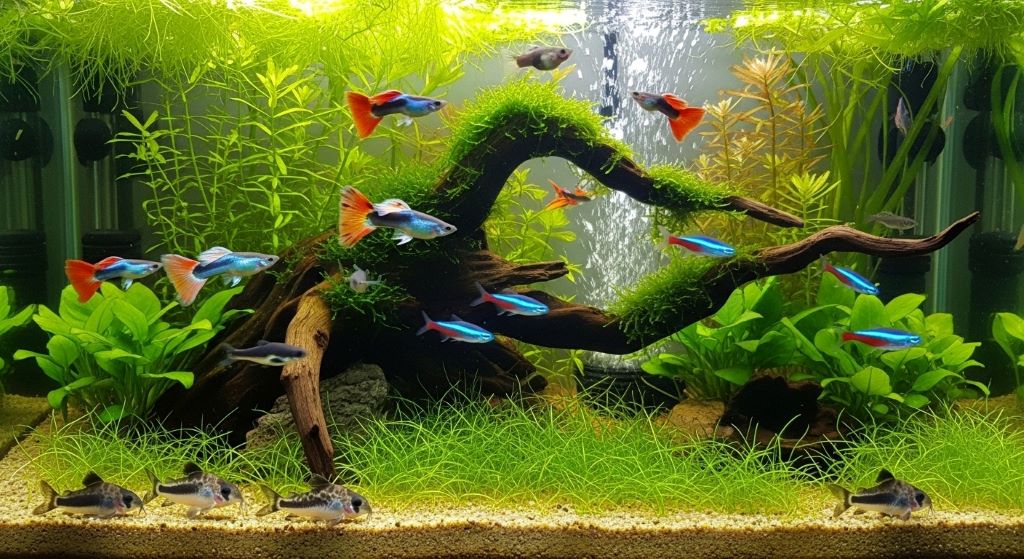
Many species make wonderful companions for guppies. Neon tetras are classic choices that bring stunning blue and red colors to your tank. These tiny schooling fish stay peaceful and prefer similar water conditions. They swim in the middle levels and look spectacular in groups of six or more.
Corydoras catfish are perfect bottom dwellers. These adorable armored fish spend their time scouring the substrate for leftover food. They remain peaceful and help keep your tank clean. Moreover, they come in various species with different patterns and colors.
Harlequin rasboras offer another excellent option. Their copper-orange bodies with distinctive black patches create visual interest. These active swimmers stay small and peaceful throughout their lives. They prefer groups and will school together beautifully.
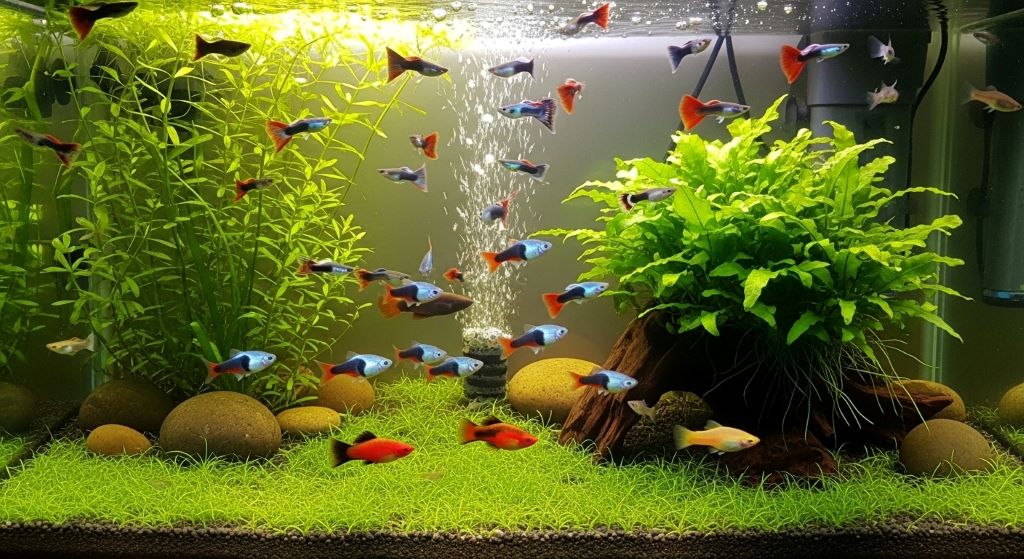
Platies share many characteristics with guppies. They come in numerous color varieties and have similar care requirements. However, be aware that platies can breed with guppies in rare cases. Despite this, they generally make harmonious tank mates.
Cherry shrimp add color and functionality to your guppy community tank. These bright red invertebrates eat algae and leftover food. They pose no threat to guppies and can breed successfully in the aquarium. Their presence adds an interesting dynamic to the ecosystem.
Species That Complement Guppies Perfectly
Endler’s livebearers are close relatives of guppies. They stay even smaller and display equally vibrant colors. These energetic fish school together and create constant movement in the tank. They share identical care requirements, making them ideal companions.
Otocinclus catfish are peaceful algae eaters. These small sucker-mouth fish keep glass and plants clean without bothering other inhabitants. They prefer groups of three or more and stay active during daylight hours.
Kuhli loaches bring something different to the aquarium. These eel-like bottom dwellers are shy but fascinating to watch. They burrow in soft substrate and emerge during feeding times. Their peaceful nature makes them safe additions.
White cloud mountain minnows tolerate cooler temperatures but adapt well to guppy conditions. These hardy fish display subtle beauty with their shimmering scales. They school actively and rarely show aggression toward other species.
Dwarf gouramis can work in larger aquariums with plenty of space. Males can be territorial toward each other, but they generally ignore guppies. Their labyrinth organ allows them to breathe air, and their colors rival those of guppies.
Fish to Avoid in Guppy Communities
Some species should never share space with guppies. Angelfish might seem peaceful, but they grow large and can eat small fish. Their size and territorial nature during breeding make them incompatible.
Tiger barbs are notorious fin nippers. They will relentlessly chase guppies and tear their flowing tails. Therefore, keep these aggressive schooling fish in separate tanks.
Bettas present a tricky situation. While some bettas tolerate guppies, many mistake male guppies for rival bettas. The colorful tails trigger their aggressive instincts. Consequently, this pairing often ends badly.
Cichlids, even smaller species, tend toward aggression. Most establish territories and attack intruders. Their behavior creates constant stress for peaceful community members.
Large predatory fish like oscars view guppies as snacks. Never combine species with significant size differences when the larger fish are carnivorous. This protects both your guppies and your investment.
Creating the Ideal Environment
Tank size greatly influences success with multiple species. A 20-gallon aquarium provides adequate space for a small peaceful fish community. Larger tanks offer more stability and territory, reducing conflicts.
Aquascaping creates important hiding spots and visual barriers. Live plants like java fern, anubias, and amazon swords provide shelter. Driftwood and rocks create territories and break sight lines. These elements reduce stress and allow fish to establish comfortable zones.
Filtration must handle the bioload of your entire community. Choose a filter rated for slightly more than your tank volume. However, avoid creating strong currents that exhaust small fish. Guppies and their companions prefer gentle to moderate water movement.
Lighting affects both plants and fish behavior. Moderate lighting for 8 to 10 hours daily supports plant growth without encouraging algae. Additionally, it helps maintain natural day-night cycles that regulate fish activities.
Stocking Levels and Introduction Strategies
Overcrowding causes numerous problems in aquariums. Follow the general guideline of one inch of fish per gallon of water. However, consider adult sizes when calculating. Small peaceful fish allow for slightly higher stocking in well-filtered tanks.
Introduce new species gradually. Add one species at a time with at least two weeks between additions. This approach allows your biological filter to adjust and helps you monitor compatibility. Quarantine new fish separately for two to three weeks when possible.
Acclimate newcomers carefully to avoid shock. Float bags in the tank for 15 minutes to equalize temperature. Then gradually add tank water to the bag over 30 minutes. Finally, net the fish into the aquarium without adding bag water.
Monitor behavior closely after each addition. Watch for signs of aggression, stress, or illness. Some initial chasing is normal as fish establish hierarchy. However, persistent aggression requires intervention or removal.
Feeding Multiple Species Successfully
Different fish have different dietary needs. Guppies are omnivores that enjoy flakes, pellets, and occasional live foods. Most compatible species share similar requirements, simplifying feeding routines.
Offer a varied diet to keep all inhabitants healthy. High-quality flakes or micro pellets work for surface and mid-level feeders. Sinking pellets or wafers feed bottom dwellers. Supplement with frozen or live foods like brine shrimp and bloodworms weekly.
Feed small amounts multiple times daily rather than one large feeding. This approach ensures everyone gets adequate nutrition. Additionally, it prevents overfeeding and maintains better water quality. Remove uneaten food after five minutes to prevent decay.
Observe during feeding to ensure smaller or shyer fish get their share. Some species need extra time or specific feeding spots. Adjust your strategy to accommodate different feeding styles and preferences.
Maintaining Water Quality for Community Success
Regular water changes are essential. Replace 25 to 30 percent of the water weekly. This removes accumulated nitrates and replenishes minerals. Consistent water changes prevent many common health issues.
Test water parameters weekly using reliable kits. Monitor ammonia, nitrite, nitrate, pH, and temperature. Sudden changes stress fish and weaken immune systems. Therefore, maintain stable conditions through regular maintenance.
Clean substrate regularly to remove waste and debris. Use a gravel vacuum during water changes to siphon the bottom. This prevents harmful bacteria growth and maintains aesthetic appeal.
Monitor fish health continuously. Look for signs like clamped fins, loss of appetite, or unusual behavior. Early detection allows prompt treatment before problems spread throughout the community.
Breeding Considerations in Mixed Communities
Guppies breed prolifically in community settings. Females can produce 20 to 50 fry every month. Without population control, your tank quickly becomes overcrowded. Therefore, consider separating males and females or keeping only one gender.
Most tank mates will eat guppy fry. While this seems harsh, it naturally controls population. Providing dense plant cover allows some fry to survive if you want occasional babies. Java moss and floating plants create excellent nursery areas.
Some species also breed readily in community tanks. Platies, mollies, and endlers all reproduce like guppies. Plan accordingly if mixing multiple livebearer species. Otherwise, population explosion becomes inevitable.
Troubleshooting Common Community Tank Issues
Aggression sometimes develops unexpectedly. Rearranging decorations disrupts established territories and may reduce conflicts. Additionally, ensuring adequate hiding spots gives victims escape routes.
Disease can spread quickly through communities. Quarantine sick fish immediately to prevent transmission. Treat the entire tank if multiple fish show symptoms. However, remove sensitive species before adding medications.
Algae growth often increases with community tanks due to higher nutrient levels. Balance lighting, feeding, and maintenance to control it. Algae-eating species help but cannot replace proper tank management.
Conclusion
Selecting appropriate tank mates for your guppies creates a vibrant and peaceful underwater world. Focus on choosing small peaceful fish with similar water requirements and compatible temperaments. Avoid aggressive species, fin nippers, and large predators. Provide adequate space, hiding spots, and proper nutrition for all inhabitants. With careful planning and consistent maintenance, your guppy community tank will thrive and bring you years of enjoyment. Remember that patience and observation are key to long-term success with any mixed-species aquarium.
Frequently Asked Questions
How many guppies should I keep together in a community tank?
Keep at least three to five guppies together since they are social fish. A ratio of two females per male prevents harassment. In a 20-gallon tank, you can comfortably house eight to ten guppies along with other compatible species.
Can goldfish live with guppies in the same aquarium?
No, goldfish are not suitable tank mates for guppies. They require much cooler water temperatures and grow quite large. Additionally, goldfish produce high waste levels and may accidentally eat smaller fish. Keep these species in separate tanks.
What are the signs that my guppies are stressed by their tank mates?
Stressed guppies often hide constantly, refuse food, or display clamped fins. You might notice torn fins, faded colors, or rapid breathing. If guppies stay at the bottom or top corners, they are likely avoiding aggressive tank mates.
How soon can I add new fish after setting up my guppy tank?
Wait at least four to six weeks after initial setup before adding tank mates. This allows beneficial bacteria to establish in your filter. Test water parameters to ensure ammonia and nitrite are zero before introducing additional fish.
Do guppies need a heater if they live with tropical tank mates?
Yes, guppies and most compatible species require stable temperatures between 72 and 82 degrees Fahrenheit. A reliable heater maintains consistent warmth, which is essential for fish health and immune function. Most homes drop below optimal temperatures without heating.
Related Topics:
How Does Hardscape Material Affect pH Buffering Capacity in Aquariums
Step-by-Step Guide: Cycling Aquarium for Healthy Fish