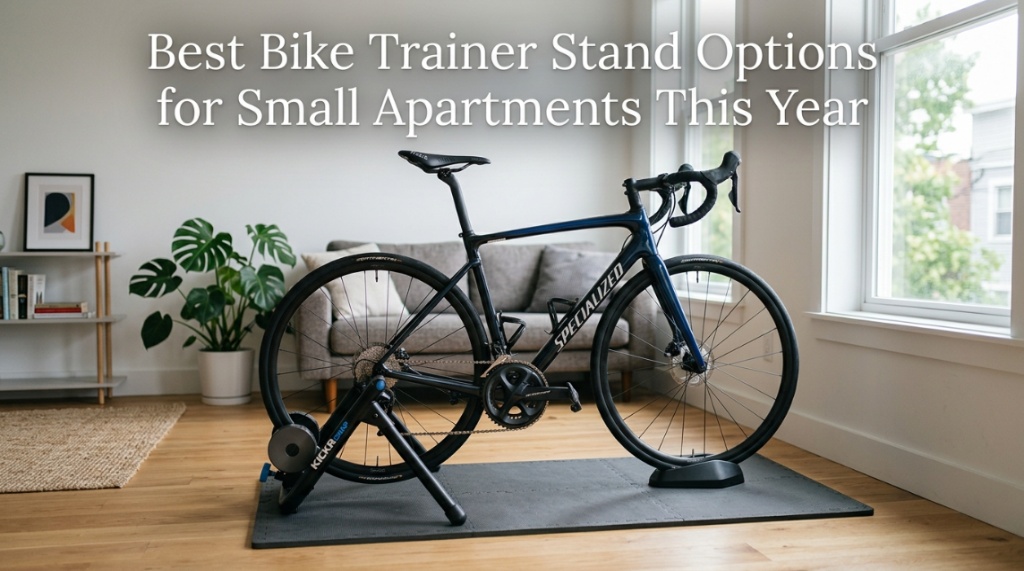
My first apartment measured 480 square feet — kitchen, bedroom, and living room all visible from the front door. When I decided to train indoors, everyone said it was impossible without a spare room. They were wrong. I found a best bike trainer stand that folded flat enough to slide behind my couch and occupied less floor space than a yoga mat during use. Small-space cycling isn’t about having room; it’s about choosing equipment designed for exactly this constraint.
An apartment bike trainer is a compact, foldable indoor cycling device specifically designed for limited living spaces — prioritizing small footprint, low noise output, easy storage, and minimal floor vibration over maximum features or professional-grade performance.
What Makes a Bike Trainer Stand Apartment-Friendly?
An apartment-friendly trainer folds to under 6 inches thick for storage, operates below 70 decibels, weighs under 20 pounds for easy repositioning, and uses rubber-dampened contact points to minimize floor vibration.
Not every trainer works in shared-wall living situations. The criteria that separate apartment-suitable trainers from garage-only models:
- Folded dimensions: Must store vertically in a closet or horizontally under a bed
- Noise output: Below 70dB (conversation level) — anything louder risks neighbor complaints
- Weight: Under 20 lbs for easy movement between storage and riding position
- Vibration dampening: Rubber feet or integrated isolation to prevent floor transmission
- Setup time: Under 5 minutes from storage to riding — longer setup kills daily habit formation
- No permanent installation: No bolts, no wall mounts, no modifications to the apartment
Which Types of Trainers Work Best in Small Spaces?
Fluid wheel-on trainers and compact direct-drive units offer the best combination of small footprint, low noise, and adequate performance for apartment bike trainer use.
| Trainer Type | Folded Size | Noise Level | Weight | Apartment Rating |
|---|---|---|---|---|
| Fluid wheel-on | 24″×18″×6″ | 60–68 dB | 14–18 lbs | Excellent |
| Magnetic wheel-on | 22″×16″×5″ | 65–75 dB | 12–16 lbs | Good |
| Compact direct-drive | 20″×18″×16″ | 55–65 dB | 35–47 lbs | Good (noise), Poor (storage) |
| Wind trainer | 24″×18″×6″ | 80–90 dB | 10–14 lbs | Not recommended |
| Rollers | 48″×6″×6″ | 65–75 dB | 15–22 lbs | Poor (length) |
Fluid trainers dominate the apartment category because they combine quiet operation with a foldable frame. Direct-drive trainers are quieter during use but heavier and bulkier for storage — a trade-off that works if you have a permanent corner to dedicate.
How Much Floor Space Does a Bike Trainer Actually Need?
A bike mounted on a trainer occupies approximately 5.5 feet long × 2.5 feet wide — roughly 14 square feet total, comparable to a small desk or dining table for two.
Space breakdown during active use:
- Bike length: 5–6 feet (varies by frame size)
- Handlebar width: 1.5–2 feet of lateral clearance needed
- Trainer base width: 1.5–2 feet
- Fan placement: 1–2 feet in front of the bike
- Side table/bottle access: 1 foot to one side
Total practical footprint: approximately 7 feet × 3 feet (21 square feet) including fan and accessories. In a 500-square-foot apartment, that’s about 4% of your total space — temporarily, only while riding.
Storage footprint when folded: most wheel-on trainers collapse to roughly the size of a large laptop bag. They fit behind furniture, inside closets, or under beds without consuming permanent living space.
How Do You Reduce Noise and Vibration in an Apartment?
Layer a thick rubber trainer mat over a dense foam interlocking tile to create a vibration-isolation sandwich that reduces transmitted noise by 60–70% compared to riding directly on hard flooring.
Noise travels through apartments via two paths: airborne sound (what you hear) and structure-borne vibration (what neighbors feel through floors and walls). Addressing both:
For airborne noise:
- Choose fluid or direct-drive trainers (quietest categories)
- Use a dedicated trainer tire — smoother rubber compounds reduce roller noise
- Maintain proper tire pressure — underinflated tires create more friction noise
- Avoid high-cadence spinning above 110 RPM — drivetrain noise increases exponentially
For structure-borne vibration:
- Trainer mat (dense rubber, 4–6mm thick) as the base layer
- Interlocking foam tiles underneath for additional isolation
- Anti-vibration pads under each trainer foot (washing machine pads work perfectly)
- Ride during reasonable hours — even quiet trainers transmit some vibration
- Position trainer against a load-bearing wall rather than center of floor span
What Are the Best Budget Apartment Trainers Under $200?
The best budget apartment trainers combine fluid resistance, foldable frames, and sub-70dB operation — several quality options exist in the $100–$200 range from established brands.
Budget picks that genuinely work in apartments:
- Fluid trainers ($130–$180): Progressive resistance, quiet operation, fold flat. Look for models with sealed fluid chambers (no leaking risk) and wide-stance legs for stability.
- Premium magnetic trainers ($80–$150): Multiple resistance levels via handlebar-mounted remote. Slightly louder than fluid but lighter and more compact when folded.
- Entry smart trainers ($150–$200): Basic Bluetooth connectivity with magnetic resistance. Noisier than fluid but offer app connectivity for motivation.
Avoid at this price point: wind trainers (too loud), ultra-cheap magnetic trainers under $60 (unstable, poor build quality), and any trainer without rubber-dampened feet.
Can You Use a Direct-Drive Trainer in an Apartment?
Yes — direct-drive trainers are actually the quietest option available, producing only 55–65 decibels. The trade-off is weight (35–50 lbs) and bulk that makes frequent storage impractical.
Direct-drive trainers work in apartments when:
- You have a permanent corner or alcove to dedicate (no daily setup/teardown)
- Noise is your primary concern over space
- You ride frequently enough to justify the permanent footprint
- Your apartment has hard flooring (easier to manage the weight)
The noise advantage is significant. Without tire-on-roller contact, direct-drive trainers eliminate the primary noise source. What remains is belt/gear mechanism sound and drivetrain noise — both substantially quieter than any wheel-on option. For apartment dwellers with noise-sensitive neighbors, this quietness often justifies the space compromise.
How Do You Store a Bike Trainer in a Small Apartment?
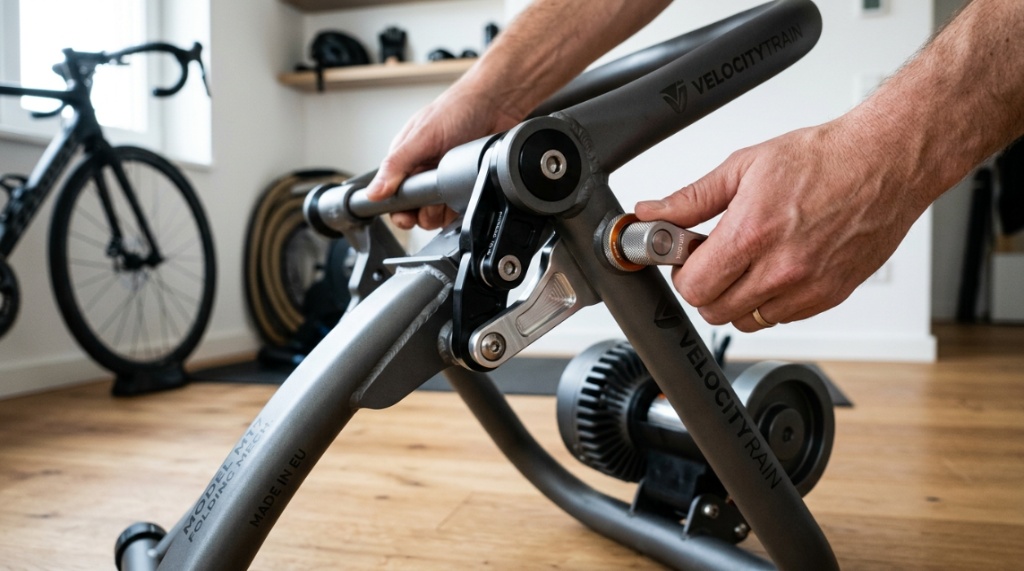
Fold the trainer flat and store vertically behind a door, inside a closet, under a bed, or between furniture pieces — most folded trainers occupy less space than an ironing board.
Creative storage solutions apartment cyclists actually use:
- Behind the couch: Folded trainers are thin enough to stand between a couch and wall
- Closet floor: Slides under hanging clothes without interfering
- Under the bed: Most folded trainers clear standard bed frame height (6–8 inches)
- Wall-mounted hooks: Hang the trainer on heavy-duty hooks like you would a bicycle
- Balcony storage box: Weatherproof container on a balcony keeps it accessible but out of living space
For the bike itself, wall-mount solutions (horizontal hooks or vertical stands) reclaim floor space when you’re not riding. A ceiling-mounted pulley system works in apartments with standard 8-foot ceilings — lifts the bike completely overhead.
Finding the right indoor setup comes down to your space constraints and riding preferences. While a compact stand is incredibly stable and easy to fold away, it isn’t your only compact option. If you want to work on your balance and core strength instead, learning how to add bike rollers to your home gym setup can give you a more dynamic, road-like feel without taking up a massive footprint.
What’s the Best Time to Ride a Trainer in an Apartment Building?
Ride between 8 AM and 9 PM on weekdays, and 9 AM to 8 PM on weekends — these windows respect most building quiet hours while giving you flexible training times.
Even with a quiet trainer and proper vibration isolation, be considerate:
- Avoid early morning sessions (before 7 AM) if you have downstairs neighbors
- Late evening rides (after 10 PM) risk complaints regardless of actual noise level
- Communicate with neighbors — let them know you cycle indoors and ask if they hear anything
- Offer your phone number so they can text if noise becomes an issue
- High-intensity intervals (sprints, standing efforts) generate more vibration — schedule these during daytime hours
Many apartment cyclists find early evening (5–7 PM) ideal — ambient building noise from cooking, TVs, and general activity masks any trainer sound, and it’s early enough to avoid quiet-hour conflicts.
How Do You Manage Sweat and Ventilation in a Small Space?
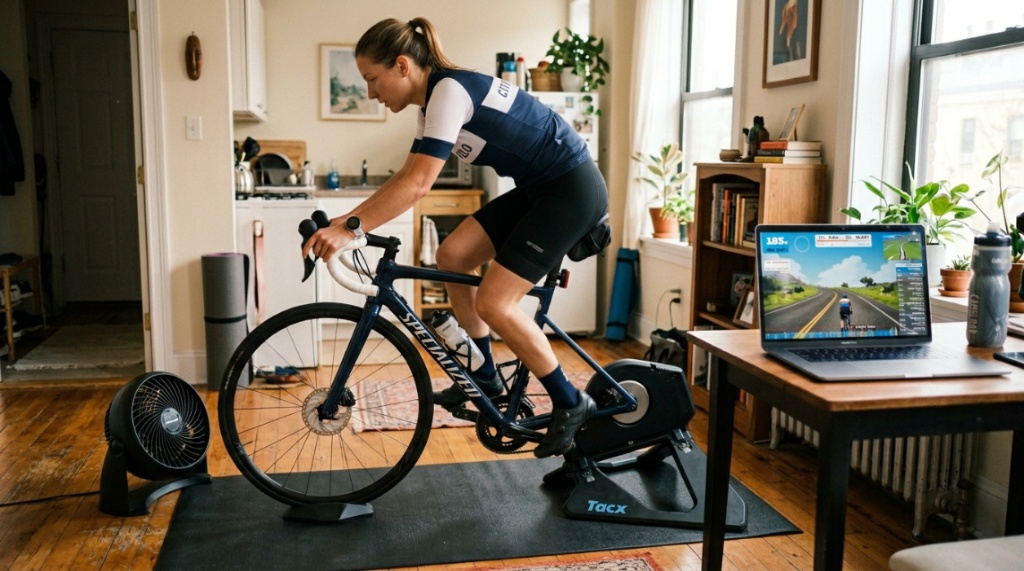
Position a high-velocity fan 3–4 feet in front of your riding position, open a window for cross-ventilation when possible, and use a frame-mounted sweat guard plus floor towels to protect your apartment.
Indoor cycling in a small space creates a microclimate problem. Without adequate airflow, temperature and humidity spike rapidly in a confined area. This affects both comfort and your apartment:
- Sweat damage: Cycling sweat is highly corrosive (salt content). It damages hardwood floors, corrodes bike components, and can stain carpets permanently.
- Humidity: A hard 60-minute session can release 1–2 liters of sweat. In a small room, this raises humidity noticeably.
- Temperature: Your body outputs 300–600 watts of heat during moderate cycling. In a 10×10 room, temperature rises measurably within 20 minutes.
Protection strategy: trainer mat (catches drips), frame sweat guard (protects headset and stem), towel on handlebars, and a post-ride wipe-down of the bike and surrounding floor. Open windows for 15 minutes after riding to reset humidity levels.
Conclusion
Small apartments don’t disqualify you from indoor cycling — they just narrow your equipment choices. Foldable fluid trainers offer the best balance of noise, performance, and storage for most apartment dwellers. Direct-drive trainers win on noise but demand permanent space. Either way, a proper mat, reasonable riding hours, and basic neighbor communication solve 95% of apartment training challenges.
The investment pays off quickly. No gym commute, no weather cancellations, no monthly membership fees. Your bike, your trainer, your schedule — all within the space you already have. Measure your available area, check your building’s quiet hours, and pick a trainer that fits both constraints.
Living in a small apartment and training indoors? Share your space-saving setup tips in the comments — the community always finds creative solutions I haven’t thought of.
Frequently Asked Questions
Will a bike trainer damage my apartment floor?
Not with proper protection. A trainer mat prevents scratches from the metal frame and catches sweat that would otherwise damage hardwood or stain carpet. Without a mat, the combination of vibration, metal contact points, and corrosive sweat can damage flooring within weeks of regular use.
Can my downstairs neighbors hear my bike trainer?
With a fluid or direct-drive trainer plus a vibration-dampening mat, most downstairs neighbors report hearing nothing during normal riding. High-intensity sprints and standing efforts generate more vibration. Ask your neighbor directly — they’ll appreciate the consideration, and you’ll know your actual noise impact.
What’s the quietest bike trainer for apartment use?
Direct-drive smart trainers are quietest at 55–65 decibels — quieter than a normal conversation. Among wheel-on options, fluid trainers with dedicated trainer tires produce 60–68 decibels. For comparison, a refrigerator hums at approximately 40 decibels and normal speech registers 60–70 decibels.
How do I cool down properly in a small apartment while cycling?
Use a high-velocity floor fan (not an oscillating household fan) positioned 3–4 feet in front at chest height. Open a window behind you to create cross-ventilation. In summer, consider a portable AC unit directed at your riding area. Proper cooling reduces perceived effort by 10–15% and allows longer, more productive sessions.
Can I use a bike trainer on a balcony instead of inside?
Yes, if your balcony is covered and the surface is level. Benefits include unlimited ventilation and zero indoor humidity concerns. Drawbacks: weather exposure (rain, extreme cold/heat), potential noise carrying to neighboring balconies, and UV damage to the trainer over time. Store the trainer inside when not in use.
Do I need to tell my landlord I’m using a bike trainer?
Generally no — a bike trainer is personal exercise equipment, not a modification to the apartment. However, if your lease has specific noise clauses or restrictions on heavy equipment, review those terms. Using a proper mat and riding during reasonable hours keeps you well within normal residential activity levels.