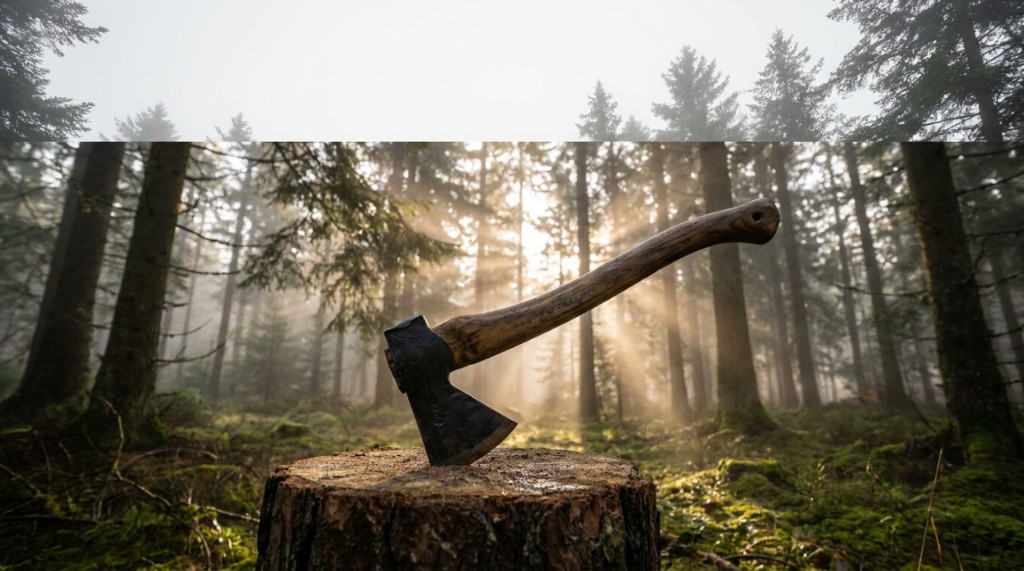
Deep in the Swedish boreal forest, a craftsman named Anders once told me that a bushcraft axe should feel like an extension of your forearm — not a tool you hold, but a limb you think with. That philosophy separates bushcraft axes from every other category of outdoor cutting tool. While camp axes optimize for splitting power and hatchets prioritize portability, a bushcraft axe balances carving precision, splitting capability, wood processing efficiency, and shelter-building versatility into a single tool that handles 90% of wilderness tasks without a backup. For outdoor survival gear enthusiasts who spend extended time in the woods — building shelters, processing game, crafting tools, and managing fire — the bushcraft axe is not optional equipment. It is the cornerstone tool around which all other gear decisions revolve. This guide identifies the best bushcraft axes available today and explains what makes each one worthy of your wilderness kit.
What Defines a True Bushcraft Axe?
A true bushcraft axe features a thin, flat-ground or Scandinavian-ground blade profile, a beard (extended lower edge) for choked-up carving grip, a curved handle between 15 and 19 inches, and a head weight of 1.25 to 2 pounds — optimized for versatility across carving, splitting, and processing tasks.
Not every axe marketed as “bushcraft” qualifies. The defining characteristics include:
- Thin profile: Bushcraft axes have thinner cheeks than splitting axes, allowing them to slice into wood for carving and limbing rather than just wedging it apart
- Beard: The blade extends below the handle line, creating a curved cutting edge that enables choked-up grip for fine carving work
- Flat or Scandi grind: A single bevel ground flat to the edge provides maximum sharpness and easy field maintenance
- Curved handle: An ergonomic S-curve or gentle arc that positions the wrist naturally for both overhead swings and close carving work
- Moderate weight: Heavy enough to split 5-inch rounds but light enough for extended one-handed carving sessions
A thick-cheeked splitting axe cannot carve. A tiny hatchet cannot process shelter poles. A bushcraft axe does both — not as well as a dedicated specialist tool, but well enough that you need nothing else in the woods.
Which Bushcraft Axes Lead the Market for Survival Use?
The Gransfors Bruk Small Forest Axe, Hultafors Ekelund Hunting Axe, Council Tool Velvicut Hudson Bay, Wetterlings Wilderness Axe, and Helko Werk Black Forest Woodworker consistently rank as the top bushcraft axes for serious outdoor survival use.
| Bushcraft Axe | Head Weight | Handle Length | Grind Type | Steel | Price Range |
|---|---|---|---|---|---|
| Gransfors Bruk Small Forest Axe | 1.5 lbs | 19 inches | Scandi with convex | Swedish axe steel | $150–$180 |
| Hultafors Ekelund Hunting Axe | 1.75 lbs | 20 inches | Convex | Swedish steel | $80–$110 |
| Council Tool Velvicut Hudson Bay | 2.0 lbs | 18 inches | Flat grind | 5160 carbon | $90–$120 |
| Wetterlings Wilderness Axe | 1.6 lbs | 17 inches | Scandi | Swedish C60 steel | $120–$160 |
| Helko Werk Black Forest Woodworker | 1.75 lbs | 18 inches | Convex | German C50 steel | $130–$170 |
The Gransfors Bruk Small Forest Axe dominates bushcraft communities for good reason — its hand-forged head, perfect weight distribution, and versatile grind handle everything from spoon carving to shelter pole processing. The Hultafors Ekelund offers 85% of that performance at 60% of the price, making it the value leader. The Council Tool Velvicut brings American-made quality with a slightly heavier head that excels at splitting tasks bushcrafters encounter in hardwood forests.
Why Does Grind Type Matter So Much for Bushcraft Axes?
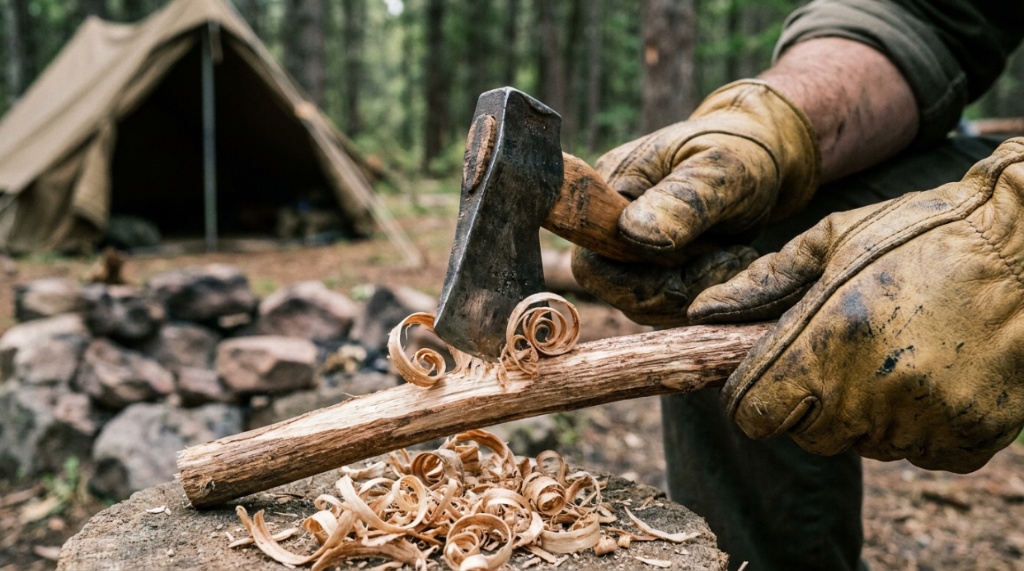
Grind type determines whether your bushcraft axe excels at carving (Scandi grind), splitting (convex grind), or provides balanced performance across both tasks — making it the single most important specification for bushcraft-specific use.
Three grinds dominate bushcraft axes:
- Scandinavian (Scandi) grind: A single flat bevel ground directly to the edge at 20–25 degrees. Produces the sharpest possible edge. Excels at carving, whittling, and precision cuts. Slightly fragile on hard knots. Easy to sharpen on a flat stone because the bevel itself registers against the stone surface.
- Convex grind: A rounded bevel that curves smoothly to the edge. Stronger than Scandi, slightly less sharp. Better for splitting and heavy processing. Harder to sharpen precisely but more forgiving of technique errors.
- Flat grind: A straight taper from the cheek to the edge. Middle ground between Scandi and convex. Common on American-made bushcraft axes. Versatile but masters neither extreme.
For pure bushcraft — shelter building, tool crafting, fire prep, and camp furniture — a Scandi grind provides the precision that defines the craft. For survival-focused bushcraft where splitting firewood is a daily necessity, a convex grind handles the abuse better. Many experienced bushcrafters own both and choose based on the trip’s primary demands.
What Handle Shape Works Best for Bushcraft Tasks?
A gently curved handle with a pronounced palm swell and flared pommel provides the best ergonomics for bushcraft tasks because it accommodates both full-grip overhead swings and choked-up carving positions without hand fatigue.
Bushcraft demands more grip versatility than any other axe discipline. In a single work session, you might:
- Swing overhead to fell a small tree (full grip at pommel)
- Choke up near the head for precise limbing cuts (short grip)
- Grip behind the beard for controlled carving strokes (finger grip)
- Use the poll as a hammer for driving stakes (reversed grip)
A straight handle works for splitting but feels awkward during carving transitions. A heavily curved handle (like traditional felling axe patterns) limits choked-up grip positions. The ideal bushcraft handle has a gentle S-curve — enough to index your hand position by feel but not so aggressive that it restricts grip options.
Handle wood matters too. American hickory provides the best shock absorption. European ash is lighter but slightly less durable. Both work well for bushcraft. Avoid handles shorter than 15 inches — they sacrifice too much swing power for the splitting tasks bushcraft inevitably requires.
How Do You Use a Bushcraft Axe for Shelter Building?
A bushcraft axe builds shelters through four primary operations: felling small trees (under 6-inch diameter), limbing poles to length, notching joints for structural connections, and splitting planks for roofing or platform material.
Shelter building showcases why bushcraft axes need versatility. A typical lean-to shelter requires:
- Ridgepole: Fell a 4-inch diameter tree, limb it clean, cut to 8–10 feet. Requires chopping power.
- Support poles: Process 6–8 poles at 2–3 inch diameter. Requires efficient limbing.
- Notches: Cut V-notches or saddle notches for structural joints. Requires carving precision.
- Roofing material: Split cedar or pine into thin planks for shingling. Requires controlled splitting.
- Stakes: Shape pointed stakes for anchoring. Requires one-handed carving control.
A dedicated splitting axe handles the felling but cannot notch. A hatchet carves beautifully but exhausts you during felling. The bushcraft axe transitions between all five operations without tool changes — a critical advantage when building shelter before dark in a survival scenario.
Staying prepared isn’t just about mastering the wilderness; true self-reliance means knowing how to maintain your entire homestead, whether you’re off the grid or managing home repairs. Just as a reliable hatchet is vital in the woods, having a dedicated set of implements for home maintenance prevents minor emergencies from turning into costly disasters. If you want to expand your self-reliance skill set beyond camp crafts, mastering basic home repairs is the logical next step. Ensuring your home workshop is properly stocked with the 6 Basic Plumbing Tools You Should Have in Your Toolbox will give you the exact same confidence when facing a burst pipe that a good axe gives you in the deep woods.
What Maintenance Does a Bushcraft Axe Need in the Field?
Field maintenance for a bushcraft axe requires a flat sharpening stone (for Scandi grinds) or a leather strop with compound (for convex grinds), plus a light oil application after each use session to prevent rust on exposed carbon steel.
Bushcraft axes see more varied use than any other axe type, which means more varied wear patterns. Maintenance adapts to the grind:
Scandi grind maintenance:
- Lay the flat bevel against a medium-grit stone (600–1000 grit)
- Stroke forward along the edge, maintaining full bevel contact
- The bevel itself acts as a guide — no angle guessing required
- Finish with a leather strop for razor sharpness
- Takes 3–5 minutes for a full touch-up
Convex grind maintenance:
- Use a leather strop loaded with green chromium oxide compound
- Draw the blade backward across the strop, rolling slightly to follow the convex curve
- For damaged edges, use a fine puck stone with circular motions following the curve
- More skill-dependent than Scandi sharpening but maintains the stronger edge profile
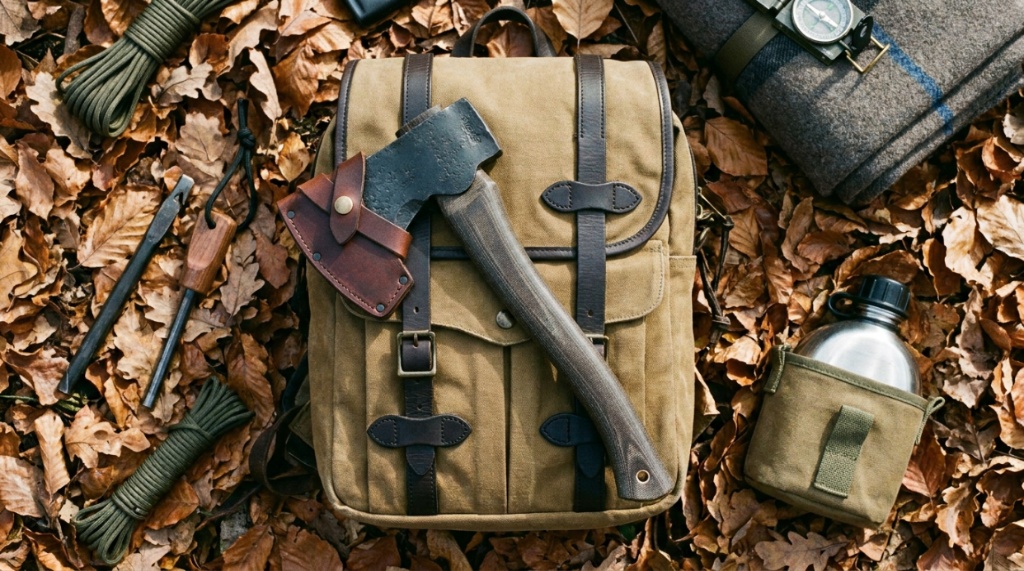
Rust prevention is critical for bushcraft axes because they spend extended time in humid forest environments. Wipe the head dry after every use, apply a thin oil film, and never store in a leather sheath overnight — leather holds moisture against the steel. Use the sheath for transport only.
Are Premium Bushcraft Axes Worth the Investment Over Budget Options?
For enthusiasts who use their bushcraft axe regularly (20+ days per year), premium axes ($120–$200) justify their cost through superior steel, hand-fitted handles, and decades of reliable performance that budget options cannot match.
The value equation depends on use frequency:
- Occasional use (5–10 days/year): A mid-range axe ($60–$90) like the Hultafors Ekelund or Council Tool provides excellent performance without premium pricing. You will not notice the difference between mid-range and premium at this use level.
- Regular use (15–30 days/year): Premium axes start justifying their cost. Better steel means less frequent sharpening. Hand-fitted handles mean better ergonomics over long sessions. Superior heat treatment means the edge lasts through full weekends of processing.
- Heavy use (30+ days/year): Premium is the only sensible choice. The per-use cost drops below mid-range options because premium axes last 30–50 years while budget options need replacement every 3–5 years.
What you actually pay for in a premium bushcraft axe: individually forged heads (not batch-produced), hand-ground edges with verified geometry, kiln-dried and hand-shaped handles fitted to each specific head, and quality control that rejects imperfect units. These factors compound into a tool that feels noticeably better in hand and performs more consistently over its lifetime.
For real-world durability testing of bushcraft-capable axes in extreme conditions, top camp axes and hatchets tested in Alaska provides performance data from extended wilderness use that reveals which tools maintain their edge and handle integrity under sustained bushcraft demands.
Conclusion
The best bushcraft axe for outdoor survival enthusiasts balances carving precision with splitting power through thoughtful design — thin profiles, bearded blades, Scandi or convex grinds, and curved handles that accommodate multiple grip positions. The Gransfors Bruk Small Forest Axe leads for pure quality. The Hultafors Ekelund wins on value. The Council Tool Velvicut excels in hardwood-heavy environments.
Choose based on your primary bushcraft activities. Shelter builders and carvers benefit from Scandi grinds. Firewood-heavy bushcrafters prefer convex. Everyone benefits from forged carbon steel, a properly curved handle, and the discipline to maintain their edge after every session. A well-chosen bushcraft axe is not just a tool — it is the foundation skill that makes all other wilderness craft possible.
Which bushcraft axe has earned permanent residence in your kit? Share your pick and the project that proved its worth.
Frequently Asked Questions
Can a bushcraft axe replace a knife in the wilderness?
A bushcraft axe handles many knife tasks — batoning, rough carving, food prep in emergencies — but cannot replace a knife for precision work like feather sticks, cordage processing, or game cleaning. Most bushcrafters carry both as complementary tools. The axe handles power tasks; the knife handles finesse tasks. Together they cover virtually all wilderness processing needs.
What is the ideal head weight for a bushcraft axe?
Between 1.25 and 2 pounds. Lighter heads (1.25–1.5 lbs) favor carving and extended one-handed use. Heavier heads (1.75–2 lbs) favor splitting and felling. The 1.5-lb sweet spot handles both disciplines adequately for most bushcraft enthusiasts without excelling at either extreme.
How long does a Scandi grind edge last on a bushcraft axe?
A properly maintained Scandi grind on quality steel (Swedish axe steel or 1060+ carbon) lasts 45–90 minutes of active cutting before needing a strop touch-up. Heavy splitting or contact with knots dulls it faster. A 2-minute strop session restores working sharpness. Full stone sharpening is needed every 3–4 hours of cumulative use.
Is a bushcraft axe good for batoning?
A bushcraft axe batons effectively for splits under 5 inches in diameter. Place the blade on the wood and strike the poll with a hardwood baton. The thin profile and sharp edge enter wood easily. However, repeated heavy batoning can damage the poll edge over time — use a dedicated batoning knife for frequent small-split work and reserve the axe for larger processing.
What is the difference between a bushcraft axe and a forest axe?
A forest axe is typically larger (2–3 lbs, 20–26 inch handle) and optimized for felling and limbing trees. A bushcraft axe is smaller (1.25–2 lbs, 15–19 inch handle) and optimized for versatility across carving, splitting, and processing. Forest axes sacrifice carving ability for chopping power. Bushcraft axes sacrifice some chopping power for multi-task capability.
Do I need a leather sheath for my bushcraft axe?
A sheath is essential for safe transport and edge protection. Leather is the traditional choice because it breathes, molds to the head shape, and provides excellent edge protection. However, store the axe outside the leather sheath during extended storage periods — leather holds moisture that causes rust. Use the sheath for transport and field carry only.
Can beginners start with a premium bushcraft axe?
Beginners can start with premium axes, but mid-range options ($60–$90) make more practical sense during the learning phase. Learning involves occasional misstrikes that damage handles and edges. A mid-range axe absorbs these learning costs without the financial sting of damaging a $180 tool. Upgrade to premium once your technique is consistent and you know exactly what specifications suit your bushcraft style.