What Makes a Fish Finder Suitable for Kayak Fishing?
A kayak fish finder should be portable, compact, and easy to mount, with a focus on shallow water performance. Unlike boat-mounted fish finders, kayak models need to be lightweight, battery-efficient, and adaptable to limited space.
Here’s what to look for:
- Portability: Choose a model that’s easy to carry and doesn’t take up much space. Portable fish finders like the Deeper PRO+ or Humminbird PIRANHAMAX 4 are ideal.
- Battery Life: Look for a device with long battery life (10+ hours) or the ability to connect to an external power source.
- Mounting Options: Kayaks have limited space, so opt for a fish finder that can be mounted on a rail, the hull, or even your paddle.
- Shallow Water Performance: High-frequency sonar (192–200 kHz) is best for shallow water, which is common in kayak fishing.
- Waterproofing: Ensure the device is waterproof or at least water-resistant to handle splashes and rain.
What Are the Best Mounting Options for Kayak Fish Finders?
Mount your fish finder securely to avoid losing it in the water and to ensure accurate readings. Here are the most popular mounting options for kayaks:
| Mounting Option | Pros | Cons | Best For |
|---|---|---|---|
| Transom Mount | Easy to install, removable | May interfere with paddle strokes | Sit-on-top kayaks |
| Hull Mount | Stable, accurate readings | Permanent, requires drilling | Dedicated fishing kayaks |
| Rail Mount | Adjustable, out of the way | Limited to kayaks with rails | Kayaks with accessory rails |
| Portable/Clamp Mount | No installation, versatile | Less stable in rough water | Rental kayaks or multi-use setups |
| DIY Mount | Customizable, budget-friendly | Requires some skill to build | Creative anglers |
People also ask: Can I use a suction cup mount for my kayak fish finder?
Yes, but suction cup mounts may not be as secure in rough water or if your kayak flexes a lot. For best results, use a mount designed specifically for kayaks.
What Are the Top Fish Finders for Kayak Fishing?
Here are some of the best fish finders for kayaks, based on performance, portability, and user reviews. These models are designed to meet the unique needs of kayak anglers.
| Model | Type | Max Depth | Frequency | Best For |
|---|---|---|---|---|
| Deeper PRO+ | Castable, Portable | 260 ft | 290 kHz | Shallow water, shore fishing |
| Humminbird PIRANHAMAX 4 | Fixed Mount | 600 ft | 200 kHz | Budget-friendly, compact |
| Garmin Striker 4 | Fixed Mount | 1,600 ft | 77/200 kHz | Versatile, CHIRP sonar |
| Lowrance HOOK2 4x | Fixed Mount | 300 ft | 200 kHz | Easy to use, wide sonar coverage |
| Vexilar SP200 | Portable, Ice/Kayak | 200 ft | 200 kHz | Ice and kayak fishing |
For shallow water fishing, the best kayak fish finder for shallow water is often the Deeper PRO+ or Garmin Striker 4, thanks to their portability and high-frequency sonar.
How to Power a Fish Finder on a Kayak?
Use a 12V battery, power bank, or the kayak’s built-in power system to keep your fish finder running all day. Here are the most common power options for kayak fish finders:
- 12V Battery: A small, sealed lead-acid or lithium-ion battery is the most reliable option. Mount it in a waterproof box and connect it to your fish finder.
- Power Bank: For portable fish finders, a high-capacity power bank (10,000mAh or more) can provide enough juice for a day of fishing.
- Kayak Power System: Some fishing kayaks come with built-in power systems or USB ports. Check your kayak’s specs to see if it can power your fish finder directly.
- Solar Charger: A small solar panel can extend your battery life, especially on long fishing trips.
Pro tip: Always carry a spare battery or power bank, especially if you’re fishing in remote areas.
Funding your outdoor adventures doesn’t have to break the bank. Once you master your local waters, you might find yourself dreaming of the ultimate fishing hotspots across the globe. Exploring what is destination travel in the world can open doors to incredible international fishing coordinates. If you need extra capital to fund these excursions or upgrade to top-tier sonar tech, learning how to earn money fast without investing much time is an excellent way to boost your gear budget without sacrificing your precious time on the water.
What Are the Common Challenges of Using a Fish Finder on a Kayak?
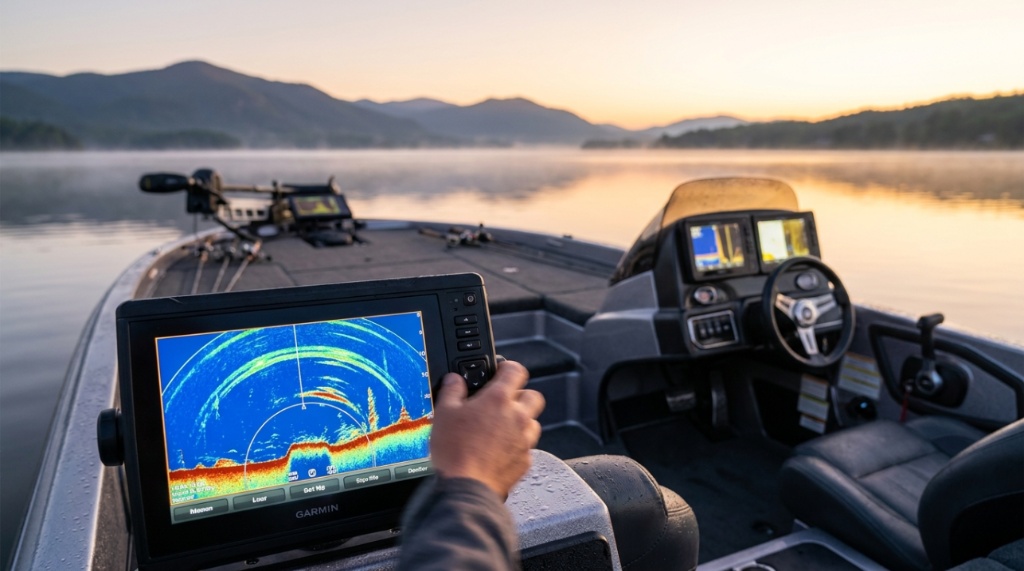
Kayak fish finders face unique challenges, such as limited space, power constraints, and stability issues. Here’s how to overcome them:
| Challenge | Solution |
|---|---|
| Limited Space | Choose a compact, portable model and use a rail or clamp mount to save space. |
| Power Constraints | Use a 12V battery or power bank, and always carry a spare. |
| Stability Issues | Secure your fish finder with a sturdy mount and avoid placing it where it can be knocked off by your paddle. |
| Water Interference | Use a transducer with a narrow cone angle to reduce interference from waves and splashes. |
| Limited Depth Range | Choose a model with a depth range that matches the waters you fish in. For shallow water, 200–300 feet is usually sufficient. |
Ready to upgrade your kayak fishing game? Pick a model that suits your needs, mount it securely, and hit the water with confidence. Tight lines!
Frequently Asked Questions
Can I use a boat fish finder on my kayak?
Yes, but it may not be practical. Boat fish finders are often larger and require more power than kayak models. If you already own a boat fish finder, look for a portable power source and a secure mounting option.
How do I read a fish finder on a kayak?
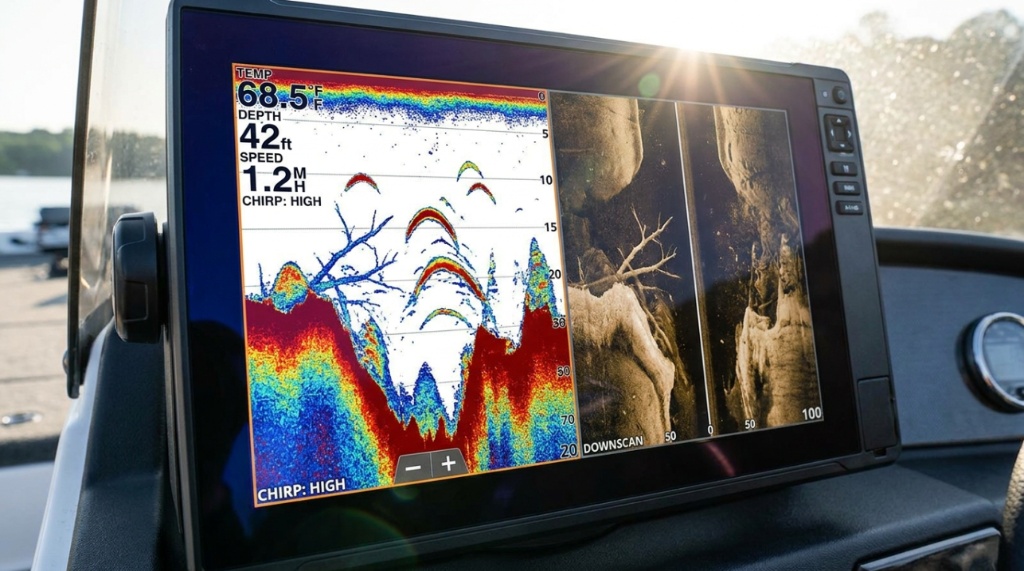
Start by understanding the basics: Fish appear as arches or blips on the screen, while the bottom is shown as a thick line. Adjust the sensitivity and depth range to get a clearer picture of what’s below your kayak.
What’s the best frequency for kayak fishing?
High frequency (192–200 kHz) is best for shallow water. It provides better resolution and detail, which is ideal for the typical depths you’ll encounter while kayak fishing.
Do I need a GPS on my kayak fish finder?
It’s helpful but not essential. GPS can help you mark fishing spots and navigate, but it’s not a must-have for all kayak anglers. If you fish in familiar waters, you may not need it.
How do I protect my fish finder from water damage?
Use a waterproof case or cover for your fish finder. Even if the device is water-resistant, it’s a good idea to protect it from splashes and rain. Some models come with waterproof bags or cases.