
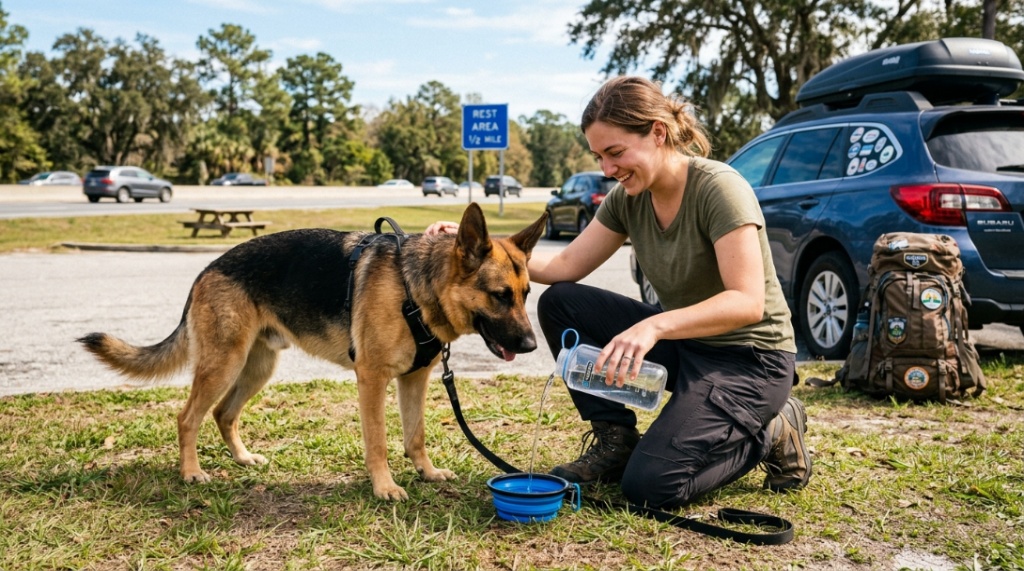
Two summers ago, a couple’s cross-country move turned into a $4,000 emergency vet visit when their unharnessed dog jumped from an open window at a rest stop — six broken ribs, a punctured lung, and a lesson learned too late. Road trips with dogs create unique safety challenges that daily drives do not: hours of continuous travel, unfamiliar environments, temperature extremes, and the cumulative stress that erodes both canine and human judgment. A dog travel harness is just one component of comprehensive dog road trip safety that includes pre-trip conditioning, in-transit protocols, rest stop procedures, and emergency preparations designed specifically for extended journeys. This guide covers the complete system — from selecting the right restraint equipment to managing the psychological and physical demands of multi-hour travel — so your next adventure creates memories, not emergencies.
What Makes Road Trip Safety Different From Regular Car Safety?
Road trip safety differs from regular car safety due to extended travel duration (increasing fatigue and stress), multiple vehicle entries/exits at unfamiliar locations, temperature fluctuations across regions, and the need for contingency planning when far from home veterinary care.
Key differences that require specific preparation:
- Duration: 2+ hour continuous travel versus typical 15–30 minute drives. Fatigue affects both dogs and drivers, reducing reaction times and increasing error risk.
- Environment changes: Multiple rest stops, unfamiliar roads, varying traffic patterns, and different regional hazards (wildlife, road conditions, weather).
- Temperature management: Hours in a vehicle means sustained temperature exposure — not just brief trips where ambient temperature matters less.
- Distance from resources: Being 200+ miles from your regular vet changes emergency response planning.
- Cumulative stress: Multiple days of travel create compounding stress that affects behavior, appetite, and health.
- Packing requirements: Need to bring safety equipment, medical supplies, and comfort items that stay-at-home drives do not require.
These differences mean that equipment rated for daily 20-minute drives may not suffice for 6-hour travel days. Restraint systems, cooling methods, and contingency plans must scale to road trip demands.
How Do You Prepare Your Dog for a Long Road Trip?
Prepare your dog through incremental conditioning drives, crate/harness desensitization, meal timing adjustments, and vet clearance — starting 2–4 weeks before departure to build tolerance and identify potential issues while still at home.
Road trip conditioning schedule:
Week 1 (4 weeks before trip):
- Start with 15-minute drives in full travel gear (harness, restraint)
- Practice loading/unloading at home without actual travel
- Introduce travel crate (if using) as a positive space with treats and feeding
- Begin adjusting meal times to align with planned travel schedule
Week 2 (3 weeks before trip):
- Increase drives to 30–45 minutes
- Practice rest stop simulations: harness on, brief stop, back in car
- Test all travel gear under actual driving conditions
- Schedule vet visit for travel clearance and medication refills
Week 3 (2 weeks before trip):
- 90-minute drives that include highway speeds
- Practice quick bathroom breaks at unfamiliar locations
- Test temperature management systems (cooling mats, fans)
- Pack and weigh your dog’s travel bag to ensure vehicle capacity
Week 4 (1 week before trip):
- Final equipment checks and replacements
- Last-minute vet visit if needed
- Create emergency contact list including vets along your route
- Dry run packing the car with all gear and your dog in position
This gradual approach prevents the most common road trip problem: a dog who becomes stressed, anxious, or carsick because their first long drive is the actual trip.
What Is the Best Restraint System for Multi-Hour Road Trips?
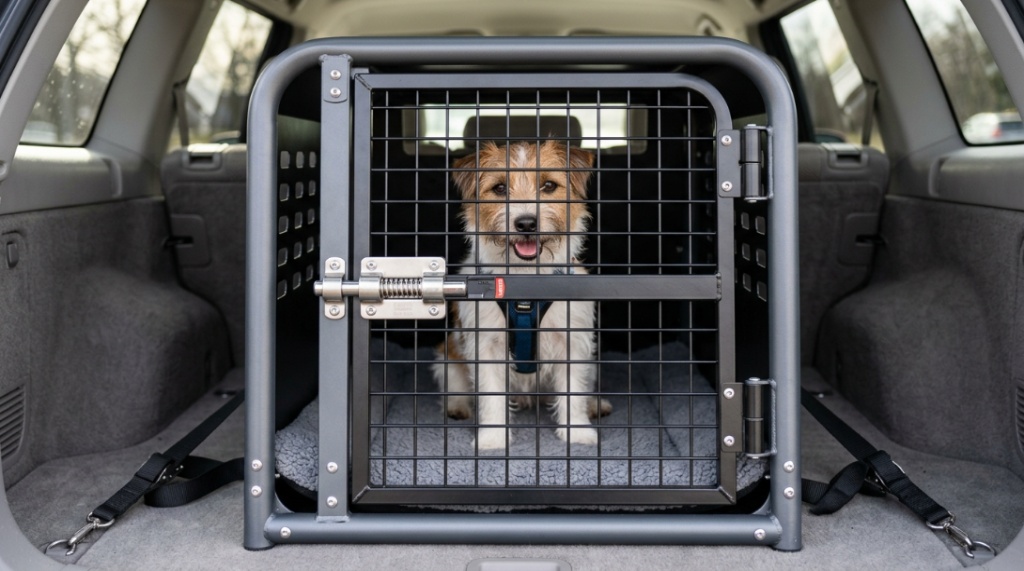
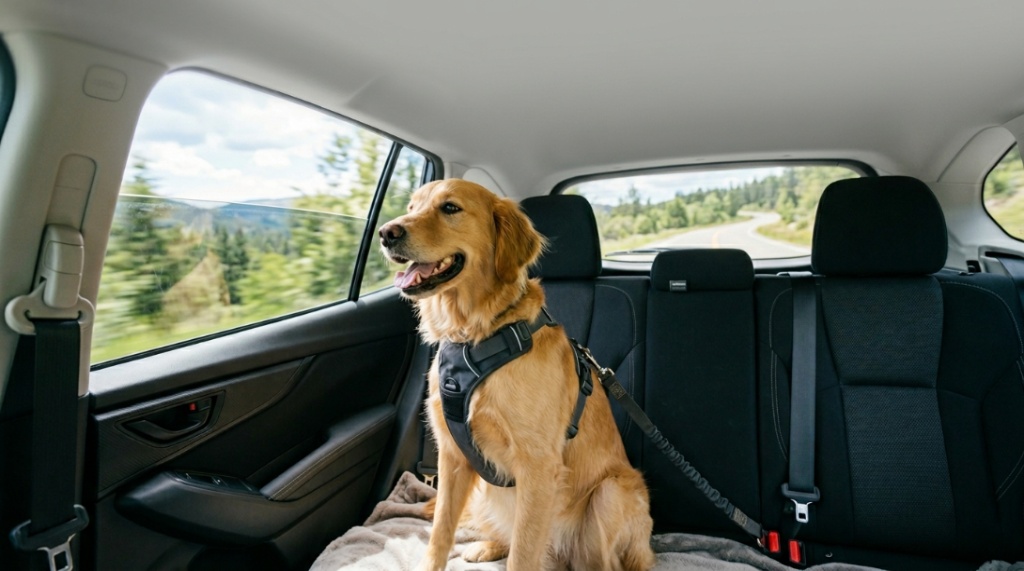
The best restraint system for multi-hour road trips combines a crash-tested travel harness with a seat belt tether that allows limited repositioning — providing safety during potential accidents while accommodating comfort needs during extended travel periods.
System components ranked by effectiveness:
| Component | Best For | Considerations | Not Recommended For |
|---|---|---|---|
| Crash-tested harness + seat belt tether | Most road trip scenarios | Allows sitting/lying/turning while preventing dangerous movement. Choose models with padding for comfort. | Dogs who panic when restrained or who chew through tethers |
| Crash-tested travel crate | Maximum safety, anxious dogs | Superior protection in serious accidents. Limited repositioning comfort. Requires vehicle space. | Dogs who get car sick in enclosed spaces |
| Vehicle barrier + harness system | SUVs, station wagons | Creates a secure zone in cargo area while allowing more movement. Must be crash-tested. | Sedans, small vehicles |
| Short-tether seat belt only | Minimal safety with some comfort | Prevents wandering but limited crash protection. Better than nothing but not ideal. | Long highway travel, high-speed roads |
| No restraint | Not recommended | Extremely dangerous. Dog becomes projectile during sudden stops. | All road trips |
The harness+tether combination works best for most road trips because it balances safety with the comfort needs of extended travel. Look for harnesses specifically designed for car travel — they have wider straps to distribute pressure, padding at stress points, and attachment points positioned to prevent twisting.
How Do You Manage Temperature During Long Car Journeys?
Manage temperature through active cooling systems (vehicle AC with proper airflow distribution), passive cooling aids (cooling mats, elevated beds), monitoring devices (thermometers with alerts), and scheduled stops every 2–3 hours for temperature equalization.
Temperature management protocol for road trips:
Before departure:
- Pre-cool vehicle to 68–72°F before loading your dog
- Install sun shades on windows that receive direct sunlight
- Use light-colored, reflective window covers to reduce solar heat gain
- Position cooling mats or elevated mesh beds in your dog’s travel area
During travel:
- Maintain cabin temperature at 68–75°F
- Use rear AC vents (or portable fans if no rear vents) to ensure airflow reaches your dog
- Monitor with a digital thermometer placed at your dog’s level (not driver level)
- Stop every 2–3 hours to open doors and equalize temperatures
At rest stops:
- Never leave your dog unattended in a parked vehicle
- If you must leave briefly, leave AC running with doors locked (controversial but sometimes necessary)
- Park in shade with windows cracked and return within 5 minutes maximum
- Better: use drive-through services or take turns staying with the vehicle
Emergency overheating response:
- Recognize signs: excessive panting, bright red gums, lethargy, vomiting
- Immediately move to shade, offer small amounts of cool (not cold) water
- Apply cool towels to paw pads, groin, and armpits — not whole body
- Seek veterinary care immediately — heat stroke causes organ damage rapidly
For New Jersey road trips specifically, summer humidity reduces evaporative cooling effectiveness. Active AC becomes essential rather than optional.
What Should Your Road Trip Emergency Kit Include for Your Dog?
Your road trip emergency kit should include: veterinary records, medications with 3-day extra supply, first aid supplies, emergency contact information for vets along your route, recovery tools (slip lead, muzzle), and identification redundancies (microchip, tags, temporary travel tag).
Complete emergency kit checklist:
- Medical documentation: Current vaccination records, health certificate (if crossing state lines), prescription information, microchip number
- Medications: 3-day extra supply of all regular medications, basic first aid (vet wrap, antiseptic, tweezers, thermometer), motion sickness medication if prescribed
- Identification: Permanent microchip, collar tags with current cell number, temporary travel tag with destination address/phone, recent photos (digital and printed)
- Emergency contacts: List of emergency veterinary hospitals along your route (research before departure), poison control hotline, regular vet’s after-hours contact
- Recovery tools: Slip lead (works as temporary leash if regular leash is lost), soft muzzle (for injury situations when even friendly dogs may bite), blanket for restraint/comfort
- Basic supplies: Collapsible water bowl, gallon of water, high-value treats for emergency recall, flashlight with extra batteries
- Vehicle tools: Window breaker/rescue tool (in case you need to extract your dog from vehicle), seat belt cutter, reflective triangles for roadside emergencies
Store this kit in an easily accessible location — not buried under luggage. Review contents before each trip and replace expired medications.
How Often Should You Stop During a Dog Road Trip?
Stop every 2–3 hours for 15–20 minute breaks that include bathroom opportunity, water intake, brief leash walk for circulation, and temperature equalization — adjusting frequency based on your dog’s age, health, and size (smaller dogs need more frequent stops).
Stop schedule by dog characteristics:
- Puppies (under 1 year): Every 1.5–2 hours. Developing bladders, higher energy, shorter attention spans.
- Adult dogs (1–7 years): Every 2–3 hours. Most can manage this interval comfortably.
- Senior dogs (7+ years): Every 2–2.5 hours. Arthritis, reduced bladder control, and temperature sensitivity require more frequent stops.
- Small breeds (under 25 lbs): Every 2–2.5 hours. Smaller bladders, faster metabolism.
- Large breeds (60+ lbs): Every 3–4 hours. Can hold longer but benefit from stretching to prevent stiffness.
- Brachycephalic breeds (pugs, bulldogs): Every 1.5–2 hours. Breathing issues require frequent temperature and stress checks.
What to do at each stop:
- First 5 minutes: Allow bathroom break on leash in designated pet areas
- Next 5 minutes: Offer water (small amounts to prevent bloat)
- Final 5–10 minutes: Brief leash walk for circulation and mental stimulation
- Before reboarding: Check paws for debris, ensure harness is properly fitted, offer small treat for positive association
Never rush stops. The 15–20 minute investment prevents accidents in the car, reduces stress buildup, and maintains your dog’s comfort throughout the journey.
What Are the Most Common Road Trip Mistakes Dog Owners Make?
The most common mistakes are: skipping pre-trip conditioning, using inadequate restraint systems, failing to plan rest stops, leaving dogs unattended in vehicles, not having emergency plans, and overestimating their dog’s travel tolerance based on short local drives.
Specific errors to avoid:
- Assuming local drive tolerance equals road trip readiness: A dog who handles 30-minute errands may become severely stressed during hour 4 of continuous travel.
- Using “just this once” safety compromises: “We’re only going a short distance” or “I’ll hold him” — accidents happen regardless of trip length or good intentions.
- Inadequate hydration planning: Offering water only at stops causes dehydration; offering unlimited water causes car sickness and frequent bathroom needs.
- Poor temperature management: Relying on “cracking windows” instead of active cooling during summer travel.
- Missing identification updates: Traveling with tags showing your home number when you will be states away for days.
- Overpacking the vehicle: Creating visibility obstructions or blocking air circulation to your dog’s area.
- Ignoring stress signals: Pushing through when your dog shows clear anxiety signs (panting, whining, trembling).
- No emergency veterinary research: Assuming you can find care if needed rather than identifying options in advance.
For comprehensive reviews of travel safety equipment tested specifically for road trip conditions, the best dog travel harness and seat belt systems reviewed for New Jersey provides detailed analysis of products evaluated under extended travel conditions — helping you choose equipment that performs through hours of continuous use rather than just brief local drives.
Conclusion
Keeping your dog safe during road trips requires a systems approach: proper restraint equipment selected for extended use, gradual conditioning before departure, temperature management protocols, scheduled rest stops, comprehensive emergency planning, and vigilance for stress signals that indicate needed adjustments. The harness and seat belt are just the foundation — the complete safety system includes everything from pre-trip veterinary clearance to rest stop routines to emergency contact lists.
Road trips with your dog can create lifelong memories when done safely. They can also create lifelong regrets when safety is compromised. Invest the preparation time, purchase the proper equipment, and follow the protocols that address road trips’ unique challenges. Your dog’s safety — and your peace of mind — are worth every minute of preparation and every dollar of proper equipment.
What is your most important road trip safety tip for traveling with dogs? Share your experience to help fellow pet parents prepare better.
Frequently Asked Questions
Should I sedate my dog for long car trips?
Never sedate your dog without veterinary guidance. Sedatives can interfere with temperature regulation, balance, and the ability to brace during sudden stops. For anxious dogs, consult your vet about anxiety-specific medications (trazodone, gabapentin) that reduce stress without causing sedation. Behavior modification (conditioning) and natural calming aids (Adaptil, anxiety wraps) are safer first options.
How do I prevent car sickness in my dog during road trips?
Withhold food for 3–4 hours before travel (water is okay), use a raised platform or harness that allows your dog to see outside (reduces motion sickness), ensure good ventilation, and consider natural remedies (ginger treats) or vet-prescribed medications if needed. Gradual conditioning drives also help many dogs overcome car sickness by building tolerance.
Can my dog ride in the front seat during road trips?
No — front seats are extremely dangerous for dogs. Airbags deploy with enough force to kill a dog, and the dashboard/windshield area is the most dangerous zone in frontal collisions. Always secure your dog in the back seat or cargo area. If you have a two-seater vehicle, disable the passenger airbag and use a crash-tested crate or restraint system specifically designed for that vehicle type.
What paperwork do I need for interstate travel with my dog?
Requirements vary by state but typically include: current rabies vaccination certificate (usually within 1 year), health certificate from a licensed veterinarian (often within 30 days of travel), and proof of other vaccinations (distemper, parvovirus). Some states have additional requirements for specific breeds or require parasite testing. Research destination state regulations 2–3 weeks before travel.
How can I keep my dog entertained during long drives?
Provide safe, car-appropriate toys (no small parts that could be swallowed), consider a travel puzzle toy with treats, play calming music designed for dogs, schedule stops for brief sniff walks (mental stimulation), and rotate toys every few hours. Avoid toys that require vigorous movement or could become projectiles during sudden stops.
What should I do if my dog escapes at a rest stop?
Immediately contain the area — close all vehicle doors, notify other travelers, and prevent access to roads. Use high-value treats, familiar commands, and avoid chasing (which triggers flight response). Have a slip lead ready at all stops for quick capture. If your dog bolts, stay at the location (they may return) while someone searches nearby. Prevention (secure leash before opening doors) is far more effective than recovery.
Are hotel stays safe for dogs during road trips?
Pet-friendly hotels can be safe with precautions: inspect the room for hazards (open windows, accessible trash), bring your dog’s familiar bedding, use a portable crate for containment, never leave your dog unattended, and research hotel pet policies in advance. Some hotels have weight limits, breed restrictions, or additional fees. Always disclose that you are traveling with a pet when making reservations.