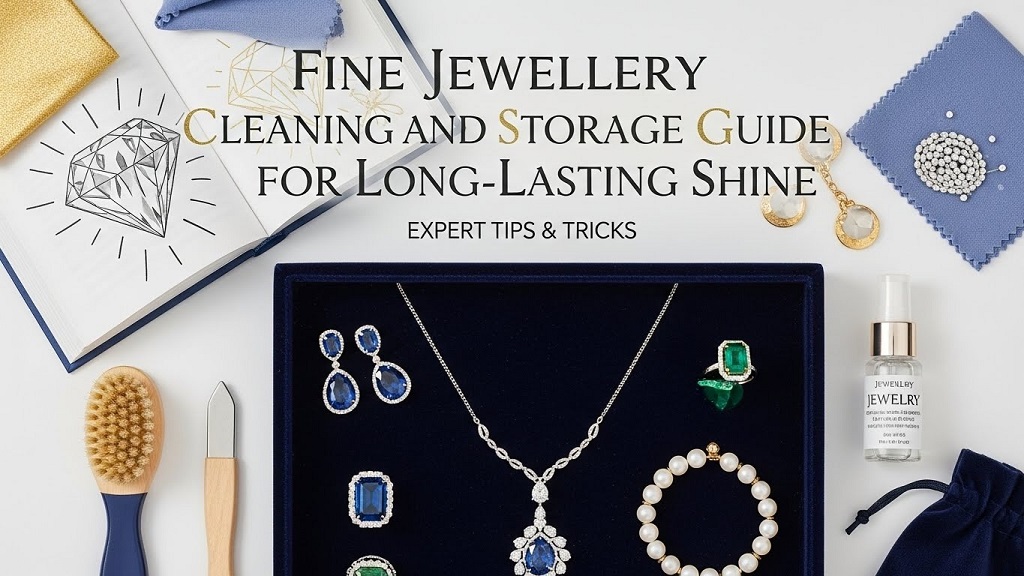
Fine jewellery cleaning and storage refer to the care methods used to preserve the shine, durability, and beauty of valuable pieces like gold, diamond, silver, and gemstone jewellery. Proper cleaning removes dirt and oils that dull brilliance, while smart storage solutions protect jewellery from scratches, moisture, and tarnish. With the right routine and environment, your cherished items can look as radiant as the day you bought them.
Why Is Fine Jewellery Care Important for Longevity?
Jewellery is more than decoration—it’s an investment and often a sentimental treasure. Regular cleaning prevents residue buildup that can weaken metal settings and dull gemstones. Secure storage protects your collection from exposure to air, humidity, and chemicals that accelerate tarnish and corrosion. Long-term care ensures each piece maintains its value, elegance, and emotional significance for years to come.
How Often Should You Clean Fine Jewellery?
The cleaning frequency depends on wear and exposure. Everyday pieces like rings and earrings should be cleaned weekly, while occasional items can be cleaned monthly. Professional cleanings once or twice a year are recommended to maintain brilliance and ensure gemstone security.
Quick Cleaning Routine at Home
- Mix warm water with a few drops of mild dish soap.
- Soak jewellery for 10–15 minutes.
- Gently brush with a soft toothbrush.
- Rinse under lukewarm water and pat dry with a microfiber cloth.
Tip: Avoid harsh cleaners or toothpaste; they can scratch metals and stones.
What Are the Best Cleaning Methods for Each Jewellery Type?
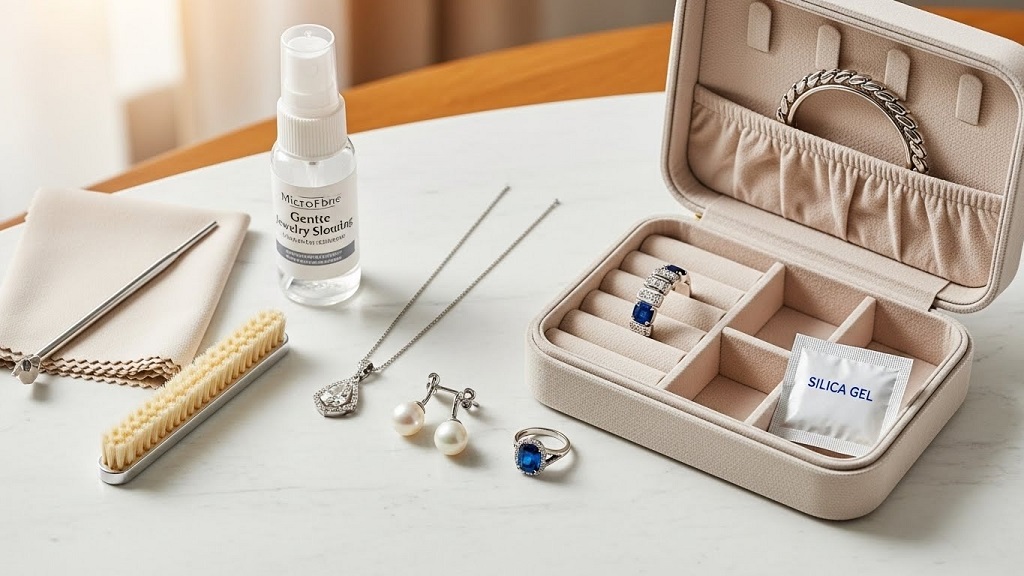
Different materials require different cleaning methods. Using the wrong approach could damage your jewellery. Here’s a guide to follow:
| Jewellery Type | Recommended Cleaning Method | Care Tips |
|---|---|---|
| Gold | Warm water with mild detergent, soft brush | Polish with a lint-free cloth to restore shine. |
| Silver | Silver polishing cloth or baking soda solution | Store in anti-tarnish pouches to prevent jewellery tarnish. |
| Diamond | Ammonia-based solution (1 part ammonia to 6 parts water) | Clean gently; avoid scratches by using soft materials. |
| Pearls | Damp cloth only, no soaking | Keep dry and store separately from metals. |
| Gemstones | Warm water, mild soap | Check for loose settings before cleaning. |
What Are Effective Jewellery Storage Ideas to Prevent Damage?
Proper storage is key to preventing scratches, tarnish, and tangles. Innovative jewellery storage ideas help you organize your collection while maintaining its pristine condition.
Best Jewellery Storage Practices
- Individual Compartments: Store each item separately to avoid metal and gemstone contact.
- Soft Linings: Use velvet or felt trays to cushion valuable pieces.
- Anti-Tarnish Fabric: Wrap silver jewellery in anti-tarnish cloth to delay oxidation.
- Humidity Control: Include silica gel packets to control moisture and prevent jewellery tarnish.
- Travel Storage: Use compact travel cases with soft inserts for safe transport.
Pro Tip: Never store fine jewellery in bathrooms or near heat sources. Humidity and temperature fluctuations speed up tarnish.
How to Prevent Jewellery Tarnish Effectively?
Tarnishing happens when metals like silver or copper react with air, moisture, or chemicals. Prevention begins with how you handle and store your jewellery.
Daily Habits to Prevent Tarnish
- Remove jewellery before showering, swimming, or exercising.
- Avoid direct contact with perfumes, lotions, and household cleaners.
- Wipe pieces with a dry, soft cloth after each use to remove skin oils and residues.
- Rotate jewellery pieces to minimize exposure and wear.
- Use air-tight containers or zip-lock bags for silver items.
Can You Use Ultrasonic Cleaners for Fine Jewellery?
Ultrasonic cleaners use high-frequency sound waves to remove grime, but they are not suitable for every piece. They work well for hard gemstones like diamonds, rubies, and sapphires, yet can damage delicate materials.
When to Avoid Ultrasonic Cleaners
- On pearls, opals, emeralds, and other porous stones.
- If jewellery has loose settings or cracks.
- When cleaning antique or enamel pieces.
For safety, consult a jeweller before using an ultrasonic machine on finer items.
What Are Eco-Friendly Jewellery Cleaning Methods?
For those who prefer natural cleaning, there are gentle, eco-friendly alternatives to chemical-based cleaners.
DIY Cleaning Options
- Baking Soda Paste: Mix three parts baking soda and one part water. Apply gently with a cloth.
- Vinegar Solution: Soak pure silver for 5 minutes in white vinegar mixed with baking soda (½ cup vinegar, 2 tbsp baking soda).
- Lemon & Olive Oil: For gold pieces, mix one teaspoon of lemon juice with small drops of olive oil for a natural polish.
These methods are safe, inexpensive, and keep your jewellery gleaming without harsh chemicals.
How Should You Store Fine Jewellery Long-Term?
If you don’t wear certain pieces often, store them properly to preserve their condition long-term.
Long-Term Storage Tips
- Clean each item thoroughly before storing.
- Wrap individually in acid-free tissue or jewellery-grade pouches.
- Keep in a dry, cool place with controlled temperature.
- Inspect and air out your collection every few months.
- Consider using a safe deposit box for high-value items.
How to Organize Jewellery for Easy Access?
Organized storage ensures quick access and prevents tangling or misplacement.
Creative Jewellery Storage Ideas
- Use tiered jewellery boxes with labeled sections.
- Wall-mounted jewellery organizers for visual display.
- Acrylic drawer dividers to separate daily-wear items.
- Repurpose vintage cups or dishes for rings and studs.
Organizing not only protects your jewellery but also turns your collection into a beautiful display.
How to Know When Jewellery Needs Professional Cleaning?
Even with proper care, professional attention is essential occasionally. Visit a jeweller if you notice:
- Gemstones that appear cloudy or lose brilliance.
- Visible dullness that doesn’t improve with regular cleaning.
- Loose prongs, polishing wear, or structural issues.
A professional can deep-clean, re-polish, and restore settings to like-new condition.
Conclusion: Keep Your Jewellery Radiant for Years
Your jewellery deserves care as refined as its craftsmanship. By combining regular cleanings, protective storage, and simple habits, you can preserve the beauty and sentiment each piece represents. Incorporate eco-friendly cleaning methods and smart storage solutions to prevent jewellery tarnish and wear. Remember — lasting shine begins with mindful maintenance.
Call to Action: Ready to keep your fine jewellery shining? Explore our recommended storage products and professional cleaning kits to transform your collection’s maintenance routine today!
FAQs About Fine Jewellery Cleaning and Storage
1. How do you clean jewellery without damaging it?
Use mild soap, warm water, and a soft-bristled brush. Avoid harsh chemicals or abrasive materials that can scratch metals and stones.
2. What is the best way to prevent jewellery tarnish?
Store jewellery in air-tight containers, use anti-tarnish strips, and minimize exposure to moisture, air, and chemicals.
3. How should I store fine jewellery at home?
Keep each item in a separate, soft-lined compartment or pouch. Avoid stacking or mixing different metals and gemstones.
4. Can toothpaste clean jewellery?
No. Toothpaste is too abrasive for precious metals and stones and can cause scratches or dull surfaces.
5. How often should I polish silver jewellery?
Polish silver every few months or whenever it starts to look dull. Frequent light polishing prevents deep tarnish buildup.
6. Can I store pearls with other jewellery?
It’s best to store pearls separately. Their surface is soft and can be scratched by harder gems or metal edges.
7. Is professional jewellery cleaning worth it?
Yes. Professionals use ultrasonic or steam systems for deep cleaning, ensuring stones remain secure and metal finishes stay intact.