You finally decided to start a fish tank, but the price tags at the pet store sent you into a tailspin. A thriving aquarium doesn’t require a second mortgage. Many beginners over-spend on flashy gear while missing the cheap, critical items that actually keep fish alive.
What Size Tank Should a Beginner Actually Buy?
For beginners, a 20-gallon long tank is the ideal balance between cost, stability, and forgiving water chemistry. Small bowls and nano tanks (under 5 gallons) fluctuate temperatures and toxin levels within hours, killing fish quickly. A larger volume gives you a safety net when you make inevitable beginner mistakes.
Smaller tanks might seem cheaper upfront, but they require more frequent water changes, precise dosing, and expensive test kits. A 20-gallon tank from a standard brand typically costs $30–$50 during sales. Avoid curved glass or specialty tanks—they cost more and are harder to clean. Look for a standard rectangular aquarium with a rim. Pair it with a simple glass lid and a basic LED light strip (not the expensive programmable ones), This guide breaks down exactly what you need to buy (and what you can skip) to set up a healthy, stable fish tank using budget-friendly fish tank setup aquarium essentials that actually work.
Why Not a 10-Gallon or a Bowl?
Ten-gallon tanks are common but cramped for most community fish. Bowls lack surface area for oxygen exchange. Neither provides room for a proper filter and heater without becoming overcrowded. A 20-gallon allows for a realistic learning curve without breaking the bank.
Which Filter Is Most Affordable and Reliable?
A hang-on-back (HOB) power filter is the most affordable, reliable, and beginner-friendly choice for a healthy tank. Canister filters are expensive and overkill for most setups under 55 gallons. Sponge filters are cheap but require an air pump and produce surface agitation that can cool the water unevenly.
Look for a filter rated for a tank slightly larger than yours. For a 20-gallon, buy a filter rated for 30–40 gallons. This ensures adequate flow and biological filtration capacity. Brands like AquaClear and Aqueon offer reliable models under $40. The key is the filter media: use a coarse sponge (mechanical), a bag of ceramic rings (biological), and activated carbon (chemical, optional after the first month). When the sponge gets dirty, rinse it in old tank water during a water change—never under tap water, which kills beneficial bacteria.
What Filter Media Should You Avoid?
Avoid disposable “all-in-one” cartridges that pet stores push. They are expensive, need constant replacement, and remove beneficial bacteria every time you swap them out. Switch to reusable media like foam blocks and bio-balls. You will save $50–$100 per year just on cartridges.
Is a Heater Required for All Fish Tanks?
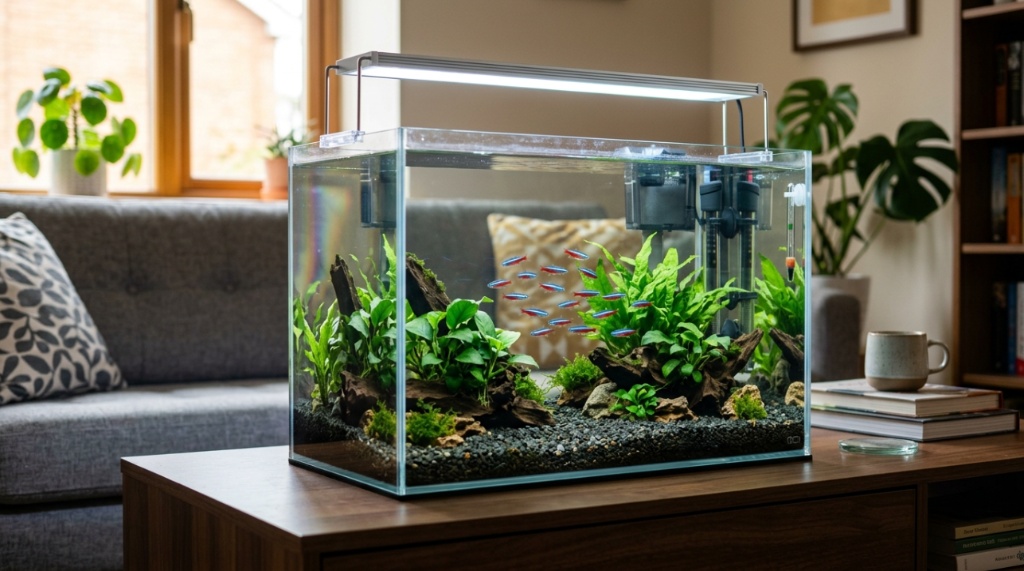
Yes, unless your home stays at a constant 76–80°F year-round. Most popular aquarium fish (tetras, guppies, corydoras, bettas) are tropical and require stable warmth. Temperature swings stress fish, suppress their immune systems, and cause ich outbreaks.
Choose a fully submersible heater with an adjustable thermostat. A good rule is 3–5 watts per gallon of water. For a 20-gallon tank, a 100-watt heater works perfectly. Place it near the filter outflow to distribute heat evenly. Buy a separate glass thermometer (a $3 stick-on model works fine) to double-check the heater’s built-in reading. Never trust the heater’s dial alone.
What About Inline Heaters or Controllers?
Inline heaters that attach to canister filter hoses are unnecessary for budget setups. Expensive temperature controllers are also overkill for a single tank. A quality submersible heater with a backup thermometer is sufficient.
Which Substrate Is Best for a Low-Cost Setup?
Plain, washed play sand or pool filter sand is the cheapest and most functional substrate for most healthy freshwater tanks. It costs pennies per pound compared to “aquarium-specific” gravel or planted soils. It is also easier for bottom-dwelling fish like corydoras to sift through without damaging their barbels.
If you want live plants, use a thick layer (2–3 inches) of sand and add root tabs (fertilizer pellets) under the roots. Avoid colored gravel or calcium-based substrates that leach minerals into the water, raising pH and hardness unpredictably. Before adding sand to your tank, rinse it thoroughly in a bucket until the water runs clear. This prevents cloudiness that takes days to settle.
How Do You Cycle a Fish Tank Without Fish?
A fishless cycle uses pure ammonia or raw shrimp to create bacteria colonies without harming any fish. This process takes 4–8 weeks but produces a stable, healthy tank that does not kill your first fish. Simply fill the tank, run the filter and heater, add a source of ammonia (liquid ammonia from the hardware store with no additives works best), and test the water every few days.
You are looking for an ammonia spike, then a nitrite spike, then the appearance of nitrates. When both ammonia and nitrite read zero for three consecutive days and nitrate is present, the cycle is complete. The fish tank setup aquarium essentials for this process include a basic master test kit (liquid-based, not strips) and a bottle of pure ammonia.
Can You Cycle a Tank with Fish?
Yes, but it involves daily water changes, a high risk of fish death, and constant monitoring. It is not recommended for beginners. The fishless method is more ethical, cheaper, and gives you a stronger, more stable filter.
What Live Plants Thrive Without Expensive CO2 Systems?
Hardy, low-light plants like Java fern, Anubias, hornwort, and Java moss grow well in basic substrate with standard LED lights. They absorb nitrates, produce oxygen, and outcompete algae without requiring injected CO2 or expensive fertilizers. These plants cost $3–$8 per bunch at local fish stores or from online hobbyists.
Anubias and Java fern should not be planted in the substrate. Instead, attach them to driftwood or rocks using fishing line or super glue gel. Their rhizomes (the thick horizontal stem) rot if buried. Hornwort can float freely in the water column, which makes it excellent for absorbing excess nutrients and providing shade for shy fish.
Which Test Kit Is Essential for a Healthy Tank?
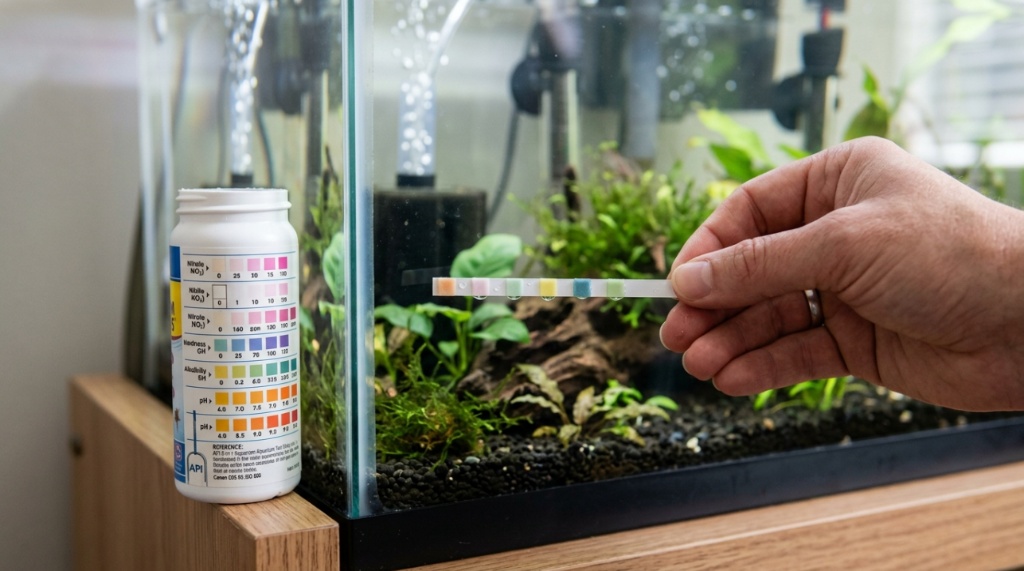
A liquid-based API Master Test Kit is the only test kit a beginner should buy. It tests ammonia, nitrite, nitrate, and pH accurately. Test strips are cheaper upfront but become unreliable within weeks after the bottle is opened, leading to false readings that kill fish.
During the first month of your tank’s life, test ammonia and nitrite daily. After the cycle is complete, test once a week. Nitrate readings above 40 ppm indicate it is time for a water change. A single master kit lasts 6–12 months depending on usage, costing about $30–$35—far cheaper than replacing dead fish.
Can You Use Tap Water Directly in an Aquarium?
No. Tap water contains chlorine and chloramines that are toxic to fish and kill filter bacteria. You must treat tap water with a dechlorinator (water conditioner) before adding it to the tank. A single bottle costs $5–$10 and treats hundreds of gallons.
Look for a conditioner that also binds heavy metals and detoxifies ammonia (like Seachem Prime). This gives you an extra safety margin if your water change schedule slips. When filling your tank for the first time, fill a clean bucket, add the conditioner at the labeled dose, stir, and then pour slowly into the tank. Never pour untreated water directly in.
How Often Should You Perform Water Changes?
For a cycled tank with low bioload (few fish), change 10–15% of the water once a week. For a heavily stocked tank or one with messy fish like goldfish, change 20–30% twice a week. Use a simple gravel vacuum (a tube with a bulb on the end) that costs $8–$12.
During the water change, hover the vacuum just above the substrate to suck up fish waste and leftover food without disturbing the plants or uprooting them. Do not remove the filter media to clean it at the same time; wait a day or two to avoid stressing the bacteria colony. Always match the new water’s temperature to the tank water using a thermometer in the bucket.
What Is the Most Common Beginner Mistake to Avoid?
Stocking fish too quickly is the number one killer of new aquariums. After your tank cycles, add only two or three small fish. Wait two weeks, test the water again, and only then add more. This allows your biological filter to adjust to the new bioload. Also, research the adult size and temperament of every fish before buying. A fish that grows to 12 inches will not stay happy in a 20-gallon tank, regardless of how small it looks at the store.
Which Maintenance Routine Keeps Algae Under Control?
Leave your tank lights on for only 6–8 hours per day, use a timer to create a consistent photoperiod, and perform regular water changes. Algae thrives on excess light and nutrients. If algae appears on the glass, scrape it off with a simple magnetic algae scraper ($10) or a razor blade (use only on glass tanks, never acrylic).
Reduce feeding to what your fish can eat in two minutes, once or twice per day. Leftover food decomposes into ammonia and feeds algae blooms. Adding a small cleanup crew like a nerite snail (one per 5 gallons) or a few Amano shrimp can also help manage algae without chemicals.
While setting up an affordable home aquarium requires mastering basic water filtration, tracking fish in open water demands a completely different set of specialized gear. If you are transitioning from managing a home tank to targeting fish in the wild, check out our comprehensive guide on How to Choose a Fish Finder for Kayak Fishing to elevate your outdoor angling setup
Should You Use Anti-Algae Chemicals?
No. They treat symptoms, not the cause, and can harm sensitive fish, snails, and shrimp. Fixing light duration, nutrient levels, and water quality is always the healthier and cheaper long-term solution.
Frequently Asked Questions
Can I set up a fish tank in one day?
You can physically fill and decorate a tank in one day, but it will not be safe for fish for at least 4–6 weeks. The nitrogen cycle requires time to establish beneficial bacteria. Adding fish immediately causes ammonia poisoning, stress, and death.
How much does a basic fish tank setup cost?
A complete budget-friendly setup for a 20-gallon tank, including tank, filter, heater, sand, dechlorinator, and a master test kit, typically costs between $100 and $150. Fish, plants, and decorations are additional.
Do I need a lid on my fish tank?
Yes, a glass lid reduces water evaporation, prevents fish from jumping out, and protects the light from moisture damage. Glass lids are inexpensive and fit standard tank sizes.
Can I use beach sand as aquarium substrate?
No. Beach sand often contains salt, shell fragments (which raise pH), and pollutants. Use only play sand, pool filter sand, or sand specifically sold for aquariums. Always rinse thoroughly before use.
Is it okay to keep a fish tank in direct sunlight?
No. Direct sunlight causes rapid algae growth, temperature swings, and temperature spikes that stress fish. Place your tank in a room with indirect light away from windows and heating vents.
How do I know if my filter is too strong for my fish?
If your fish struggle to swim, get pinned against the outflow, or constantly hide behind decorations, the flow is too strong. Use a spray bar or a pre-filter sponge to diffuse the current. Some fish (like bettas and danios) prefer low flow while others (like hillstream loaches) need high flow.
Can I keep live plants with just a basic LED light?
Yes, many hardy plants like Java moss, Anubias, Cryptocoryne, and Vallisneria grow well under standard low-to-medium output LED lights. Avoid high-light plants like carpeting plants unless you upgrade your lighting and add CO2.