
Key Takeaways
- A post-trip checklist prevents forgotten maintenance tasks over time.
- Drying gear fully stops rust, mold, and unpleasant odors.
- Restocking used items immediately saves time before your next trip.
- Rotating seasonal gear keeps your kit relevant and lightweight.
- Regular inspection catches small problems before they become bigger ones.
A fishing kit left unchecked slowly falls into disorganized disrepair. However, a few simple habits keep everything ready to go. This guide explains how to maintain your fishing kit properly. You will grab your gear and head out with total confidence.
Why Kit Maintenance Matters Between Trips
Fishing gear takes a beating every time you head to the water. Without maintenance, small issues build into bigger problems. Therefore, regular care keeps your entire kit dependable and ready.
Rushed trip preparation often leads to forgotten or damaged gear. Many anglers discover a snapped line or dead battery mid-trip. As a result, a promising day gets cut short by a preventable issue.
Moisture represents one of the biggest threats to any fishing kit. Damp gear packed away quickly develops rust, mold, and bad odors. Additionally, trapped moisture damages electronics like scales and fish finders.
According to the American Sportfishing Association, proper gear maintenance directly supports long-term participation and enjoyment in fishing. This connection makes sense once you consider the frustration of failed gear. A well-maintained kit keeps fishing fun rather than frustrating.
Building maintenance into your routine also saves money over time. Replacing an entire kit costs far more than regular upkeep. Therefore, a few minutes after each trip protects your larger investment.
Creating a Post-Trip Checklist
A simple checklist keeps maintenance consistent after every fishing trip. Follow these steps as soon as you return home.
- Empty your tackle box and check for damaged or missing items.
- Rinse reels, lures, and tools with fresh water.
- Dry all gear thoroughly before repacking anything.
- Inspect line for fraying, twists, or weak spots.
- Check batteries in scales, lights, and electronic devices.
- Restock any used bait, hooks, or terminal tackle.
Completing this checklist immediately prevents forgotten steps later. Memory fades quickly once gear gets packed away in storage. Therefore, handle maintenance the same day, whenever possible.
Rinsing gear removes salt, sand, and slime before they cause damage. This step matters most after saltwater or muddy freshwater trips. A quick rinse takes only a few minutes but prevents major issues.
Restocking supplies immediately saves stress before your next trip. Running out of hooks or leader material mid-preparation causes delays. Therefore, replace used items right after your checklist review.
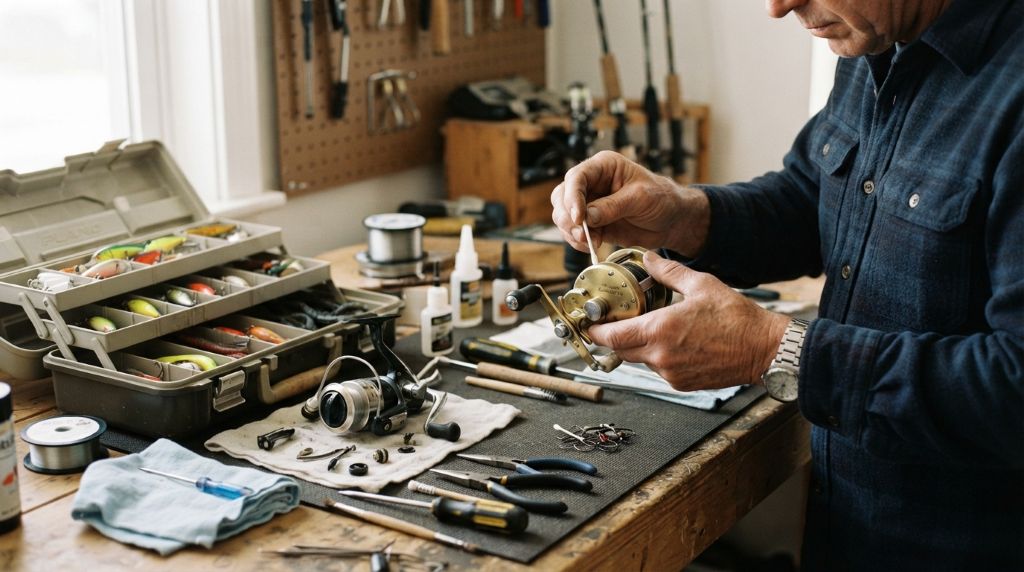
Cleaning Your Reels and Rods
Reels and rods need regular cleaning to perform reliably over time. Follow these steps to keep them working smoothly.
- Wipe down rod blanks with a damp, soft cloth
- Rinse reel exteriors with fresh water after saltwater trips
- Avoid spraying water directly into the reel’s internal gears
- Apply reel oil to moving parts every few trips
- Check rod guides for cracks or grooves from line wear
Rod blanks collect dirt, sunscreen, and bait residue during normal use. A simple wipe-down keeps the blank clean and easy to grip. This habit also helps you spot cracks or damage early.
Reel exteriors benefit from rinsing, but internal gears need more caution. Excessive water pressure can push moisture into sealed compartments. Therefore, use a gentle rinse rather than a high-pressure hose.
Guide inspection matters more than many anglers realize during maintenance. Grooved or cracked guides fray line during every single cast. Replacing damaged guides prevents frustrating break-offs on future trips.
Organizing and Restocking Your Tackle
An organized, fully stocked tackle box saves time before every trip. Follow these steps to keep your supplies ready.
- Sort through hooks, weights, and lures after each trip.
- Remove damaged or rusted items immediately.
- Note any categories running low on supplies.
- Restock missing items before storing your tackle box.
- Reorganize compartments if items feel cluttered or messy.
- Label sections clearly for faster access next time.
Removing damaged hooks prevents injury and improves your hook-set reliability. A dull or bent hook rarely performs well during a fight. Therefore, replace these items rather than keeping them for later.
Noting low supplies helps you shop efficiently before your next trip. A quick list prevents forgetting small but essential items. This habit saves a frustrating, last-minute scramble before heading out.
Reorganizing periodically keeps your box functional as your gear collection grows. Compartments that felt spacious at first can become cluttered quickly. A few minutes of reorganizing restores speed and efficiency.
Drying and Storing Gear Properly
Proper drying and storage prevent most long-term damage to your kit. Follow these steps before placing gear into storage.
- Air dry all gear fully before closing any storage container
- Store tackle boxes in a cool, dry location
- Keep waders and boots away from direct sunlight
- Avoid sealing damp gear inside airtight bags or containers
- Check stored gear periodically during long breaks between trips
Air drying prevents the mold and mildew that damp storage often creates. This step takes patience but protects your entire kit long term. Therefore, never rush the drying process before storing gear away.
Sunlight damages many materials used in modern fishing gear. UV rays break down rubber, plastic, and certain fabric coatings. Consequently, store your kit in a shaded, temperature-controlled space.
Airtight containers trap any remaining moisture inside the storage space. This trapped moisture often causes more damage than open air exposure. Therefore, choose ventilated storage options whenever possible.
Seasonal Kit Reviews and Upgrades
Beyond regular maintenance, seasonal reviews keep your kit relevant and current. Follow these steps during major seasonal transitions.
- Review your entire kit at the start of each season.
- Remove gear suited only to the previous season’s conditions.
- Add seasonal items suited to upcoming weather and fish behavior.
- Replace any gear that shows significant wear or damage.
- Test electronics like scales and fish finders thoroughly.
- Update your checklist based on lessons from the previous season.
Seasonal transitions offer a natural checkpoint for larger kit reviews. Spring and fall work especially well for this deeper inspection. These reviews catch problems that quick post-trip checks might miss.
Testing electronics during seasonal reviews prevents surprises during important trips. A scale or fish finder that worked fine months ago may now malfunction. Therefore, confirm these tools function properly before relying on them again.
Updating your checklist keeps your maintenance routine improving over time. Each season teaches new lessons about your specific gear and habits. Incorporating these lessons makes future maintenance even more effective.
Conclusion
Maintaining a fishing kit takes only a few consistent habits after each trip. Follow a post-trip checklist, clean your reels and rods, and restock your tackle. Dry and store everything properly, then review your kit each season. If you’re often traveling between fishing spots, it also helps to choose the best fishing rods for digital nomads based on portability, durability, and ease of storage. These steps keep your gear ready and reliable for every fishing adventure.
A well-maintained kit means less stress and more time enjoying the water. Start building these habits after your very next fishing trip. Clean, restock, and store your gear properly, and it will always be ready when you are.
Frequently Asked Questions
How soon after a trip should I clean my gear?
Clean your gear the same day, whenever possible. This habit prevents forgotten maintenance and reduces moisture damage.
What items should I always restock after a trip?
Always restock hooks, leader material, and any used bait. These items run out quickly during regular fishing use.
How do I prevent my tackle box from smelling bad?
Dry all gear fully before storing it away. Trapped moisture causes mold and unpleasant odors over time.
Should I do a deeper kit review each season?
Yes, seasonal reviews catch problems that quick checks miss. They also help you update gear for changing conditions.
What is the biggest threat to stored fishing gear?
Moisture causes the most damage to stored fishing gear. Always dry everything fully before long-term storage.