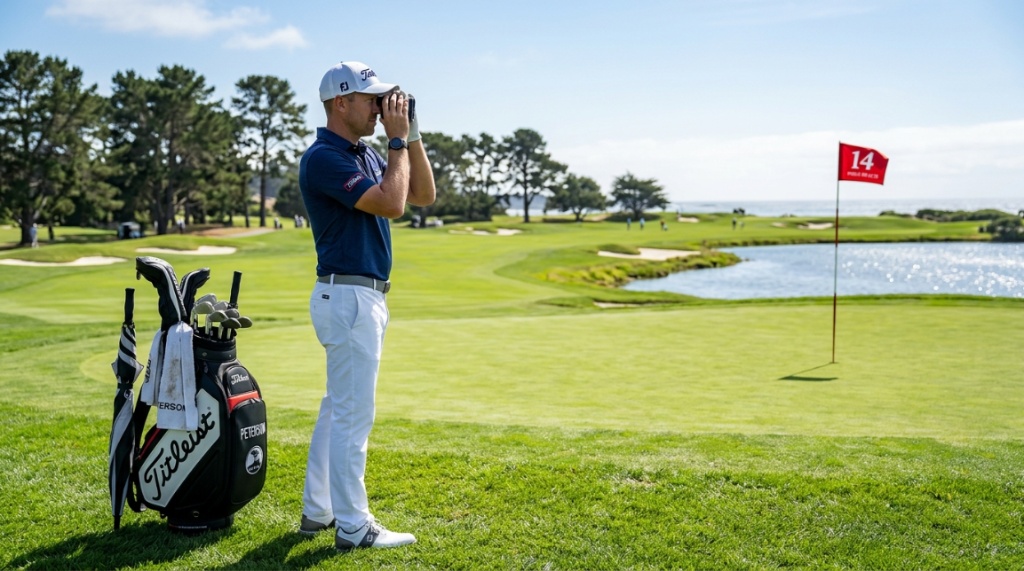
You’re standing on the fairway, 167 yards from the flag, and the wind is swirling. Your gut says 7-iron, but your last shot with it flew the green. If this scenario feels familiar, you’re not alone—club selection is the most persistent challenge in golf. The problem isn’t your swing; it’s the lack of precise data. A portable rangefinder eliminates guesswork by delivering exact yardages, but knowing the numbers is only half the battle. The real skill lies in translating that laser-accurate distance into the correct club choice, factoring in elevation, wind, and course conditions. This guide will transform raw data into confidence, helping you hit more greens and shave strokes off your score.
Learning to master portable golf rangefinder club picking isn’t just about buying a device; it’s about developing a systematic approach to every shot. By understanding slope compensation, carry distance, and environmental factors, you’ll make smarter decisions that lower your handicap.
What Does a Portable Rangefinder Actually Measure?
A portable golf rangefinder measures the precise distance from your ball to a specific target—usually the flagstick—using laser technology. It calculates the “line-of-sight” distance, which is the straight-line measurement between you and the object, accurate to within one yard.
Carry Distance vs. Total Distance
The most critical distinction is between carry distance (how far the ball flies in the air) and total distance (carry plus roll). Rangefinders give you the yardage, but they don’t tell you whether the ball will roll forward or stop dead. You must analyze the green’s firmness and entry angle to determine how the ball will behave upon landing.
The Importance of Locking onto the Flag
Modern rangefinders feature “Flag Lock” or “Pin Lock” technology that vibrates to confirm you’re targeting the flag, not the background trees. This eliminates the risk of shooting the wrong object, ensuring your data is as accurate as possible.
Understanding the Refresh Rate
High-quality units offer a rapid refresh rate, giving you the distance almost instantly. This speed is crucial during a round to maintain pace of play and prevent you from overthinking. A quick, reliable read is the foundation of effective club picking.
How Do Slope Compensation Features Change Your Club Choice?
Slope compensation modes adjust the measured distance to account for elevation changes between you and the target. If the pin is uphill, the rangefinder displays a “plays-like” distance (longer); if downhill, it shows a shorter adjusted number. Using this data directly influences your club selection,If you are shopping for junior golfers alongside your own gear, make sure to Compare Youth Golf Club Sets Before Making a Purchase to ensure the right fit for developing players.
Uphill Lies: The Invisible Distance
When shooting uphill, the ball takes a higher trajectory and loses distance. The rangefinder might say 150 yards, but with slope, it reads 158 yards. Trusting this adjusted number prevents you from coming up short, which is a common mistake for amateur golfers.
Downhill Lies: Gravity is Your Friend
Conversely, downhill shots play significantly shorter. A 150-yard hole might only play 140 yards. If you ignore this and hit your standard 150-yard club, you will likely fly the green. The slope feature helps you dial back your club selection with confidence.
Legal Restrictions on Slope Modes
Important: Slope modes are illegal for tournament play under USGA rules. Most rangefinders allow you to toggle this feature off to comply with competition standards. You must check the display often to ensure you are using the legal mode during rounds that count.
Why Is Knowing Your “Carry Number” the First Step?
Before you can trust your rangefinder for club selection, you need to know how far you hit each club in the air, not on the ground. Your “carry number” is the average distance a specific club travels before it lands. This is your baseline data.
How to Calculate Your Real Carry Distances?
Find a flat practice field or use a launch monitor, hit ten shots with each club, and disregard the worst and best results. The average of the remaining eight is your carry number. You need separate numbers for the range and the course, as turf conditions vary.
Creating a Personalized Club Distance Chart
Write down your carry distances for each club, but include the percentage of confidence you have in hitting that number. For example, you may have a 90% confidence in hitting your 8-iron 140 yards but only 75% confidence in hitting your 3-wood 210 yards. Use these confidence levels to grade your shot selection.
The “Stock Shot” Concept
Your stock shot is your natural, controlled swing with each club. In pressure situations, you should rarely attempt to “squeeze” extra distance out of a club. Instead, choose the club you can hit automatically to your carry number, even if that means taking a more lofted club and swinging easier.
Which Environmental Factors Alter Rangefinder Data?
The raw number from the rangefinder is just a starting point. Wind, temperature, altitude, and humidity all physically alter how the ball travels through the air. Ignoring these factors renders your precise yardage useless.
Wind: The Silent Club Adjuster
A headwind (wind blowing toward you) adds resistance, causing the ball to balloon and land short. A 10mph headwind can cost you 10–15 yards of carry. A tailwind helps the ball fly further and hold its trajectory. Crosswinds push the ball left or right, affecting your target, not just the distance.
Temperature and Altitude Effects
Cold air is denser, reducing ball flight distance. For every 10-degree drop in temperature below 75°F, expect to lose 1-2 yards per club. High altitude (above 5,000 feet) has thinner air, allowing the ball to travel up to 10% further. You must adjust your club selection accordingly.
Wet Conditions and Soft Ground
If the fairway is soft and wet, the ball won’t roll out much after landing. You may need to take an extra club to secure the full carry distance to reach the pin. Conversely, on firm, baked-out fairways, landing short and releasing the ball toward the flag is a viable strategy.
How Do You Use a Rangefinder for Approach Shots vs. Layups?
Your strategy differs greatly depending on whether you are attacking the pin or playing a safe layup. For approach shots, you are targeting the flag; for layups, you are targeting a specific yardage zone to leave a favorable next shot. The rangefinder helps you navigate both scenarios.
Precision on Par 3s
On par 3s, the rangefinder is your best friend. Shoot the flag, check the slope, and check the wind. Determine whether the front or back pin position changes your target. If the pin is tucked at the back, you might need to aim for the middle of the green to avoid short-siding yourself.
Layup Strategy: The “Number” Game
When laying up, shoot the water hazard or bunker to determine your “must not cross” number. Then, subtract 10-15 yards for your safety margin. Use your rangefinder to find a flat lie on the fairway that matches your favorite 100-yard club, giving you the best look at the green.
Using the Rangefinder for Doglegs
Shoot the corner of the dogleg to see if you can clear the trees or if you need to lay back. This helps you make smart tee shots on narrow holes. Understanding how far trouble is allows you to choose an aggressive line or a safe fairway finder.
Can You Trust Your Rangefinder Over Your Instincts?
Eventually, experience teaches you that the data is objective and your instincts are often skewed by memory or emotion. Trusting the rangefinder requires discipline, especially when “feeling” like you need a specific club. The device is the single source of truth.
The “Between Clubs” Strategy
When the distance falls between two clubs, your decision depends on the pin location and the danger. If there is trouble short (bunkers or water), take the longer club and swing smooth. If the trouble is long (OB or rough behind), take the shorter club and take a more aggressive swing.
When to Ignore the Rangefinder
There is one primary situation where you should ignore the rangefinder: severe elevation changes with cliffs or ravines. The slope function accommodates normal hills, but complex multi-tiered terrain can confuse the algorithm. In this rare case, use your eyes and club selection based on the visual shot.
Building a Pre-Shot Routine
Create a rigid routine: 1) Shoot the pin, 2) Note the slope number, 3) Assess the wind with grass, 4) Choose your club based on your carry chart. By doing this every single time, you remove anxiety and ensure every shot is calculated, reducing the chance of a “stupid” mistake.
Is There a Difference Between GPS and Rangefinders for Club Picking?
Yes, GPS devices give you yardages to the front, back, and middle of the green, while rangefinders give you a laser-point distance to a specific object. For picking clubs, a rangefinder offers superior accuracy for approach shots, but GPS is faster and better for mapping hazards and layup zones.
Pros and Cons of Laser Rangefinders
Pros:
- Exact yardage to the flag or bunker.
- Pin-lock technology for precision.
- No subscription fees or battery life concerns.
Cons:
- Requires a steady hand and target acquisition.
- Doesn’t automatically show front/back distances.
- Can be slower if you have shaky hands.
Pros and Cons of GPS Watches/Devices
Pros:
- Instant distance to front, center, and back of green.
- Excellent for finding hazards and layup points.
- No need to aim at anything; automatic.
Cons:
- Less accurate (often rounded to nearest 2-3 yards).
- Cannot target a specific hidden pin.
- Requires charging and sometimes firmware updates.
How to Practice with a Rangefinder to Improve Club Picking?
Practicing with a rangefinder on the trackman range is the fastest way to improve, but you can also practice on the course by connecting your data to results. The goal is to build a database of your real-world carries in different conditions.
The “Drop the Bag” Drill
When you hit a shot, leave your golf bag or a towel at the spot where the ball lands. After your round, walk back to the spot and shoot it with your rangefinder to see how far you actually hit the ball. This is the most accurate way to verify if your “carry number” is correct.
Reporting Conditions in Practice
During practice rounds, note how the ball reacts. Did the 9-iron roll out 5 yards or check up? Did the 7-iron balloon in the wind? This data, used with your rangefinder, helps you fine-tune your club selection for firmer or softer greens.
Statistical Tracking
Download a shot-tracking app and log your club, distance, and result (green hit, short, long). After 10 rounds, you will see trends. For example, if you are always short with your 5-iron from 185 yards, you know that club is now your 150-yard club and your 4-iron is the 170-yard club.
What Are Common Mistakes Golfers Make with Rangefinders?
Even with a perfect device, golfers often make errors that lead to poor club selection. Recognizing these pitfalls is essential to maximizing the value of your technology.
Shooting the Flag When You Should Shoot the Green
If the pin is at the very front, the distance is shorter but the danger is long. Instead of shooting the flag, shoot the center of the green to ensure you have room for error. You can also shoot the front edge and calculate a safe yardage to cover.
Forgetting to Re-Aim After Changing Stances
If you are on a severe slope, your ball position may shift. Always re-shoot the pin after taking your stance to ensure the distance hasn’t changed due to a different angle or a change in the target line. A few feet can mean a different club.
Ignoring the “Effective Distance”
A rangefinder gives you the raw distance, but it cannot calculate the “effective distance” for your shot shape. If you hit a high, towering shot, it will land shorter than a low, piercing shot. You must adjust the rangefinder number based on your shot shape and trajectory.
When Should You Upgrade Your Rangefinder for Better Data?
If your current rangefinder gives inconsistent numbers or fails to lock onto flags beyond 150 yards, it might be time to upgrade. Better technology means more precise data, which translates directly to better club selection. Newer models feature adaptive slope and faster processors.
Key Features to Look For
Look for higher magnification (6x or 7x), a longer range (up to 600 yards), and adaptive slope technology that doesn’t slow down. Also consider a magnetized mount for your cart, as convenience encourages usage. A good device will last you years and save you countless strokes.
Quality vs. Budget
Budget rangefinders are fine if you play casually, but if you want serious scoring, investing in a quality model is worth it. The clarity of the lens and the speed of the lock are significantly better in premium units, reducing eye strain and providing more trustworthy yardages.
If you’re in a region with heavy vegetation or have trouble locking onto pins, checking guides that review top models for your environment can help. For those looking for robust devices that handle various Florida courses and lighting conditions, exploring options for portable golf rangefinder club picking can offer insight into which technology performs best in harsh sunlight and humidity.
How Do You Handle Different Pin Locations with a Rangefinder?
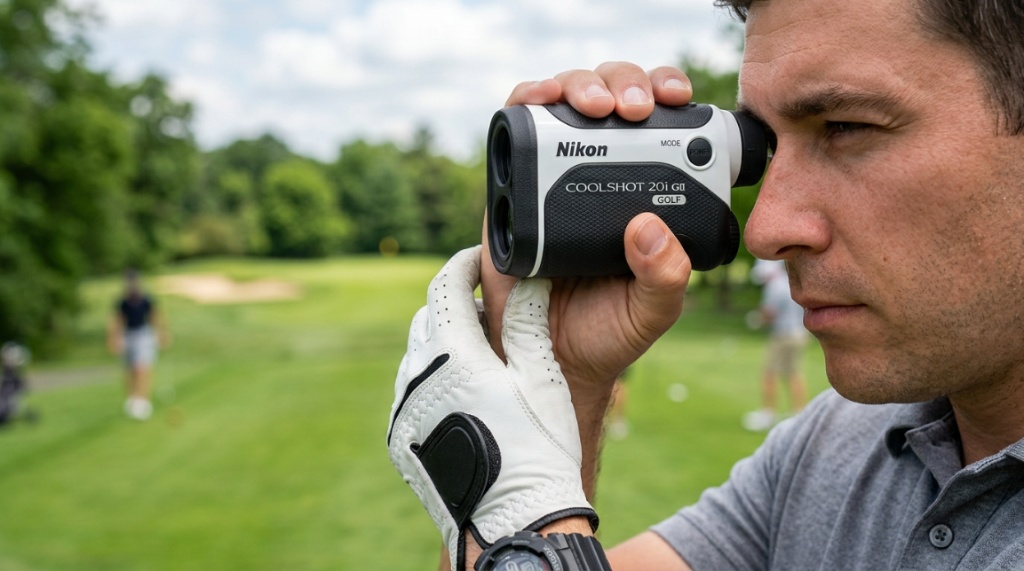
Pin placement—front, middle, or back—significantly changes your strategy. You cannot always aim at the flag; sometimes you must aim for the safe part of the green to avoid disaster. your rangefinder is essential for assessing these risks accurately.
Front Pin Placements
For front pins, the yardage is usually shorter, but the green is shallow. The danger is hitting long and rolling off the back. Take the rangefinder reading, but consider adding one extra club to ensure you clear the front edge, even if it brings the back bunkers into play.
Back Pin Placements
Back pins offer more green in front to work with. The visible risk is coming up short in the hazard. You can take a shorter club and fly the ball to the front of the green, letting it roll back to the pin. Check the slope to see if the green tilts away from you.
Middle Pin Placements
Middle pins are the most forgiving. Aim at the flag, but prioritize the middle of the green. A slight mishit still leaves a birdie putt or par, rather than a bogey. Use the rangefinder to confirm the exact center distance and play your standard stock shot.
Frequently Asked Questions
What is the difference between slope and non-slope rangefinders?
Slope rangefinders adjust the distance based on elevation changes (uphill/downhill), giving you a “plays-like” distance. Non-slope models provide the raw, line-of-sight distance only. Slope models are typically more expensive but offer a slight scoring advantage in non-competitive rounds.
Can I use a slope rangefinder in a golf tournament?
No, using the slope feature is strictly prohibited under USGA and R&A rules during competition. However, most models allow you to switch off the slope function to make the device legal for tournament play. Always ensure slope is off to avoid disqualification.
Do I need to carry a rangefinder and a GPS device?
No, not necessarily. For most amateur golfers, a rangefinder is sufficient because it gives you exact distances. GPS devices are helpful for seeing front/back numbers, but a rangefinder allows you to shoot specific hazards and layup areas. Choose one based on your primary needs.
How do I avoid missing the flag with my rangefinder?
Use the “Flag Lock” feature and rely on the vibration signal to confirm you are on the pin. If you are struggling to lock on, try focusing on a point just above or below the flagstick to get a clear reflection, ensuring no trees are directly behind the pin.
Does temperature really affect my club selection?
Yes, significantly. Colder air is denser, reducing the ball’s flight. For every 15-degree drop in temperature below 70°F, you can lose roughly 2% of your total distance. If you play in the morning cold, carry one extra club for your approach shots.
Should I stick to the rangefinder number on a windy day?
You should adjust the number based on the wind. A 10 mph headwind is generally considered to be a one-club adjustment. A 20 mph wind is a two-club adjustment. Tailwinds can make a club play one or two clubs less. Use the rangefinder as your base, and then apply the wind factor.
How often should I replace my rangefinder?
High-end rangefinders last 5–10 years if treated well, but battery life and lens clarity will degrade over time. If the view is foggy or the lock is slow, it’s time to upgrade. Technology improves every few years, with better stabilization and faster processing.
## Conclusion Mastering club selection is not about magic; it’s about trusting the process and the data. A portable rangefinder gives you the objective foundation needed to make every swing count. By understanding the difference between carry and total distance, utilizing slope features correctly, and factoring in environmental conditions like wind and temperature, you can eliminate the most common scoring threats on the course. We have shown you that the device is not a replacement for skill but a multiplier for your existing knowledge. Your next step is simple: grab your rangefinder and use the step-by-step routine outlined here on your next practice round. Note your carry numbers, verify your yardages with the “drop the bag” drill, and observe how your clubs perform in real conditions. The more you align your instincts with the device’s numbers, the faster you will see your handicap drop. Stop guessing, start measuring, and watch your approach play become the strongest part of your game.