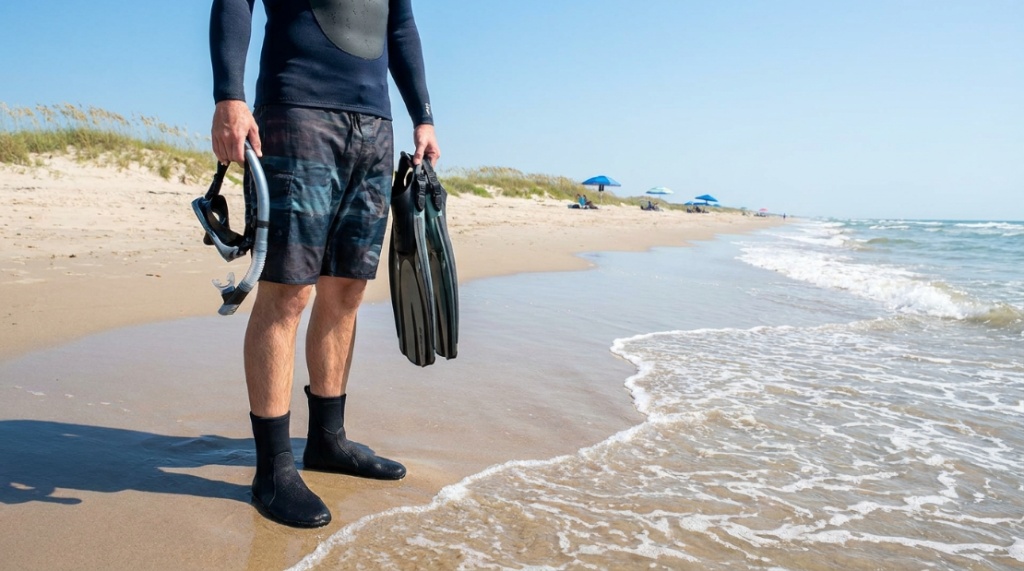
Snorkeling in Texas is a unique experience. From the jade-green waters of the spring-fed rivers in the Hill Country to the salty, surf-washed shores of the Gulf Coast, the Lone Star State offers diverse underwater adventures. But if you’ve ever slipped on a pair of fins without protection, you know the pain: blisters, chafing, and cold feet that can cut your session short. That’s where wetsuit socks come in. These simple neoprene liners are the difference between a miserable, foot-cramping float and a comfortable, extended exploration. In this guide, we’ll break down exactly how to choose, use, and care for wetsuit socks for snorkeling in Texas, ensuring your next trip is all about the fish, not your feet.
Key Takeaways
- Wetsuit socks protect your feet from blisters caused by fin friction and insulate against cold Texas spring water, which often sits in the 68–72°F range year-round.
- Fit is critical: socks should be snug but not tight, and you should size up your fins by one to two sizes to accommodate the extra neoprene bulk.
- Choose sock thickness based on water temperature—2mm for warm Gulf summers, 3mm for cooler spring-fed rivers and early-season Gulf trips.
- Always rinse your socks in fresh water after saltwater use and dry them in the shade to prevent neoprene breakdown and odor.
- Wearing socks actually improves fin performance by providing a secure, non-slip interface that reduces foot fatigue during long swims.
Why Wetsuit Socks Are Essential for Texas Snorkeling
Texas presents a unique set of challenges that make wetsuit socks more than just an optional accessory. The primary reason to wear them is simple: protection. Snorkeling fins are designed to fit snugly to transfer power from your legs to the water. Without a barrier, the rigid rubber or plastic edges of the foot pocket will rub against your skin. In fresh water, this friction creates raw spots quickly; in saltwater, the abrasive action is compounded by sand and grit that gets trapped inside the fin, acting like sandpaper on your heels and toes.
Beyond chafing, there is the temperature factor. While the Gulf of Mexico gets pleasantly warm in July and August, the spring-fed rivers like the Comal, San Marcos, and Frio remain a crisp 72 degrees or colder. After twenty minutes of floating, that cold water leaches heat from your extremities, causing numbness that reduces your ability to feel the bottom and increases the risk of cuts from unseen rocks. Wetsuit socks provide a crucial thermal barrier, keeping your feet warm and your blood circulating.
The Difference Between Socks and Boots
It is important to distinguish between wetsuit socks and wetsuit boots. Socks are thin, typically 2mm to 3mm thick, and have a smooth or textured sole. They are designed to be worn inside a fin. Boots, on the other hand, are thicker (5mm to 7mm), have rugged rubber soles, and are designed for walking on land or rocky shorelines. For open-water snorkeling from a boat or a sandy beach, socks are the correct choice. If you are planning to hike into a remote river spot over sharp limestone, you might consider boots, but for standard snorkeling, socks offer the best balance of flexibility and protection.
How to Choose the Right Thickness and Material
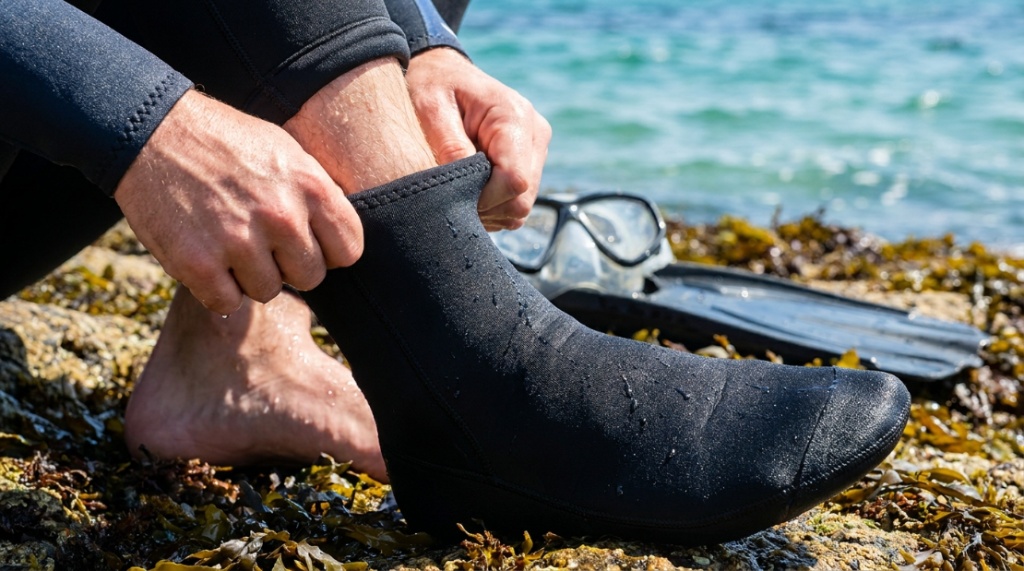
Selecting the right sock isn’t a one-size-fits-all decision. The thickness of the neoprene dictates both warmth and fit. In Texas, you rarely need the heavy-duty 5mm options used in cold-water diving. Instead, focus on 2mm and 3mm varieties.
- 2mm Socks: Ideal for summer Gulf snorkeling when water temps exceed 80°F. They offer minimal warmth but provide essential blister protection and a smooth interface between your skin and the fin.
- 3mm Socks: The sweet spot for Texas. They are warm enough for spring-fed rivers and fall Gulf trips (water temps in the 70s) but thin enough to fit comfortably inside most standard fins.
- Material Quality: Look for pre-washed or “stretch” neoprene that retains flexibility when wet. Glued and blind-stitched seams (GBS) are superior to overlock stitching because they prevent water from flushing through the needle holes, keeping your feet warmer.
Fit and Sizing: Getting It Right
The most common mistake beginners make is buying socks that are too large. A wetsuit sock should fit like a second skin—snug with no wrinkles. Wrinkles in neoprene create pressure points that cause blisters, defeating the purpose of wearing them. When trying on socks, ensure your toes touch the end of the sock lightly, but they shouldn’t be curled. If the sock is too big, it will bunch up inside the fin and cause cramping.
Critically, you must adjust your fin size. If you normally wear a size 10 fin, you will likely need a size 11 or 12 to accommodate a 3mm sock. Trying to force a socked foot into a fin that was fitted for bare feet will cut off circulation and ruin your trip. Always test your fins with the socks on before you hit the water,
Before heading out into the water, remember proper foot care is essential to prevent blisters and irritation—learn more about how to take care of your feet before your next trip.
Step-by-Step: How to Use Wetsuit Socks with Your Fins
Using wetsuit socks seems straightforward, but there is a correct method to ensure maximum comfort and performance. Follow these steps to get it right every time.
- Start with Dry Feet: Ensure your feet are completely dry before putting on the socks. This makes them easier to slide on and prevents the neoprene from sticking and twisting.
- Roll, Don’t Push: Roll the sock down into a donut shape at the toe, then slip your foot in and unroll the neoprene up over your ankle. This prevents the material from stretching out of shape and reduces stress on the seams.
- Align the Heel: Make sure the heel of the sock is seated firmly in the heel of your foot. A misaligned heel will cause the sock to rotate during swimming.
- Lubricate the Fin (Optional): If your fins are tight, apply a small amount of water or fin lubricant to the outside of the sock. Do not use soap, as it can degrade neoprene.
- Insert and Adjust: Slide your foot into the fin. Push your foot all the way in until your toes touch the end of the fin pocket. Adjust the sock so there are no bunched areas around the ankle or arch.
- Test the Fit: Walk to the water and kick gently. If you feel any pinching or pressure points, stop and readjust immediately. Do not “tough it out”—a hot spot will turn into a blister within minutes.
Practical Scenarios: River vs. Gulf Coast Snorkeling
The way you use your socks will vary slightly depending on where you are snorkeling in Texas. Understanding these nuances will help you get the most out of your gear.
Spring-Fed River Snorkeling (Hill Country)
In rivers like the Comal or San Marcos, you are dealing with constant 72°F water and rocky, uneven bottoms. Here, a 3mm sock is your best friend. The extra thickness provides cushioning when you inevitably bump your feet on submerged logs or limestone ledges. Because the water is fresh, you don’t have to worry as much about salt residue, but you should still rinse your socks after use to remove silt and algae. The primary goal here is warmth and impact protection.
Gulf Coast Snorkeling (Padre Island, Galveston)
Gulf snorkeling often involves surf and sandy bottoms. In the summer, a 2mm sock is sufficient. The main threat here is sand. Sand will get into your fins, and without socks, it will grind against your skin. The socks create a seal that keeps sand out. Additionally, when walking from the beach to the water, socks protect the bottom of your feet from hot sand and sharp shell fragments. In the winter months (November–March), if you are brave enough to enter the Gulf, a 3mm sock is essential to combat the 60°F water temperatures.
Common Mistakes to Avoid
Even experienced snorkelers make errors with their gear. Here are the most common pitfalls and how to avoid them.
- Wearing Socks with Open-Heel Fins: Open-heel fins require a boot with a rigid sole, not a thin sock. If you use a sock with open-heel fins, the strap will dig into your Achilles tendon, causing severe pain. Socks are designed exclusively for full-foot fins.
- Ignoring the “Too Tight” Signal: If your feet feel like they are in a vice, the sock is too thick or the fin is too small. Reduced circulation leads to cramps, which can be dangerous in open water.
- Drying in Direct Sunlight: UV rays break down neoprene. Always dry your socks in the shade. Hanging them in the blazing Texas sun will cause them to crack and lose their flexibility within a season.
- Using Them as Walking Shoes: Wetsuit socks have thin soles. Walking on concrete or gravel will wear holes in the bottom quickly. Put your fins on right at the water’s edge or wear sandals to the shore.
Maintenance and Care for Longevity
Neoprene is durable but requires specific care to last. After every snorkeling session, especially in the saltwater of the Gulf, you must rinse your socks thoroughly in fresh water. Salt crystals left to dry in the neoprene will abrade the material and cause it to deteriorate. Turn them inside out to rinse the interior, where sweat and sand accumulate.
To dry, squeeze out excess water with a towel—do not wring them, as this can break the internal foam structure. Lay them flat in a cool, shaded area. Once completely dry, store them flat or rolled, not folded sharply, to prevent creases. If they develop an odor, wash them in a mild detergent specifically designed for wetsuits, never in a washing machine.
Frequently Asked Questions
Can I wear wetsuit socks without fins?
Yes, you can, but they are not designed for walking. They offer minimal grip on wet boat decks or slippery rocks. They are best used as a liner for fins or for wearing inside water shoes if you need extra warmth.
How tight should wetsuit socks be?
They should be snug with no wrinkles or air pockets. If the sock leaves deep red marks on your skin after removal, they are too tight. You should be able to wiggle your toes slightly, but the material should not bunch up.
Do wetsuit socks make fins fit tighter?
Yes, they add bulk. You will likely need to size up your fins by one to two sizes. If your fins are already a tight fit without socks, they will be too restrictive with socks on.
Are wetsuit socks worth it for warm Texas water?
Absolutely. Even in 85°F water, the primary benefit is blister prevention. The friction from fins is the number one cause of ruined snorkeling trips, and socks eliminate that issue entirely.
Can I use wetsuit socks for scuba diving in Texas?
Yes, they work well for warm-water scuba diving. However, if you are diving in the winter or doing deep dives where water temps drop below 65°F, you will need a thicker boot (5mm+) to maintain adequate warmth.
Conclusion
Snorkeling in Texas offers incredible variety, but your enjoyment hinges on comfort. Wetsuit socks are a small investment that pays off in a big way, protecting your feet from blisters, keeping them warm in chilly spring water, and preventing sand from ruining your session. Remember to choose the right thickness for the season, ensure a snug fit, and adjust your fin size accordingly. With the right pair of socks and proper care, you can focus on what matters—gliding effortlessly over the reefs and riverbeds of the Lone Star State without a second thought about your feet.