You finally upgraded to a proper touring kayak or maybe just picked up two sit-on-tops for the family. The problem is, your garage is already swallowing your truck, your tools, and that half-finished project from 2019. Piling the kayaks on the floor is not an option, especially in Texas, where garage space doubles as a workshop, a home gym, and a storm shelter. The heat, the humidity, and the occasional scorpion mean you need a storage solution that keeps your gear safe, accessible, and off the concrete. Learning how to hang kayaks in your Texas garage saves floor space, protects your investment, and gives you back your sanity. Whether you own a ten-foot whitewater boat or a seventeen-foot fishing yak, the right hanging system makes all the difference.
Gravity is free, but your garage square footage is not. This guide will walk you through the best methods, tools, and techniques for hanging kayaks safely and securely in a Texas garage.
What Are the Best Kayak Storage Options for a Texas Garage?
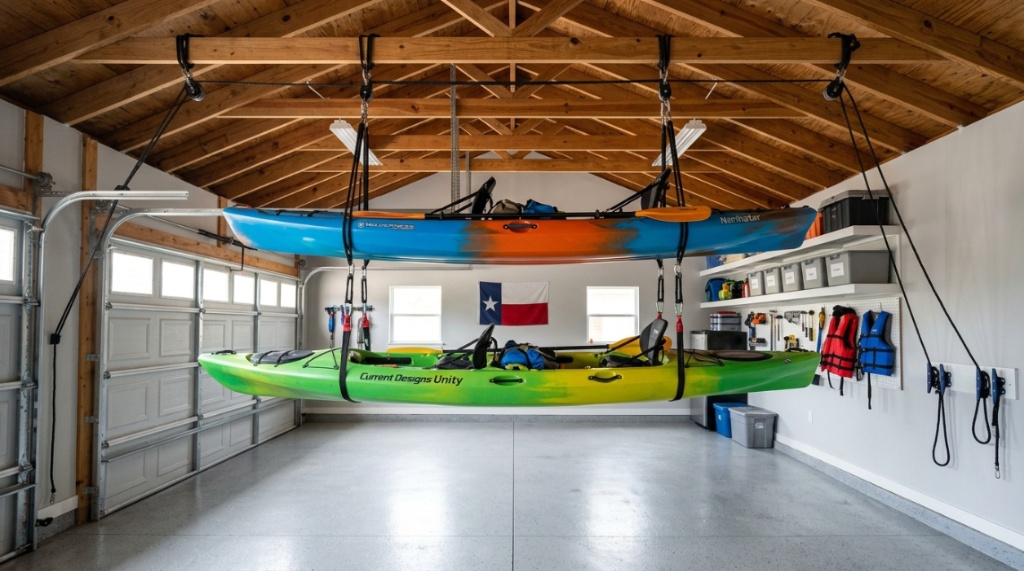
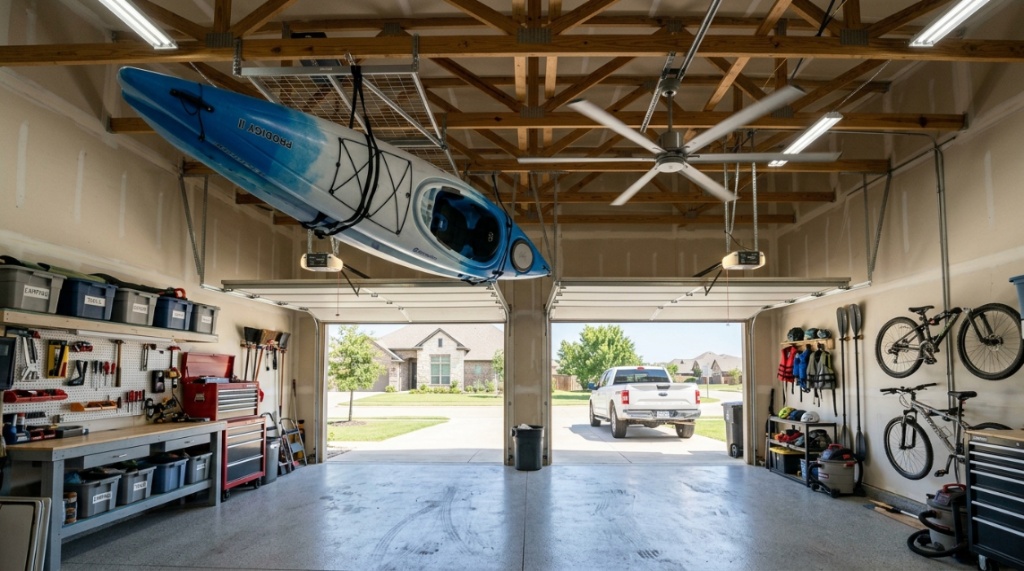
Ceiling Hoists Are the Gold Standard for Single Kayaks
A ceiling hoist, also called a pulley system, is ideal for one-person loading. You crank the kayak up to the ceiling, out of the way, and lower it when you need it. These systems work well in standard eight-foot garages and keep your boat completely off the floor.
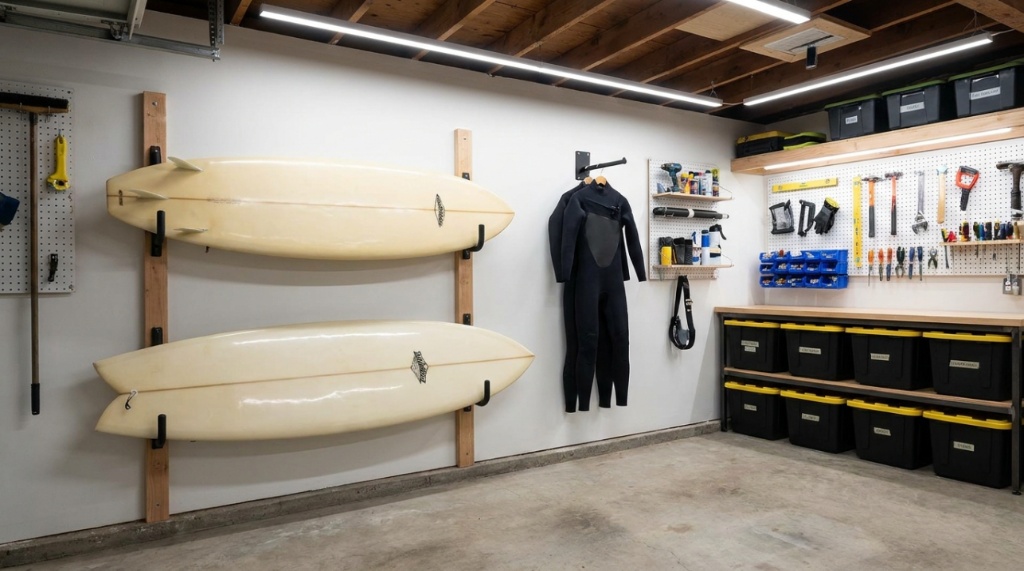
Wall Racks Offer Quick Access for Frequent Paddlers
If you paddle weekly, a wall rack is faster than a hoist. Wall-mounted brackets or J-hooks hold the kayak horizontally along the wall. This method keeps the kayak at waist height, making loading and unloading effortless.
Freestanding Racks Work Best for Multiple Boats
For families with two or more kayaks, a freestanding rack is a smart choice. These racks sit on the floor and can hold several boats vertically or horizontally. They do not require drilling into walls or ceilings, which is useful for renters.
Vertical Storage Saves Width in Narrow Garages
Vertical racks store the kayak on its end, leaning against the wall. This footprint is tiny, but it only works for lighter kayaks under forty pounds. Heavier boats can tip or become difficult to manage.
Why Is Proper Hanging Technique Crucial in the Texas Climate?
Heat and Humidity Cause Hull Deformation
Texas summers push garage temperatures above 120°F. If you store a kayak incorrectly, the hull can warp or develop a permanent oil-canning effect. Hanging the kayak by the ends or using a flat support system prevents pressure points that lead to deformation.
Floor Contact Encourages Mold and Pest Problems
Concrete floors in Texas garages often have moisture issues. If your kayak sits directly on the floor, the bottom can trap humidity, leading to mold growth. Hanging it keeps air flowing around the hull, reducing mildew and discouraging spiders and scorpions from taking up residence.
Proper Weight Distribution Prevents Cracking
Using narrow straps or sharp hooks can create stress points on polyethylene hulls. Over time, these stress points can crack, especially when the plastic expands and contracts with temperature swings. Wide straps or padded cradles distribute the weight evenly.
How Do You Choose the Right Storage System for Your Kayak?
Match the System to Your Kayak Weight
A lightweight recreational kayak under fifty pounds works with almost any system. Heavy touring kayaks or fishing yaks over seventy pounds require heavy-duty pulleys or wall brackets rated for the weight. Always check the manufacturer’s load limit.
Consider Your Garage Ceiling Height
Standard Texas home garages have eight-foot ceilings. Measure from the floor to the ceiling and subtract the kayak height. If you have a high ceiling, you can use a hoist. For low ceilings, consider a wall-mounted system that keeps the kayak horizontal.
Evaluate Your Daily Routine
If you load up every Sunday morning, a quick-release wall rack is best. If you only paddle once a month, a ceiling hoist saves more space. Think about how often you want to muscle the boat up and down.
Which Wall Mounts Work Best in a Texas Garage?
J-Hooks Are Simple and Effective
J-hooks mount to wall studs and cradle the kayak on its side. They are inexpensive and easy to install. Use two J-hooks spaced about three feet apart to support the hull evenly.
Adjustable Wall Racks Offer Flexibility
These racks have arms that fold up when not in use. They allow you to store the kayak flat against the wall, which works well for narrow garages. Look for models with padded arms to protect the kayak finish.
Horizontal Cradles Provide Extra Support
For long or heavy kayaks, horizontal cradles distribute weight across a larger surface area. These are often used for tandems or fishing kayaks that carry extra gear weight.
Check Stud Location Before Buying
Drywall alone cannot hold a kayak. You must anchor into wood or metal studs. If your garage studs are sixteen inches apart, you can space mounts accordingly. If they are wider, you may need a mounting board to bridge the gap.
How to Install a Ceiling Hoist System Step by Step
Gather the Right Tools and Hardware
You will need a ceiling hoist kit, a stud finder, drill, socket set, and carabiners. Most kits come with screws, pulleys, and ropes, but you may need longer screws for thick ceiling joists.
Locate Ceiling Joists and Mark the Drill Points
Use a stud finder to locate joists in your garage ceiling. Mark two points about three feet apart along the same joist, or use two separate joists if you run the straps parallel. Drill pilot holes to avoid splitting the wood.
Mount the Pulleys and Route the Rope
Attach the pulleys securely to the joists. Thread the rope through both pulleys, making sure the rope moves freely. Tie a knot at the end to prevent slipping.
Attach the Straps and Test the Load
Use wide cam straps to cradle the kayak hull. Hoist the kayak a few inches off the ground first, shake it gently, and check for movement. Once secure, crank it up to the ceiling.
Can You Hang a Kayak from Garage Drywall Without Studs?
Drywall Alone Cannot Support a Kayak
Drywall anchors are designed for lightweight items like shelves or pictures. A kayak pulling on drywall will rip out instantly, causing damage and injury. Always anchor into studs.
Use a Mounting Board for Difficult Locations
If your studs are in the wrong place, attach a 2×4 or 3/4-inch plywood board across three studs, then mount your rack to the board. This distributes the weight across multiple studs and gives you flexibility.
Toggle Bolts Are Not Recommended for Kayaks
Toggle bolts can hold moderate weight in hollow drywall, but the dynamic load of lifting and lowering a kayak can cause them to fail. Stick with stud mounting for safety.
When Should You Choose Vertical Storage Over Horizontal?
Vertical Storage Saves the Most Floor Space
If your garage is narrow and you need to park a car, vertical storage is your best bet. The kayak stands upright against the wall, taking up only about two square feet of floor space.
Light Kayaks Work Best for Vertical Racks
Boat under forty pounds are easy to tilt and slide into a vertical rack. Heavier boats can be awkward to maneuver vertically, and you risk scraping the hull on the concrete.
Use a Floor Stand to prevent slipping.
A vertical rack should have a padded cradle at the bottom and a strap near the top to hold the kayak upright. Without these, the kayak can tip over easily, especially in a garage with foot traffic.
What Tools and Hardware Do You Need for a Safe Installation?
Stud Finder and Level Are Non-Negotiable
A stud finder saves you from guessing where to drill. A level ensures your rack is straight, which prevents the kayak from sliding off.
Use Lag Bolts for ceiling mounts.
Lag bolts penetrate deeper into wood than regular screws. They provide a much stronger hold for ceiling hoists that handle heavy loads. Use washers to distribute pressure.
Ratchet Straps with Padding Protect the Hull
Thin straps can cut into the kayak plastic over time. Use straps with built-in padding or wrap the kayak with foam pipe insulation where the straps touch.
Carabiners Make Quick Release Easy
Attach carabiners to the ends of your straps so you can clip and unclip the kayak quickly. This is especially useful for hoist systems where you need to attach the boat after lifting.
How to Protect Your Kayak from Texas Heat and Pests
Store Kayak Away from Garage Windows
Direct sunlight through a window can bake the kayak, causing fading and brittleness. Store it in a shaded corner or use a UV-protective cover if it must be near a window.
Use Ventilated Racks to Reduce Moisture Build-Up
Closed racks trap moisture against the hull. Open racks with slats or mesh allow air circulation, which is critical in Houston or Gulf Coast areas where humidity is high.
Spray for Spiders and Scorpions Regularly
Texas garages are prime real estate for pests. Spray a perimeter insecticide around your storage area every few months. Check inside the kayak cockpit before every trip.
For those looking for budget-friendly solutions, check out this guide on kayak storage Texas residents recommend for keeping gear safe without breaking the bank.
Is It Safe to Hang Multiple Kayaks in the Same Garage Area?
Staggering Kayaks Prevents Banging and Scratches
When storing two or more kayaks on the same wall, stagger them at different heights. This keeps the hulls from rubbing together, which can cause scratches and wear over time.
Use Separate Hoists for Each Kayak
It is tempting to run a single hoist system for multiple boats, but this creates unbalanced loads. Each kayak should have its own set of straps and pulleys for safe lifting.
Leave Enough Space to Walk Under or Around
Hanging multiple kayaks can turn your garage into an obstacle course. Plan the layout so you can still access your car doors, tool bench, and refrigerator without ducking under hulls.
How to Maintain Your Kayak Storage System Over Time
Inspect Straps and Ropes Every Three Months
UV light and heat degrade nylon straps and ropes. Look for fraying, discoloration, or stiffness. Replace any strap that shows signs of wear before it fails under load.
Tighten Bolts and Screws Annually
Vibration from opening garage doors and general use can loosen hardware. Do an annual check on all bolts, especially ceiling mounts. A socket wrench makes this quick,Before lifting heavy watercraft above your vehicle, always inspect your ceiling joists for structural integrity. Since ceiling tracks often run close to your automated entry points, pair your setup with our Complete Garage Door Safety Checklist That Could Save Lives to prevent accidental tracking interference.
Lubricate Pulley Wheels to Keep Them Smooth
Pulleys can squeak or freeze up in dusty garage environments. A shot of silicone spray keeps them running smoothly. Do not use oil-based lubricants, which attract dust.
Frequently Asked Questions
Can I hang a kayak in an uninsulated Texas garage?
Yes, but take precautions against extreme heat. Use padded straps to prevent pressure marks and store the kayak out of direct sunlight. Ventilated racks help reduce heat buildup.
How much weight can a ceiling hoist hold?
Most residential ceiling hoist kits hold up to 100 pounds. Heavy-duty systems can hold 150 pounds or more. Always check the manufacturer rating and ensure your ceiling joists can support the load.
Do I need to remove kayak accessories before storage?
Yes. Remove fishing rod holders, paddle clips, and any loose gear. These items create uneven weight distribution and can scratch the hull. Store accessories separately in a bin.
Will hanging my kayak cause it to warp?
If you support the kayak correctly with wide straps or cradles spaced properly, warping is unlikely. Avoid hanging by the carry handles or using thin ropes that dig into the plastic.
Can I hang a kayak in a garage with a sloped ceiling?
Yes, but you may need to adjust the mounting height. Use a level and measure carefully so the kayak hangs parallel to the floor. A sloped ceiling may require a custom bracket.
What is the best wall mount for a fiberglass kayak?
Fiberglass kayaks are more rigid than plastic but more prone to cracking. Use padded cradles that support the hull evenly. Avoid any mount that pinches the sides together.
How do I prevent my kayak from smelling musty when stored?
Ensure the kayak is completely dry before storing. Leave the cockpit open and place a moisture absorber bag inside. Hanging the kayak upside down allows water to drain out naturally.
Conclusion
Hanging kayaks in a Texas garage is not just about reclaiming space; it is about protecting your gear from the brutal climate and extending its lifespan. Ceiling hoists, wall racks, and vertical systems each have their strengths, and the right choice depends on your garage layout, kayak weight, and how often you paddle. Always anchor into wood studs, use wide straps or padded cradles, and store your boat in a shaded, ventilated area. Regular inspections and pest prevention will keep your kayak ready for the next lake trip or coastal paddle. Now is the time to clear that floor space, grab your drill, and get your kayak off the ground where it belongs. Your garage will thank you, and so will your back.