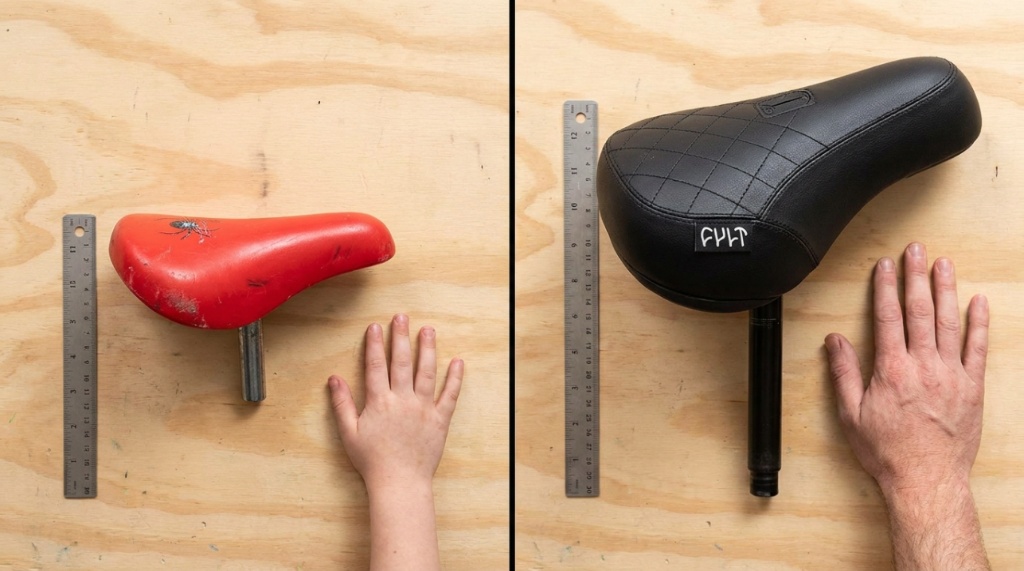
A dad at an Arizona skatepark bought his 8-year-old the same BMX seat he’d just put on his own bike — figuring a seat is a seat. Two weeks later his son complained the bike was uncomfortable and stopped riding. The problem wasn’t the seat’s quality; it was that an adult-sized seat on a kid’s frame put the saddle at the wrong height, width, and padding profile for a child’s body. Choosing a BMX seat for kids versus a BMX seat for adults isn’t interchangeable — riders of different sizes need different seat widths, padding densities, mounting compatibility, and durability levels. The right seat matches the rider’s body weight, sit-bone width, riding style, and the bike’s frame size. Get this match wrong and you get discomfort, poor control, and a kid who’d rather play video games than ride.
BMX riding spans an enormous age and size range — from 5-year-olds on 16-inch bikes to adult riders on 20-inch (or larger) frames — yet seats are often sold as one-size-fits-all. They’re not. A child weighs a fraction of an adult, has narrower sit bones, and rides differently (more seated cruising, less aggressive standing tricks). An adult rider generates far more force, needs more durable construction, and often rides standing for freestyle or racing. Understanding these differences ensures you buy a seat that fits the actual rider. Here’s the complete guide to choosing the right BMX seat for kids and adults, including how to find an BMX seat for kids that actually fits.
What’s the Main Difference Between BMX Seats for Kids and Adults?
The main differences are width, padding density, durability, and mounting compatibility. Kids’ BMX seats are narrower with softer padding for lighter riders, while adult seats are wider, firmer, and built tougher to handle greater rider weight and force.
Key differences explained:
- Width: Kids have narrower sit bones, requiring narrower seats. Adult seats are too wide for children, causing chafing and poor positioning.
- Padding density: Lighter kids need softer padding to feel cushioning. Heavier adults need firmer, denser padding that won’t bottom out under their weight.
- Durability: Adult seats use tougher materials and reinforced rails to withstand higher forces. Kids’ seats can be lighter since they endure less stress.
- Mounting: Kids’ bikes (16″, 18″) may use different seat post diameters than adult 20″+ bikes. Compatibility matters.
- Weight: Lighter seats benefit kids who need to maneuver smaller bikes. Adults prioritize durability over weight savings.
How Do You Choose the Right BMX Seat Size for a Child?
Match the seat to the child’s bike size (16″, 18″, or 20″ wheels) and ensure the seat width suits their narrower sit bones — typically a slim, lightweight seat with moderate padding for comfort during seated riding.
Kids’ BMX seat selection by bike size:
| Bike Wheel Size | Typical Age | Rider Weight | Seat Recommendation |
|---|---|---|---|
| 16 inch | 5–7 years | 40–55 lbs | Narrow, lightweight, soft padding |
| 18 inch | 6–9 years | 50–75 lbs | Narrow-medium, light, moderate padding |
| 20 inch (youth) | 8–13 years | 70–110 lbs | Medium width, durable, moderate padding |
Important considerations for kids:
- Comfort encourages riding: A comfortable seat keeps kids riding longer and more often. Discomfort makes them quit.
- Growth allowance: Kids grow fast. A slightly adjustable setup or a seat that suits their current size matters more than future-proofing.
- Lightweight matters: Kids handle lighter bikes more easily. A heavy seat makes a small bike harder to maneuver.
- Safety first: Ensure proper seat post clamp tightness so the seat doesn’t slip during riding.
How Do You Choose the Right BMX Seat for an Adult?
Adult riders should choose a seat based on riding style (racing, freestyle, or cruising), sit-bone width, and durability needs — with firmer, denser padding and reinforced construction to handle adult weight and riding forces.
Adult BMX seat selection factors:
- Riding style: Racers want lightweight minimal seats; freestyle riders want durable seats that survive tricks; cruisers want more padding for comfort.
- Sit-bone width: Wider sit bones need wider seats for proper support. A too-narrow seat causes pressure points and numbness.
- Padding density: Adults need firmer padding that supports their weight without bottoming out. Soft padding that works for kids feels mushy and unsupportive for adults.
- Durability: Adult riding generates more force. Reinforced rails and tough covers prevent premature failure.
- Mounting type: Pivotal, railed, or combo seats — ensure compatibility with the seat post system.
What Seat Mounting Types Work for Kids and Adults?
The three main BMX seat mounting types are pivotal, railed, and combo. Pivotal seats are common on modern BMX bikes for both kids and adults, while railed seats offer more adjustment and combo seats provide versatility.
Mounting type comparison:
- Pivotal seats: Mount via a single bolt through the seat into a toothed post, allowing angle adjustment. Lightweight, secure, common on modern BMX. Works for both kids and adults. Most popular freestyle choice.
- Railed seats: Traditional two-rail mounting with a clamp. Allow fore/aft and angle adjustment. More common on racing bikes and some kids’ bikes. Versatile positioning.
- Combo seats: Include both pivotal and rail compatibility. Maximum versatility but slightly heavier. Good if you’re unsure of your post type.
- Integrated seat/post combos: Seat and post are one unit. Lightweight, clean look. Common on freestyle bikes. Less adjustable.
Before buying any seat, identify your bike’s seat post type. A pivotal seat won’t mount on a rail-only post without an adapter, and vice versa. This compatibility check prevents the frustration of buying an incompatible seat.
How Does Rider Weight Affect BMX Seat Choice?
Rider weight directly determines optimal padding density — lighter riders (kids) need softer padding to feel cushioning, while heavier riders (adults) need firmer, denser padding that supports their weight without compressing fully.
Weight-based padding guide:
- Under 60 lbs (young kids): Soft padding. Light riders don’t compress firm padding enough to feel comfort. Soft foam provides the cushioning they need.
- 60–110 lbs (older kids/teens): Medium padding. Balances cushioning and support as riders gain weight and ride more aggressively.
- 110–180 lbs (light-medium adults): Medium-firm padding. Supports adult weight while maintaining comfort during seated riding.
- 180+ lbs (heavier adults): Firm, dense padding. Soft padding bottoms out under heavy riders, causing discomfort and faster wear. Firm padding maintains support.
The principle: padding that feels perfect for a 50-lb child feels mushy and unsupportive for a 180-lb adult, while padding firm enough for the adult feels hard as a rock to the child. Match padding density to actual rider weight, not just age.
Can a Kid Use an Adult BMX Seat or Vice Versa?
Generally no — an adult seat is too wide and firm for a child, causing discomfort and poor positioning, while a kid’s seat is too narrow and soft for an adult, causing pressure points and premature wear. Match the seat to the rider.
Why mismatches fail:
- Adult seat on a kid: Too wide (chafes inner thighs), too firm (no cushioning for light rider), too heavy (harder to maneuver small bike). The child rides uncomfortably and less often.
- Kid’s seat on an adult: Too narrow (pressure points, numbness), too soft (bottoms out under weight), not durable enough (wears out fast under adult forces). The adult experiences pain and the seat fails quickly.
Exceptions where it might work temporarily:
- A larger teen (110+ lbs) transitioning to adult seats
- A lightweight adult on a youth 20″ bike with a youth seat
- Emergency/temporary use until the correct seat arrives
For regular riding, always match the seat to the rider’s size and weight. The cost difference between seats is small ($15–$40), but the comfort and performance difference is significant.
What Should You Budget for a Quality BMX Seat?
Budget $15–$30 for a quality kids’ BMX seat and $20–$50 for a quality adult seat. This range provides good padding, durable construction, and proper mounting without overpaying for pro-level features most riders don’t need.
Price guide by category:
- Kids’ seats ($15–$30): Lightweight, appropriately narrow, comfortable padding. No need to spend more — kids outgrow bikes and ride less aggressively.
- Adult recreational seats ($20–$40): Durable, properly padded, quality mounting. The sweet spot for most adult riders.
- Adult performance seats ($40–$70): Premium materials, minimal weight (racing) or maximum durability (freestyle). Worth it for serious riders.
- Pro/specialty seats ($70+): Brand-name pro models, exotic materials. Diminishing returns for recreational riders.
For most families and recreational riders, an affordable $15–$30 kids’ seat and $25–$45 adult seat deliver excellent comfort and durability. Reserve premium spending for dedicated racers or freestyle riders who demand specific performance characteristics.
How Do You Install a BMX Seat Correctly for Comfort?
Install the seat at the correct height (leg nearly extended at pedal bottom for cruising, lower for freestyle), level or slightly nose-up, and tightened securely so it doesn’t slip — proper installation matters as much as the seat itself.
Installation steps:
- Height: For seated riding/cruising, set height so the rider’s leg is nearly straight (slight bend) at the pedal’s lowest point. For freestyle, set lower for trick clearance.
- Angle: Start level. Adjust slightly nose-up if sliding forward, slightly nose-down if experiencing pressure. Small adjustments make big comfort differences.
- Fore/aft (railed seats): Position so knees align over pedals when seated. Affects pedaling efficiency and comfort.
- Tightness: Tighten the seat clamp and mounting bolt securely. A slipping seat is uncomfortable and unsafe. Check periodically.
- Test ride: Ride briefly and adjust. Comfort issues often resolve with minor height or angle tweaks rather than a new seat.
Finding the right bike geometry is crucial for a rider’s confidence, especially when stepping up to a larger adult frame. When riders use gear that doesn’t match their physical builds, they often face a severe dip in self-assurance and feel like they don’t belong on the track. This psychological hurdle isn’t exclusive to sports; for instance, professionals often struggle with the five types of imposter syndrome in the workplace when stepping into a demanding new environment. In both cycling and career development, having the right physical and mental tools is what ultimately breaks down those barriers.
Conclusion
Choosing a BMX seat for kids versus adults isn’t interchangeable—riders of different sizes and weights need seats with different widths, padding densities, and durability levels. Kids need narrow, lightweight seats with softer padding suited to their lighter weight and seated riding style. Adults need wider, firmer, more durable seats that support their weight and handle the forces of aggressive riding. Matching the seat to the actual rider ensures comfort, control, and continued enjoyment.
Identify your bike’s seat post mounting type, match the seat width and padding to the rider’s body and weight, and budget $15–$30 for kids or $20–$50 for adults. Then install it correctly — proper height, angle, and tightness matter as much as the seat itself. Get these factors right and you’ll have a comfortable, well-fitting seat that keeps the rider on the bike and off the couch.
Who’s the rider and what’s their bike size? Share the age, weight, and wheel size in the comments — I’ll recommend the specific seat type, width, and padding that fits them perfectly.
Frequently Asked Questions
Can a child use an adult BMX seat?
Not recommended. Adult BMX seats are too wide and firm for children, causing chafing, discomfort, and poor positioning. A child’s lighter weight can’t compress firm adult padding for cushioning. Match the seat to the child’s size and weight with a narrower, softer kids’ seat.
What size BMX seat does my child need?
Match the seat to the bike’s wheel size: 16″ bikes (ages 5–7) need narrow lightweight seats, 18″ bikes (ages 6–9) need narrow-medium seats, and youth 20″ bikes (ages 8–13) need medium-width durable seats. Width should suit the child’s narrower sit bones with appropriate soft-to-moderate padding.
How much should I spend on a BMX seat?
Budget $15–$30 for a quality kids’ BMX seat and $20–$50 for an adult seat. This range provides good padding, durable construction, and proper mounting. Kids’ seats can be cheaper since children ride less aggressively and outgrow bikes. Reserve premium pricing for serious adult racers or freestyle riders.
What’s the difference between pivotal and railed BMX seats?
Pivotal seats mount via a single bolt into a toothed post, allowing angle adjustment — common on modern BMX bikes. Railed seats use traditional two-rail clamps allowing fore/aft and angle adjustment — common on racing bikes. Check your bike’s seat post type before buying, as they’re not interchangeable without adapters.
Why is my BMX seat uncomfortable?
Common causes: wrong width for your sit bones, padding too soft or too firm for your weight, incorrect installation height or angle, or a seat designed for a different riding style. Often, adjusting the seat angle slightly or changing height resolves discomfort. If not, the seat size/padding may be wrong for your body.
Do heavier riders need firmer BMX seats?
Yes. Heavier riders (180+ lbs) need firm, dense padding that supports their weight without bottoming out. Soft padding that feels comfortable for lighter riders compresses fully under heavy riders, causing discomfort and faster wear. Match padding density to your actual body weight for best comfort.
How tight should a BMX seat be?
Tighten the seat clamp and mounting bolt securely so the seat doesn’t slip or rotate during riding. It should be firm enough that you can’t move it by hand but not over-torqued to the point of damaging the clamp or post. Check tightness periodically, especially after aggressive riding.