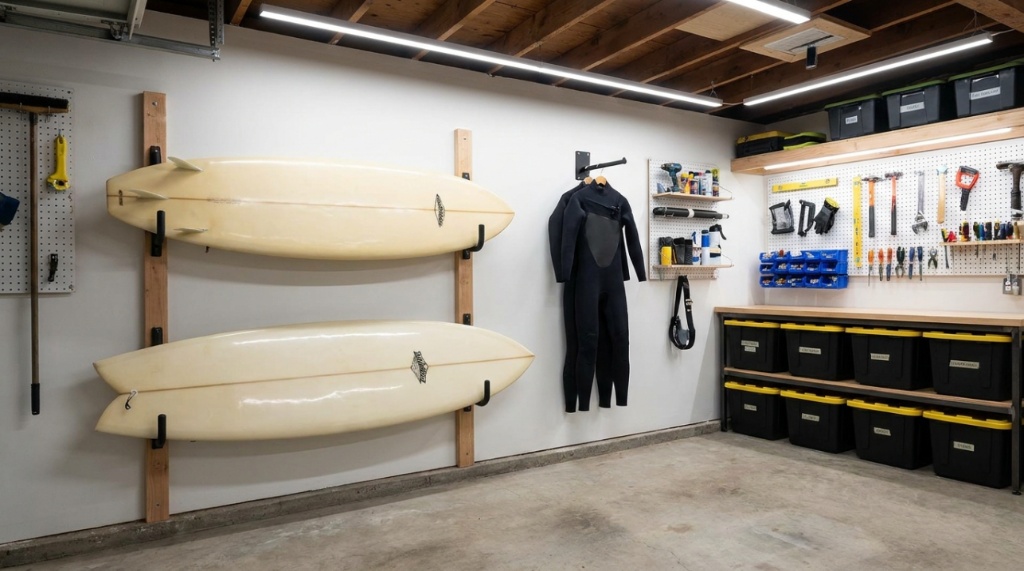
Think installing a surfboard wall mount is complicated? Think again. With the right tools and a clear step-by-step process, you can have your board safely up on the wall in under 30 minutes — even if you’ve never done a DIY project before. This guide covers everything from finding studs to final positioning.
What You’ll Need
Before you start, gather these tools:
- ✅ Your surfboard wall mount kit
- ✅ Stud finder
- ✅ Pencil
- ✅ Tape measure
- ✅ Power drill or screwdriver
- ✅ Drill bits (the right size for your screws)
- ✅ Level
- ✅ Wall anchors (if not drilling into studs)
Most quality mounts come with the screws and anchors included. Check the box before you shop for extras.
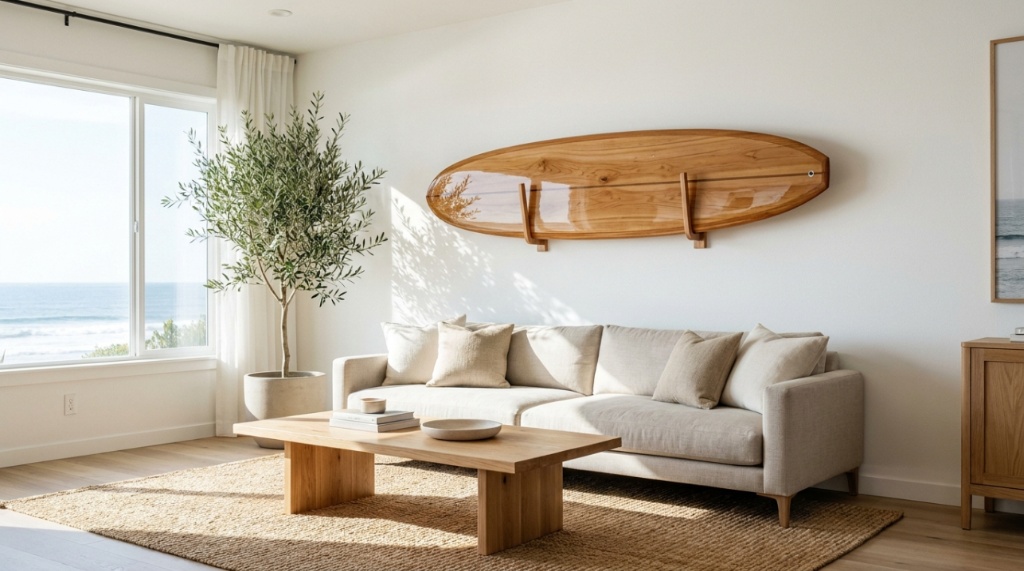
Step 1: Choose Your Wall and Spot (5 Minutes)
Pick a wall that:
- Is away from direct sunlight (south-facing walls get the most sun in the northern hemisphere)
- Has enough vertical clearance — your board needs about 6–12 inches above the nose and below the tail
- Is not near a heat source like a furnace vent or radiator
- Is accessible enough for you to grab and return your board easily
The ideal height for a horizontal wall mount is roughly 5–6 feet from the floor — easy to reach without needing a stool.
Step 2: Find Your Studs (5 Minutes)
This is the most important step. A surfboard rack installation is only as strong as its anchor points.
- Run your stud finder slowly along the wall
- Mark each stud edge with a pencil (studs are usually 16″ apart)
- Confirm by tapping — solid sound = stud, hollow sound = no stud
- Ideally, you want both mount arms to hit studs
If you can’t hit studs: Use heavy-duty drywall anchors rated for at least 50 lbs each. Toggle bolts are the most secure option for drywall.
Step 3: Mark Your Drill Points (5 Minutes)
- Hold your first mount bracket against the wall at your desired height
- Use a level to make sure it’s straight
- Mark the screw holes with a pencil
- Repeat for the second bracket
Key tip: Measure the width of your surfboard at its widest point (usually near the nose or mid-section). Your brackets should be spaced to sit about 1/3 from the nose and 1/3 from the tail of the board — never at the very ends.
Step 4: Drill and Mount (10 Minutes)
- Drill pilot holes at your marked points — slightly smaller than your screw diameter
- If using wall anchors, tap or screw them in now
- Hold the bracket in place and drive in the screws
- Don’t overtighten — snug is enough; overtightening can crack drywall
- Give each bracket a firm tug to test it — it should feel completely solid
- Repeat for the second bracket
Check with a level one more time after both brackets are up. Adjust if needed before moving on.
Step 5: Place Your Board (5 Minutes)
Now the satisfying part:
- Lift your surfboard carefully — fins facing out (away from the wall)
- Lower it gently onto the padded arms
- Center it so the weight is evenly distributed
- Step back and check: is it level? Is it touching the wall? (It shouldn’t)
- Make any final adjustments to the arm angles if your mount is adjustable
Safety should always come first when setting up your surf station, especially if you have little ones running around the house. While getting your boards securely off the floor prevents accidental trips and damage, don’t forget about safeguarding your family during actual sessions. Protecting young riders goes hand-in-hand with smart storage, so make sure to check out our essential guide on Kid-Friendly Surf Helmets and Accessories You Needto keep your mini-shredders safe out in the water.
Common Installation Mistakes to Avoid
| Mistake | Why It’s a Problem |
|---|---|
| Skipping the stud finder | Mount can pull out of wall under board weight |
| Arms too close together | Board balanced on small area = pressure dings |
| No padding check | Hard metal rails scratch board |
| Not using a level | Board hangs crooked, looks bad |
| Mounting too high | Hard to reach, risks dropping board |
Tips for Specific Wall Types
Concrete/brick walls: Use a masonry bit and concrete anchors. This takes a bit more effort but results in the most secure surfboard wall mount possible.
Tile walls (garages): Avoid if possible. Tile cracks easily when drilling. Mount on the drywall or wood section instead.
Plaster walls (older homes): Use longer screws and toggle bolts — plaster is brittle and doesn’t hold anchors as well as drywall.
Conclusion
Installing a surfboard wall mount is one of the easiest home improvement projects a surfer can tackle. With the right tools and this step-by-step guide, you’ll have your board up on the wall safely and securely in under 30 minutes. The hardest part is choosing which wall to show it off on.