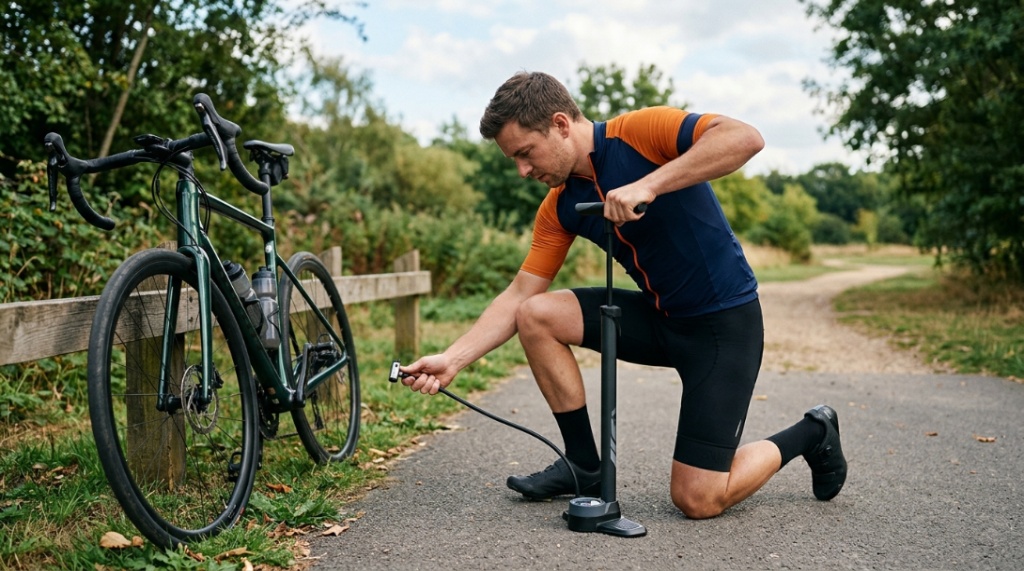
You grab a bike air pump off the shelf, get home, and discover it doesn’t fit your valve — or worse, it fits loosely enough to seem like it’s working while silently leaking half the air you’re pumping in. The Presta vs Schrader valve distinction confuses more new cyclists than any other equipment question, and buying a pump incompatible with your valve type wastes money and leaves you stranded with flat tires. A bike air pump needs to match your specific valve type with a secure seal, or you’re pumping air into the atmosphere instead of your tire.
A bike air pump is a manual or electric inflation device designed to force air through a bicycle tire’s valve stem and into the inner tube or tubeless tire. The two dominant valve standards — Presta (narrow, threaded, with a lock nut) and Schrader (wider, spring-loaded, same as car tires) — require different pump head configurations for proper sealing and efficient air transfer.
This guide explains the actual mechanical difference between Presta and Schrader valves, which bikes use which type, and how to choose a pump that handles your current setup without creating frustrating compatibility problems.
What’s the Actual Difference Between Presta and Schrader Valves?
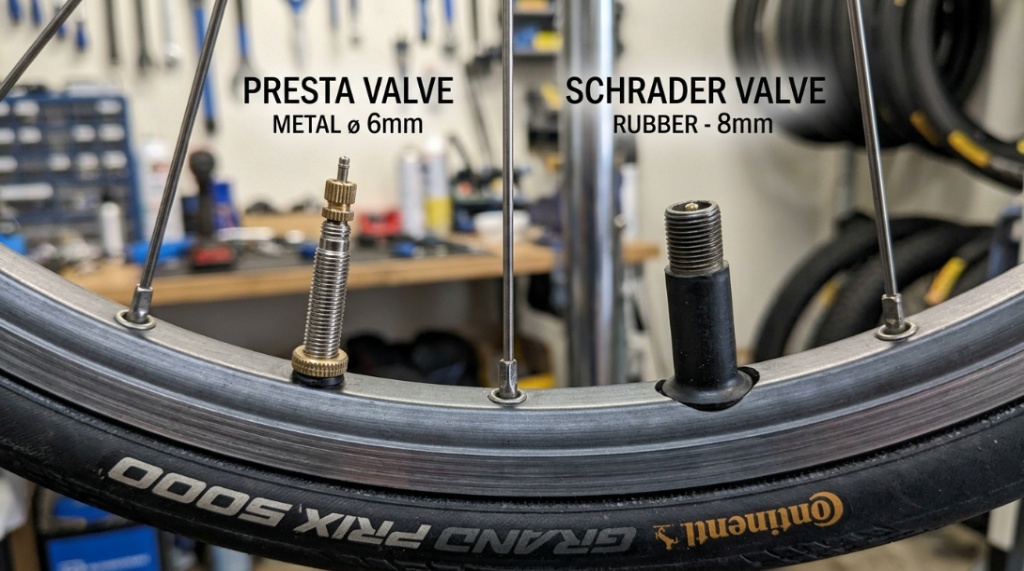
Presta valves are narrower (6mm diameter), use a manually opened lock nut for air flow, and require lower force to seal. Schrader valves are wider (8mm diameter), use an internal spring-loaded pin, and are self-sealing. The pump head must match the diameter and sealing mechanism of your specific valve type.
Technical comparison:
| Characteristic | Presta Valve | Schrader Valve |
|---|---|---|
| Diameter | 6mm (narrow) | 8mm (wide — same as car tires) |
| Rim Hole Required | 6mm hole (smaller, maintains rim strength) | 8mm hole (larger, slightly reduces rim strength) |
| Air Flow Control | Manual — unscrew knurled lock nut to open | Automatic — spring pin depressed by pump head |
| Sealing Mechanism | External — metal nut compresses against valve body | Internal — spring closes valve when pump removes |
| Common On | Road bikes, gravel bikes, mountain bikes, high-end wheels | BMX bikes, kids bikes, cruisers, hybrid bikes, e-bikes |
| Max PSI Handling | Better at high pressure (120+ PSI) due to secure sealing | Adequate to 100 PSI, less precise at very high pressures |
| Ease of Use | Requires unscrewing lock nut before and tightening after inflation | Simply attach pump and inflate — no preparation needed |
| Durability | Exposed lock nut can bend if valve is bumped | Recessed valve core protected by surrounding metal body |
The key takeaway: these aren’t just different sizes of the same thing. They use fundamentally different air-flow mechanisms that require pump heads engineered specifically for each type.
Which Valve Type Does Your Bike Use?
Check your current tires: Presta valves are thin metal stems with a small knurled nut at the top that unscrews. Schrader valves look exactly like car tire valves — wider with a flat top and usually a plastic cap. If you’re unsure, the rim drill hole size confirms it: 6mm holes = Presta, 8mm holes = Schrader.
Bike types and their typical valve standards:
- Road bikes: Almost always Presta. Narrow rims need the smaller drill hole to maintain structural integrity.
- Mountain bikes: Mostly Presta on modern bikes. Some entry-level and older models use Schrader.
- BMX bikes: Almost always Schrader. Wider rims accommodate the larger valve hole without strength concerns.
- Kids bikes: Typically Schrader for simplicity (no lock nut to manage).
- Hybrid/commuter bikes: Mixed — check your specific bike. Budget hybrids often use Schrader, performance hybrids use Presta.
- E-bikes: Usually Schrader due to wider rims and the simpler inflation process.
- Gravel bikes: Almost always Presta, following road bike conventions.
If you own multiple bikes with different valve types (common for families with kids bikes and adult road bikes), you need a pump that handles both — which leads to the next decision.
Should You Buy a Dual-Compatible Pump or Valve-Specific Pump?
Buy a dual-compatible pump if you have bikes with both valve types or might change bikes in the future. Buy a valve-specific pump only if every bike you’ll ever inflate uses the same valve type and you want the most secure possible seal without any compromise.
Decision framework:
- Buy dual-compatible if: You have family members with different bikes, you might upgrade bikes later, you want one pump to handle everything, or you occasionally help friends with different setups.
- Buy Presta-specific if: You exclusively ride road/gravel with Presta valves, you need maximum high-pressure accuracy above 100 PSI, and you want the tightest possible valve seal.
- Buy Schrader-specific if: You only ride BMX or cruiser bikes, you want the simplest attachment process, and you inflate car tires with the same pump.
For BMX and action sports riders specifically, a pump with native Schrader priority makes inflation faster and more reliable. The best BMX bike pump recommendations cover models with optimized Schrader head designs tested for durability under daily use.
What Types of Dual-Compatible Pump Heads Exist?
Three designs handle both valves: twin-head pumps with separate Presta and Schrader openings, auto-switching smart heads that detect valve type internally, and reversible-gasket heads where you flip an internal rubber piece. Twin-head and auto-switching are superior; reversible gaskets wear out fastest.
Pump head designs compared:
- Twin-Head (two separate openings): One side fits Presta, the other fits Schrader. No internal mechanism to fail. You choose the correct opening and attach. Most reliable long-term but slightly bulkier head design. Example: Topeak JoeBlow Sport III.
- Auto-Switching Smart Head: Single opening with internal mechanism that detects valve width and adjusts automatically. Convenient when it works — but the switching mechanism is a potential failure point after 2–3 years of heavy use. Example: Lezyne Classic Floor Drive.
- Reversible Internal Gasket: Single opening where you unscrew the head, flip the internal rubber gasket, and reassemble for the other valve type. Inconvenient for frequent switching. Gasket wears from repeated flipping. Cheapest to manufacture but worst user experience.
- Adapter-Based: Presta-native head with a screw-on adapter for Schrader (or vice versa). Adapters get lost, add a leak point, and never seal as well as native fittings. Avoid for regular use.
How Do You Properly Attach a Pump to Each Valve Type?
For Presta: unscrew the valve lock nut first, press pump head straight on, and flip the lever to lock. For Schrader: simply press the pump head onto the valve and flip the lever — no preparation needed. Improper attachment is the number one cause of “my pump doesn’t work” complaints.
Presta valve inflation steps:
- Remove valve cap (if present)
- Unscrew the small knurled nut at the valve tip counterclockwise until it stops (don’t remove it, just loosen)
- Briefly tap the valve tip to break any internal seal (you’ll hear a small hiss of air)
- Press pump head straight onto valve stem — don’t angle it
- Flip the pump lever to lock the head in place
- Pump to desired pressure
- Flip lever to unlock, pull head straight off
- Re-tighten the knurled lock nut clockwise
Schrader valve inflation steps:
- Remove valve cap
- Press pump head straight onto valve — the pump head depresses the internal spring pin automatically
- Flip the pump lever to lock
- Pump to desired pressure
- Flip lever, remove head straight
- Replace valve cap (prevents dirt from blocking the spring pin)
The critical technique for both: push the head on STRAIGHT, never at an angle. Angled attachment bends Presta valves permanently and creates partial seals on Schrader that leak during pumping.
What PSI Range Do You Need Based on Your Valve Type?
Presta-valve bikes typically need 60–130 PSI (road bikes at the high end). Schrader-valve bikes typically need 30–100 PSI (BMX, kids bikes, cruisers). Your pump’s gauge must be accurate within the PSI range your specific bikes require — not just at its maximum rating.
PSI ranges by bike type and valve:
- Road bikes (Presta): 80–130 PSI depending on tire width and rider weight
- Gravel bikes (Presta): 35–60 PSI for off-road traction
- Mountain bikes (Presta): 25–40 PSI for trail riding, higher for XC
- BMX (Schrader): 40–100 PSI depending on discipline
- Kids bikes (Schrader): 30–50 PSI depending on tire size
- Hybrid/commuter (either): 50–80 PSI for mixed terrain
- E-bikes (Schrader): 40–65 PSI for heavier bike + rider load
A pump with a gauge that tops at 160 PSI may display your 45 PSI BMX target at the very bottom of its dial — making precise reading nearly impossible. Choose a pump gauge optimized for your actual operating range.
Can You Convert Between Presta and Schrader?
You can convert Presta valves to accept Schrader pump heads using a brass adapter ($2–$3), but you cannot convert Schrader to accept Presta pump heads. The adapters work in emergencies but add a leak point — using a properly compatible pump is always better for daily use.
Conversion options and limitations:
- Presta-to-Schrader adapter (small brass piece): Screws onto a Presta valve, enlarging the connection point to accept Schrader pump heads. Works for emergencies (gas station air, borrowing a friend’s pump) but shouldn’t be permanent. Adds a potential leak point.
- Schrader tube in a Presta rim: NOT possible without drilling the rim hole wider (destructive, voids warranty, weakens rim).
- Presta tube in a Schrader rim: Possible with a rim shim/grommet to center the narrower valve in the wider hole. Works but may rattle and can shift under pressure.
Bottom line: don’t plan around converting. Buy a pump that natively handles your valve type (or both types) and skip the adapter complexity entirely.
What Are the Best Budget-Friendly Dual-Compatible Pumps?
The Topeak JoeBlow Sport III ($35–$45), Lezyne Classic Floor Drive ($40–$55), and Bontrager Charger ($30–$40) all deliver reliable dual-valve compatibility with accurate gauges at accessible price points. All three handle both Presta and Schrader without adapters.
- Topeak JoeBlow Sport III: Twin-head design (separate openings). Large 3″ gauge accurate ±2 PSI. Steel barrel. Wide stable base. The default recommendation for multi-bike households.
- Lezyne Classic Floor Drive: Auto-switching ABS head. CNC-machined barrel. Premium feel at mid-range pricing. 3.5″ gauge. Replacement parts readily available.
- Bontrager Charger: Auto-switching head. Clean design. 2.5″ gauge. Slightly less premium construction but reliable and covered by Trek warranty. Good value entry point.
All three handle the full PSI range from mountain bike pressures (25 PSI) through road bike pressures (120+ PSI) with accuracy verified across the spectrum.
Conclusion
Choosing between Presta and Schrader compatible bike pumps starts with identifying your valve type (check your rims), then selecting a pump head design that seals reliably without adapters. For most cyclists — especially those with multiple bikes or family members on different setups — a quality dual-compatible pump with a twin-head or auto-switching design at $35–$55 covers every scenario. Prioritize gauge accuracy in your operating PSI range and native valve compatibility over maximum pressure ratings or premium aesthetics.
For BMX and Schrader-valve riders specifically, explore the best BMX bike pump options optimized for Schrader valve reliability and BMX pressure range accuracy.
Which valve type do your bikes use? Drop your setup and any pump frustrations in the comments — valve compatibility problems are almost always solvable with the right information.
Frequently Asked Questions
Can one pump work for both Presta and Schrader valves?
Yes. Most modern floor pumps above $30 include dual-compatible heads that handle both valve types without adapters. Twin-head designs offer separate openings for each valve, while auto-switching heads detect the valve type automatically. Both approaches work reliably for years when purchased from quality brands.
Why does my pump leak air on Presta valves?
Three common causes: the valve lock nut isn’t fully unscrewed (air can’t flow in), the pump head is attached at an angle creating a partial seal, or the pump’s internal Presta gasket is worn. Try unscrewing the lock nut further, reattaching perfectly straight, or replacing the pump head gasket ($3–$5 repair).
Do I need to unscrew anything on a Schrader valve before pumping?
No. Just remove the plastic dust cap and attach the pump head. The pump head automatically depresses the internal spring pin to allow air flow. This is Schrader’s main advantage over Presta — zero preparation needed before inflation. Replace the dust cap after inflation to keep dirt out of the spring mechanism.
Can I use a car tire pump on my bike?
On Schrader-valve bikes (BMX, kids bikes), yes — but with extreme caution. Car pumps deliver high volume rapidly and can over-inflate bike tires in seconds, potentially blowing the tire off the rim. Use very short bursts (1–2 seconds) and check pressure between each burst with a separate gauge.
Which valve type is better overall?
Neither is objectively better — each suits different applications. Presta excels on narrow high-pressure rims (road, gravel) where the smaller rim hole preserves structural integrity. Schrader excels on wider rims (BMX, cruisers) where simplicity and durability matter more than rim weight savings. Your bike type determines the better choice.
How do I know if my pump head gasket needs replacing?
Signs of worn gaskets: air hissing from the pump head connection during strokes, the lever feels looser than when new, or you can see visible cracking or deformation on the rubber gasket when you remove the head cap. Most quality pumps sell replacement gasket kits for $3–$8 that take 2 minutes to install.
Are tubeless-compatible pumps different from regular bike pumps?
Standard pumps work for topping off tubeless tires, but seating a tubeless tire bead initially requires a burst of high-volume air that regular floor pumps can’t deliver fast enough. Tubeless-specific pumps include a pressurized air chamber that releases a burst to seat the bead. Once seated, any standard pump maintains pressure normally.