Some girls would rather walk barefoot on hot pavement than put on anything resembling a dress shoe — and forcing the issue before a family wedding guarantees a power struggle that nobody wins, least of all the parents holding stiff patent leather shoes while their daughter runs away in socks. Girls formal dress shoes designed for shoe-resistant children exist at every price point, but they require abandoning the traditional approach of picking shoes that look formal first and hoping comfort follows. For girls who actively hate dress shoes, the strategy reverses: start with what feels acceptable to HER, then find the most formal-looking version of that comfortable category.
Comfortable flower girl shoes for shoe-resistant children prioritize sensory comfort above all else — soft materials that don’t feel “hard” or “stiff” against skin, lightweight construction that doesn’t feel “heavy,” flexible soles that don’t restrict movement, and familiar closure types that don’t feel “weird” compared to their everyday shoes. The formality comes from finish and color, not from rigid dress shoe construction that triggers their resistance in the first place.
This guide is specifically for parents whose daughters have consistently resisted formal footwear — where the challenge isn’t finding a pretty shoe but finding ANY formal shoe she’ll actually agree to wear for 2–3 hours at a wedding.
Why Do Some Girls Resist Dress Shoes So Intensely?
Sensory sensitivity, negative past experiences, and the stark contrast between dress shoes and their familiar everyday footwear drive resistance. It’s rarely about being “difficult” — it’s about genuine discomfort that children lack the vocabulary to explain beyond “I don’t like it” or “it hurts.”
Root causes of dress shoe resistance:
- Sensory processing sensitivity: 15–20% of children have heightened sensory processing. Stiff materials, unfamiliar textures, and pressure points that other children tolerate feel genuinely intolerable to sensory-sensitive girls. This isn’t behavioral — it’s neurological.
- Previous negative experience: One painful event in stiff shoes creates lasting negative associations. Children remember physical discomfort from shoes more vividly than adults expect, and generalize that memory to all “dress shoes” as a category.
- Contrast with everyday shoes: If she lives in soft sneakers, flexible sandals, or barefoot at home, the jump to rigid leather shoes feels extreme. The greater the gap between everyday and dress footwear, the stronger the resistance.
- Loss of movement freedom: Active girls who run, climb, and jump instinctively recognize when shoes restrict their movement capacity. Stiff soles and heavy construction trigger resistance because they limit what she can do physically.
- Appearance anxiety: Some girls associate “dress shoes” with formal situations that make them uncomfortable — performing, being watched, standing still. The shoes become a symbol of the stressful situation rather than just footwear.
What Shoe Categories Do Shoe-Resistant Girls Actually Accept?
Most shoe-resistant girls accept footwear that feels closest to sneakers or bare feet: soft-soled flats, flexible moccasins, dressy versions of familiar shoe types (decorated canvas shoes, metallic slip-ons), or formal sandals that don’t enclose the foot completely.
Acceptance hierarchy (most to least likely to be tolerated):
| Shoe Type | Acceptance Rate | Formality Level | Best For |
|---|---|---|---|
| Decorated canvas/sneaker-style | Very high — feels like everyday shoes | Casual-semi formal | Casual outdoor weddings, resistant girls of all ages |
| Soft leather moccasins (metallic/satin) | High — feels like slippers | Semi-formal | Indoor weddings, toddlers through age 7 |
| Elastic ballet flats (no closure) | High — minimal sensation | Semi-formal to formal | Most weddings, girls who dislike straps/buckles |
| Dressy sandals (open design) | Moderate-high — doesn’t enclose fully | Semi-formal | Summer/outdoor weddings, girls who hate enclosed feet |
| Soft Mary Janes (velcro, flexible sole) | Moderate — depends on softness | Formal | Traditional ceremonies, gradually acclimated girls |
| Traditional rigid dress shoes | Very low — maximum resistance trigger | Most formal | Not recommended for resistant children |
Start from the top of this list and work downward until you find the category she accepts. Then find the most wedding-appropriate version within that category. This approach respects her comfort boundaries while still achieving appropriate formality.
How Do You Find Formal-Looking Shoes That Feel Like Sneakers?
Look for “dressy sneakers,” hidden-comfort dress shoes with sneaker insoles, or ballet flats built on sneaker-technology platforms. Brands like Stride Rite, Geox, and Skechers make formal-appearance shoes with athletic shoe comfort engineering hidden inside.
Sneaker-comfort dress shoes that actually exist:
- Stride Rite “Dress” collection ($40–$60): Memory foam insoles, flexible rubber outsoles, and lightweight construction inside formal-looking silhouettes. Designed specifically for children who resist traditional dress shoes. Available in Mary Jane, ballet flat, and loafer styles.
- Geox “Plie” line ($50–$70): Patented breathable sole technology with formal leather uppers. Feels ventilated (no sweating that causes discomfort) while looking completely traditional. European styling.
- Native Shoes “Jefferson” ($40–$50): Ultra-lightweight EVA material that looks like a dress shoe but weighs almost nothing and flexes completely. Wipes clean instantly. Not traditional leather aesthetic but increasingly accepted at casual-formal events.
- DREAM PAIRS “Comfort” line ($25–$35): Budget option with cushioned insoles and flexible soles in formal styling. Less durable than Stride Rite but adequate comfort for a single event at half the price.
The comfortable flower girl shoes guide highlights specific models tested by parents of shoe-resistant girls with acceptance-rate feedback.
Can Decorated Sneakers or Canvas Shoes Work for Weddings?
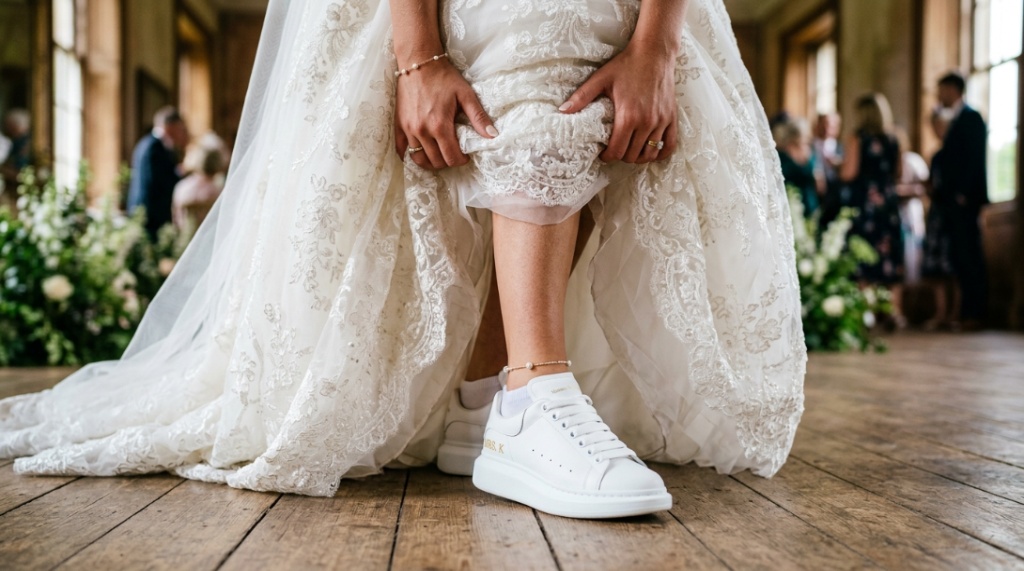
Yes — at casual-to-semi-formal weddings, clean white canvas shoes decorated with clip-on embellishments, white Converse-style low-tops, or metallic slip-on sneakers are increasingly accepted and photograph charmingly when paired with formal dresses.
When decorated sneakers work:
- Outdoor garden/barn weddings: Casual venue + functional footwear for grass and uneven ground = sneakers are practical and appropriate
- Couple explicitly supports casual attire: Many modern couples welcome children in comfortable footwear — ask if unsure
- Reception only (not ceremony): Wear formal shoes for the 20-minute ceremony, switch to decorated sneakers for the 4-hour reception
- Photo style is candid/documentary: Photographers capturing real moments (not posed formality) make sneakers look intentionally charming
How to make canvas shoes wedding-ready:
- Start with clean white canvas (new or freshly washed)
- Add removable clip-on shoe decorations (crystals, bows, flowers) — $5–$10 from craft stores or Etsy
- Match laces to dress color (ribbon laces in satin or organza replace standard cotton)
- Ensure soles are clean — dirty soles visible in walking/dancing photos ruin the look
What Sensory Accommodations Make Dress Shoes Tolerable?
Remove or cover interior seams with moleskin, add a thin cushioned insole over any hard footbed, choose shoes lined with soft fabric (not bare leather or plastic), and ensure nothing touches the top of the foot with pressure. These modifications address the specific sensory triggers that cause resistance.
Sensory modification checklist:
- Interior seam coverage: Run your finger inside the shoe feeling for raised seams or stitching ridges. Cover any with thin moleskin strips before first wear. Seams are the #1 sensory trigger for sensitive children.
- Insole swap: Replace hard factory insoles with soft memory foam children’s insoles ($8–$12). The cushion eliminates “hard floor” sensation that bothers some children.
- Sock choice matters: Seamless bamboo or modal socks (no toe seam) paired with the dress shoe dramatically reduce sensory input. Regular socks with toe seams add friction that compounds shoe discomfort.
- Lining check: Run finger inside the shoe upper. If it’s bare hard material (unlined leather or plastic), add a thin fabric liner or choose only fabric-lined shoes. Bare material against skin causes sensory defensiveness.
- Tongue padding: If a tongue or strap crosses the top of the foot, ensure it’s padded. Thin unpadded straps create pressure lines that hypersensitive children notice immediately.
f you are opting for non-traditional footwear, keeping the overall color palette of the bridal party cohesive is key. For instance, if your bridesmaids are wearing deep, rich jewel tones, you will want to read our guide on What Color Shoes to Wear With a Burgundy Dress to find comfortable flats or sneakers that perfectly complement the look without sacrificing your personal style.
How Do You Gradually Acclimate a Shoe-Resistant Girl Before the Wedding?
Start 3–4 weeks before the wedding with 2-minute positive-association sessions and increase by 2–3 minutes every few days. Pair shoe-wearing with high-reward activities (screen time, treats, special activities). Never force past the point of distress — build positive association, not endurance through misery.
Gradual acclimation protocol for resistant children:
- Week 1: Shoes near her during play (visible, touchable). Let her explore them without wearing. Praise any voluntary interaction. Goal: remove novelty/fear response.
- Week 2: 2–5 minutes of wearing during high-engagement activities. Remove before any complaint. Verbal praise. Small reward after each successful session.
- Week 3: 10–15 minutes including walking. Pair with activities she loves. If resistance appears, reduce duration rather than powering through. Consistency matters more than duration.
- Week 4: 20–30 minutes simulating wedding activities (standing still briefly, walking on different surfaces, sitting and standing). By now the shoes should feel familiar rather than foreign.
If after 3 weeks she still shows significant distress at 10+ minutes, pivot to a more comfortable shoe category rather than forcing the current choice. Her comfort threshold has been clearly communicated — respect it and find a different solution.
What’s the “Last Resort” Strategy for Extremely Resistant Girls?
The last resort that always works: formal shoes for the ceremony aisle walk only (5 minutes maximum), then immediate switch to her comfortable everyday shoes or bare feet for everything else. Prioritize the child’s wellbeing over aesthetic perfection — one aisle photo with formal shoes can be enough.
Absolute minimum formal shoe exposure strategy:
- Pre-ceremony: Comfortable shoes or barefoot during all waiting, prep, and pre-ceremony activities
- Ceremony entrance only: Formal shoes on 2 minutes before her walk. Walk the aisle. Sit. Remove immediately after her role is complete (someone in the pew handles this discreetly).
- Total formal shoe time: 5–10 minutes maximum
- Everything else: Comfortable alternatives — pretty socks, moccasins, decorated sneakers, or bare feet
This approach captures the key formal photos (aisle walk) while respecting the child’s genuine discomfort with extended formal footwear. Most photographers can angle shots to exclude feet during other portions of the event.
How Do You Explain the Situation to the Couple Getting Married?
Be direct and brief: “She has strong preferences about shoes — we’ll have formal shoes for the ceremony walk but may need to switch to comfortable alternatives for the rest. She’ll look beautiful either way.” Most couples prioritize a happy, engaged child over specific footwear in their wedding party.
Communication approach:
- Inform early: Mention it when discussing flower girl role, not the week before the wedding. This allows the couple to plan photo timing accordingly.
- Offer solutions: “We’ll have formal shoes for the aisle and photos — is that enough, or do you need them all day?” Most couples are flexible once they understand the situation.
- Show alternatives: If you’ve found beautiful moccasins or decorated flats she will wear, show the couple. They may approve them for the entire event.
- Acknowledge their vision: “I understand you want a specific look — we’ll make it work for photos. For the reception, can she be in comfortable shoes?” Respects their event while protecting your child.
Conclusion
Girls who hate dress shoes aren’t being difficult — they’re communicating genuine discomfort that parents need to solve, not override. The solution is finding the most formal version of shoes she actually tolerates: sneaker-comfort flats, soft moccasins, flexible ballet styles, or even decorated canvas for casual venues. Start from her comfort and work toward formality rather than starting from formality and hoping she’ll endure. Gradual acclimation over 3–4 weeks builds familiarity. And if all else fails, formal shoes for the 5-minute aisle walk followed by comfortable alternatives is a perfectly acceptable strategy that protects both the couple’s photos and your daughter’s wellbeing.
Explore comfortable flower girl shoes specifically reviewed by parents of shoe-resistant children at the girls formal dress shoes collection with acceptance-rate data and sensory comfort ratings.
Does your daughter resist all formal shoes or specific types? Share what she does and doesn’t tolerate in the comments — other parents with the same challenge benefit enormously from hearing what worked and what failed for similar children.
Frequently Asked Questions
Is it okay for a flower girl to wear sneakers at a wedding?
At casual and semi-formal weddings, clean decorated sneakers are increasingly accepted and even celebrated as charming. For formal weddings, check with the couple first. Many couples prefer a happy child in sneakers over a miserable child in formal shoes. The trend toward authentic, candid wedding photography has made non-traditional flower girl footwear more socially acceptable.
How do I know if my daughter’s shoe resistance is sensory processing related?
Signs of sensory-driven resistance: she also resists tags in clothing, seams in socks, certain fabric textures, or specific shoe materials (not just formal styles). If resistance appears across multiple clothing/texture categories — not only dress shoes — consult an occupational therapist. Sensory processing sensitivity is common (15–20% of children) and manageable with appropriate accommodations.
What if the flower girl dress requires a specific shoe color the child won’t wear?
Find her accepted shoe type in the required color. If she tolerates soft ballet flats but not Mary Janes, find a ballet flat in white/ivory/whatever color is needed. The color isn’t usually the resistance trigger — it’s the construction and feel. Match color requirement to her accepted comfort category.
Can I bribe my daughter to wear dress shoes for the wedding?
Short-term incentives (special treat after the ceremony, choosing a fun activity after the wedding) can motivate cooperation for limited-duration wear. Avoid framing it as punishment/reward — frame it as “you wear these for the special walk, then you get comfortable shoes AND we go get ice cream.” Keep the required duration realistic (under 30 minutes for strongly resistant children).
Are there dress shoes designed specifically for sensory-sensitive children?
Yes. Brands like See Kai Run, Stride Rite “SRT” line, and Tsukihoshi design with sensory considerations: seamless interiors, ultra-soft linings, flexible construction, and no harsh materials. These aren’t marketed as “sensory-friendly” but their engineering addresses the exact triggers that cause resistance in sensitive children.
What if she removes her shoes during the ceremony?
Assign one calm adult (ideally not a parent in the wedding party) to sit near her with shoes ready. If she removes them, the adult can discreetly help them back on for photo moments or let her be barefoot if she resists. Brief barefoot moments during a ceremony are barely noticeable to guests and won’t ruin photos from typical shooting distances.
Should I practice the aisle walk with the dress shoes on?
Yes — at least 2–3 times during the break-in period. Practice reduces “new situation” anxiety that compounds shoe discomfort. Walk the approximate distance in the shoes at home, ideally on a similar surface (if the ceremony is on carpet, practice on carpet; if on grass, practice on grass). Familiarity with the combined experience of shoes + walking + being watched reduces day-of resistance significantly.